




19th Century Magazine Holder
A 19th century magazine holder is a functional stand designed to keep periodicals tidy, bringing period timber and brass into a room.
19th Century Magazine Holder
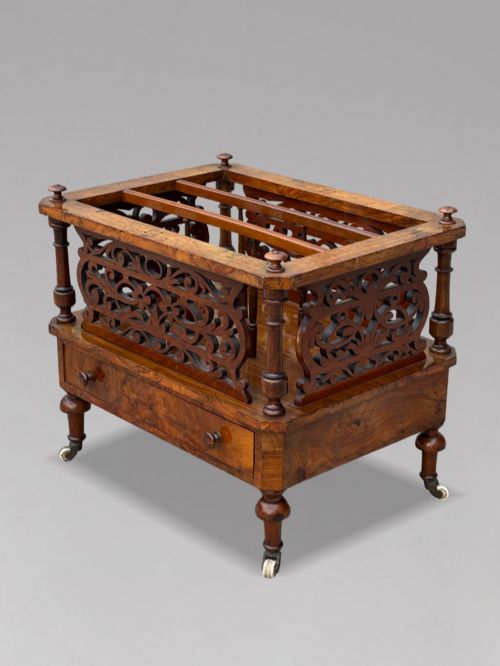
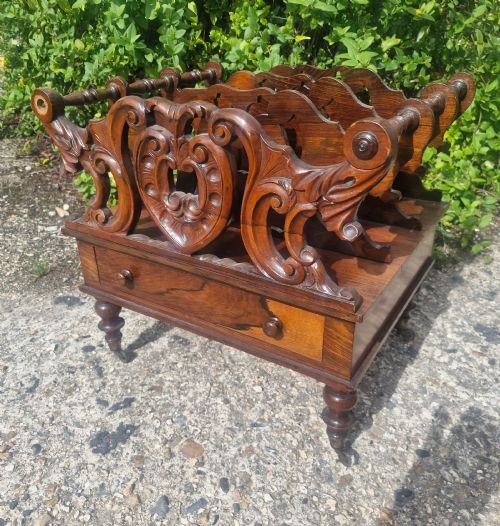
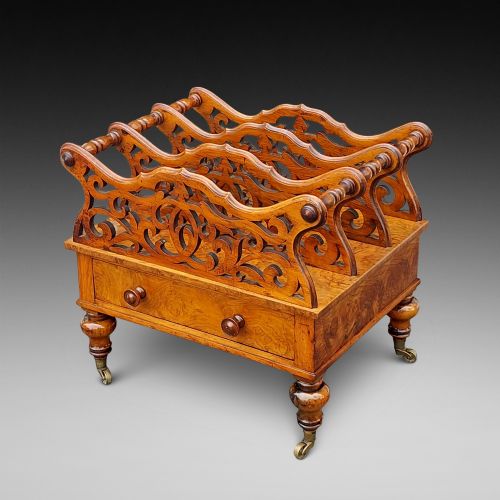
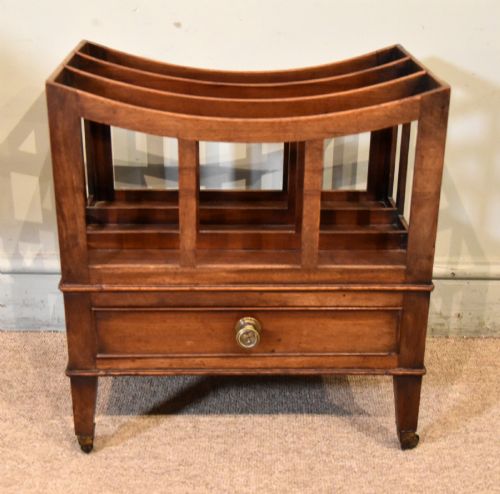
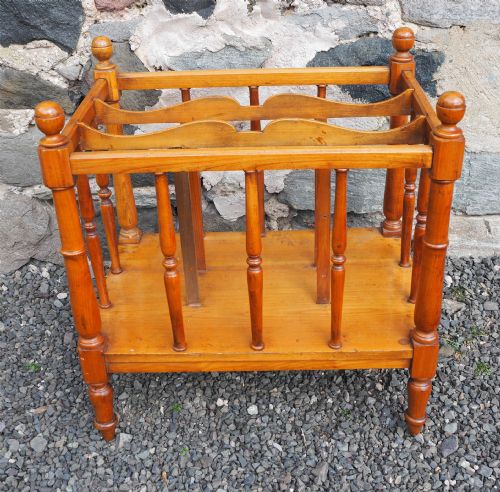
A 19th century magazine holder most commonly appears on this page as a Canterbury, a compartmented stand developed to hold sheets, folios and periodicals. These pieces emerge from periods spanning the Georgian, Regency, William IV and Victorian eras, reflecting shifting domestic tastes in storage.
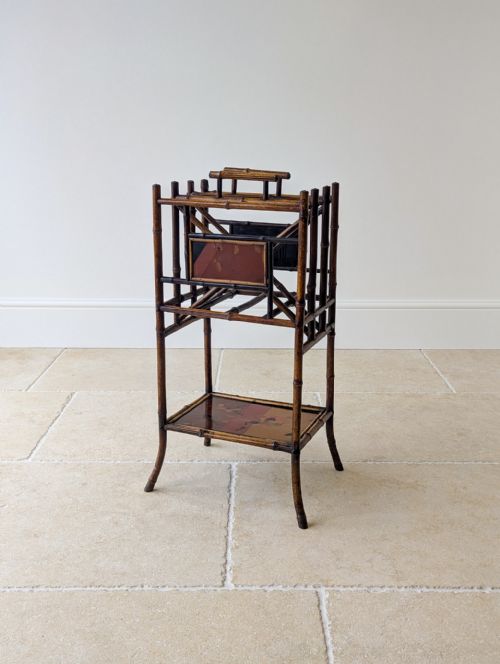
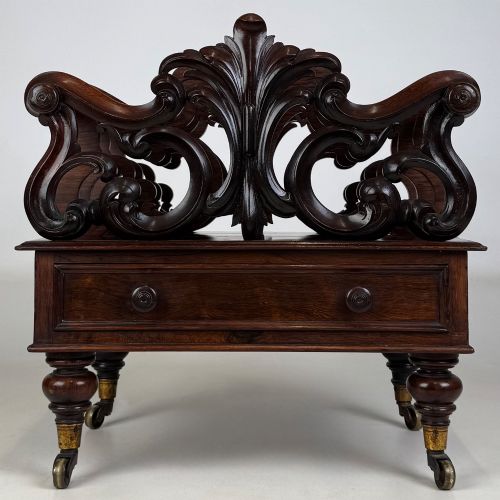
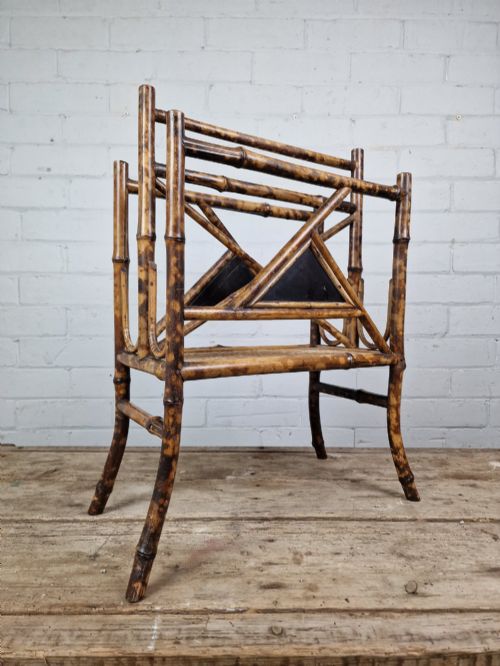
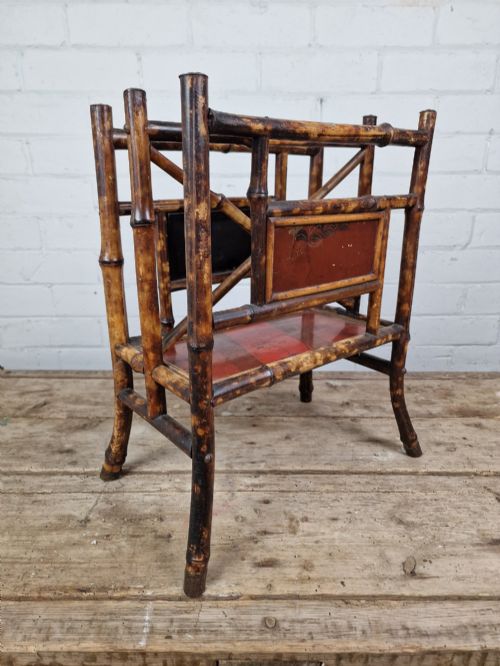
Makers fashioned these stands in forms such as boat-shaped frames, multi-tier music racks and low stands featuring integrated drawers or work tops. Rosewood and mahogany dominate the offerings, alongside burr walnut, fruitwood and bamboo variants associated with the Aesthetic Movement.
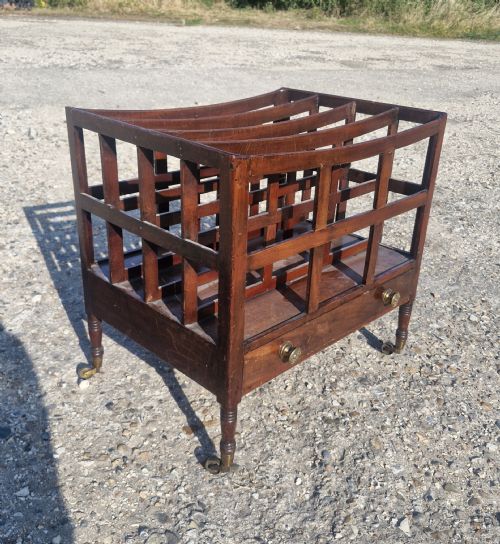
Buyers encounter everything from simple country house mahogany racks to grand scale Regency folios and highly figured walnut designs inlaid with marquetry. Each piece served a specific domestic function in the parlour or library, holding the daily papers and sheet music close to hand.
How they were made
Cabinet makers utilised dense hardwoods like rosewood, mahogany and walnut, often selecting highly figured veneers and burr walnut for decorative impact. Slats and divisions were shaped to form open partitions, supported on turned legs and frequently fitted with brass castors.
Construction involved traditional joinery techniques, combining framed dividers with dovetailed drawers where a base storage compartment was included. Bamboo and lacquer versions relied on specialised binding and finishing methods suited to exotic materials popular during the later Victorian period.
Listings feature woods spanning mahogany, rosewood, walnut, burr walnut, fruitwood and bamboo alongside ceramic and brass elements.
What varies in quality
The choice of timber and the complexity of the figuring separate standard examples from exceptional ones, with burr walnut and richly grained rosewood sitting at the upper end. Finer pieces display meticulous carving, such as prince of wales feathers or intricate marquetry inlay, rather than plain turned spindles.
Structural integrity and the retention of original elements, including brass castors and internal partitions, define a superior piece. The integration of functional additions like lower drawers or work tops also elevates the sophistication of the stand.
The 19th Century Magazine Holder Glossary
- Canterbury
- A low stand with partitioned sections designed to hold music sheets, newspapers and magazines. It often includes a small drawer beneath the slatted dividers.
- Folio
- A large-format publication or set of loose sheets stored flat or upright in stands built for oversized papers. Regency examples often scale these dimensions up for large portfolios.
- Marquetry
- Decorative veneer work formed by fitting pieces of various woods and materials into a background to create pictorial patterns. It appears on Victorian walnut surfaces.
- Aesthetic Movement
- A late 19th-century design style that favoured simplicity, asymmetry and oriental influences, frequently utilising bamboo and lacquer. Pieces from this period embrace lighter organic structures.
- Whatnot
- A set of open shelves supported by pillars, occasionally combined with a Canterbury base to store books and magazines alongside display items.
19th Century Magazine Holder: Frequently Asked Questions
What is a Canterbury used for?
These stands were originally designed to hold sheet music, folios and unbound newspapers in the sitting room or music room. They kept everyday reading materials organised and portable near seating areas.
Over time, their role expanded to accommodate magazines as periodical publishing grew. Today, they serve the same practical function beside a sofa or armchair.
How do I date a mahogany Canterbury?
Georgian and early 19th-century examples tend to feature linear proportions and solid mahogany construction with simpler turned supports. Regency pieces often incorporate boat-shaped frames and brass accents.
Victorian iterations frequently introduce heavier turned pillars, elaborate carving or burr walnut veneers. Examining the timber grain and joining methods helps narrow the decade.
What is the difference between a music rack and a magazine holder?
Music racks were built with shallower or partitioned slots specifically sized for bound scores and sheet music folios. Magazine holders and standard Canterburys often provide wider compartments suited to folded periodicals.
Many 19th-century workshop designs overlapped in purpose, handling both sheet music and newspapers interchangeably. The internal depth and addition of music stands often clarify the primary intent.
Where should I place a bamboo Canterbury?
Bamboo and lacquer pieces from the Aesthetic Movement suit spaces that benefit from lighter, exotic textures. They pair well with plant stands and eclectic room schemes.
Keep them away from direct heat sources and strong sunlight to protect the natural bamboo stems and surface finishes. Their compact footprint allows them to sit easily beside desks or reading chairs.