




19th Century Letter Box
A 19th century letter box is a practical piece of desk furniture designed to organise household correspondence, offering both utility and period charm.
19th Century Letter Box
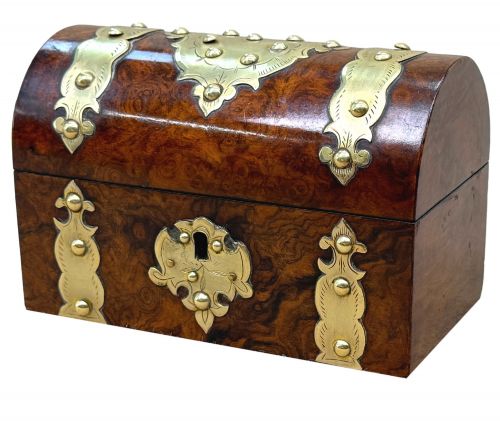
When you search for a 19th century letter box, you encounter pieces designed for the country house, hotel, or private chapel, originating primarily from the Victorian era. These items span forms such as correspondence boxes, post boxes, stationery boxes, and wall-hanging examples.
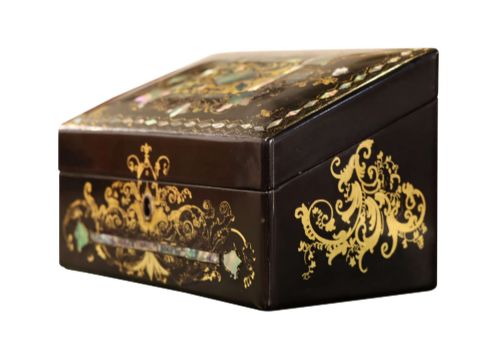
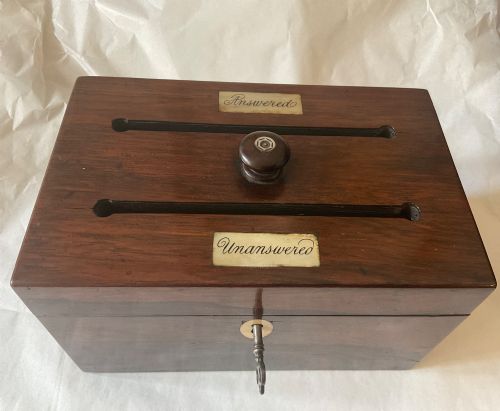
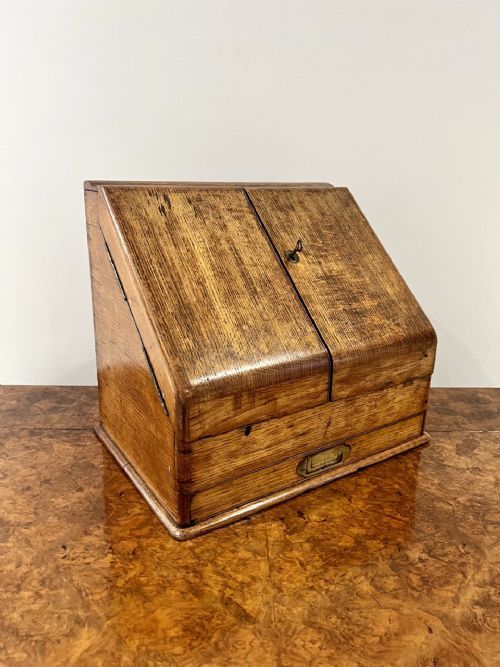
The most common variations on this page include mahogany, oak, and papier-mâché constructions, often associated with domestic correspondence and stationery storage. Pieces frequently reflect mid-century production, particularly around eighteen-fifty and eighteen-sixty.
Domestic and country house examples dominate the selection, functioning as secure receptacles for incoming and outgoing post before regular rural postal collections became widespread.
Materials and construction methods
Makers utilised solid timbers such as mahogany and oak, alongside papier-mâché and lacquer finishes, to build these desk accessories. Structural joinery and carved details demonstrate the standard cabinet-making techniques of the period.
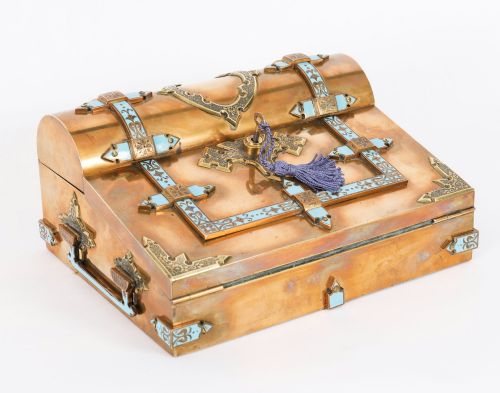
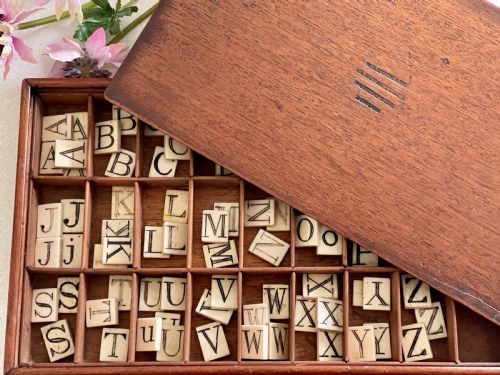
Surface decoration incorporates materials such as mother-of-pearl inlay, bone details, and specific design influences like the Pugin style seen on chapel examples.
19th Century Letter Box Retail Price Guide 2026
Typical asking prices for 19th century letter box among the pieces listed under this phrase on Sellingantiques today, from the lower quarter to the upper quarter. They describe what is for sale here now, not the wider market.
Judging quality and execution
Quality separates standard utilitarian containers from exceptional country house pieces through the choice of timber figure, such as tiger oak, and the crispness of carved elements. The integration of functional elements like working locks and keys also distinguishes better examples.
The sophistication of surface embellishments, from lacquer work to mother-of-pearl inlay, marks the distinction between workshop production and finer bespoke commissions.
The 19th Century Letter Box Glossary
- Correspondence box
- A desk accessory specifically intended for holding writing paper, envelopes, and incoming letters.
- Stationery box
- A lidded container featuring internal divisions for organising various sizes of paper and writing implements.
- Papier-mâché
- A composite material made from paper pulp or layers of paper bound with glue, often lacquered and decorated.
- Tiger oak
- Quarter-sawn oak displaying prominent medullary rays that produce a distinctive tiger-stripe pattern.
- Pugin design
- A decorative style inspired by the architectural and design principles of Augustus Pugin, often featuring Gothic revival motifs.
19th Century Letter Box: Frequently Asked Questions
What is a 19th century letter box?
These pieces are wooden or papier-mâché desk containers created during the nineteenth century to store household post and writing paper.
They served households before modern postal delivery systems made domestic collection boxes common.
How were letter boxes used?
Families used them to keep incoming and outgoing correspondence neat and secure on a desk or hall table.
Some variants were wall-hanging to allow members of a household to drop in post for collection.
How do I identify a Victorian piece?
Victorian examples date from the nineteenth century and often reflect revival styles or country house utility.
Specific characteristics include carved oak decoration and Pugin-inspired chapel designs.