



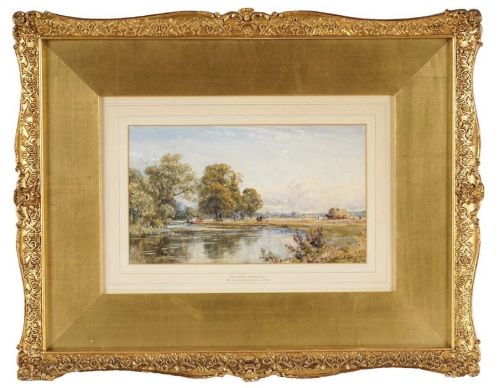
19th Century Landscape Watercolour
A 19th century landscape watercolour captures the topography and atmosphere of the British countryside and beyond through delicate pigment on paper.
What They Are
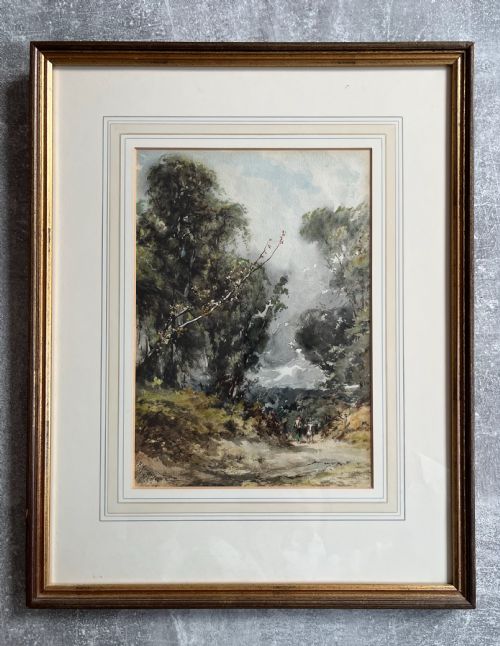
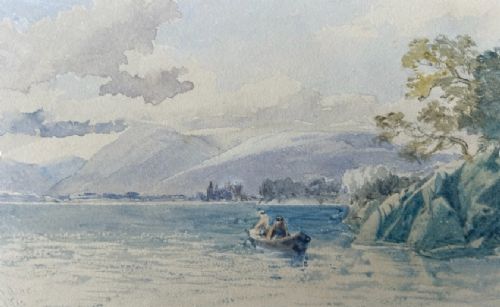
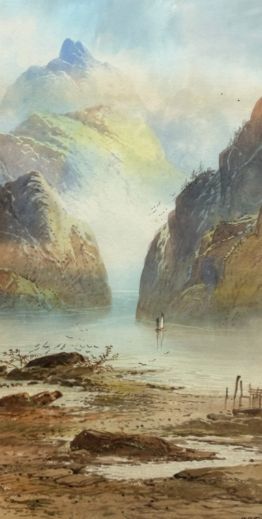
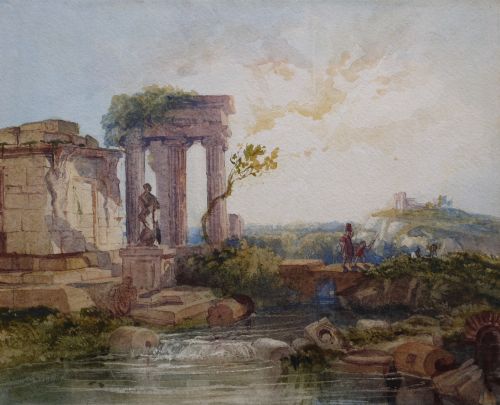
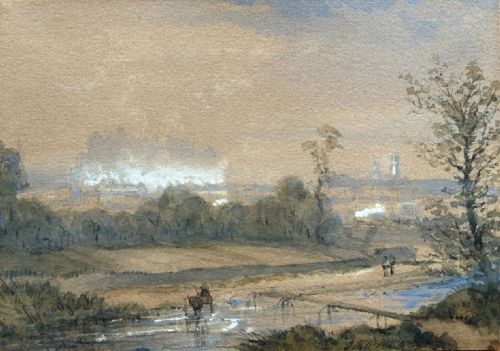
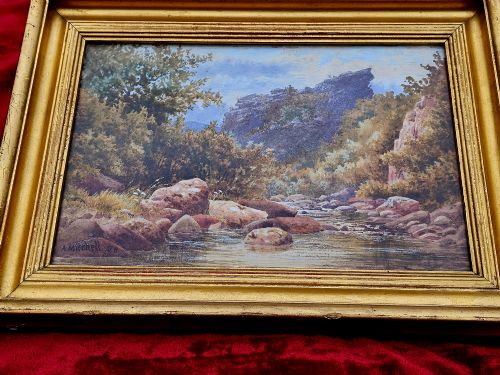
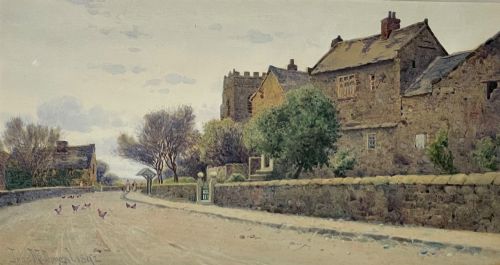
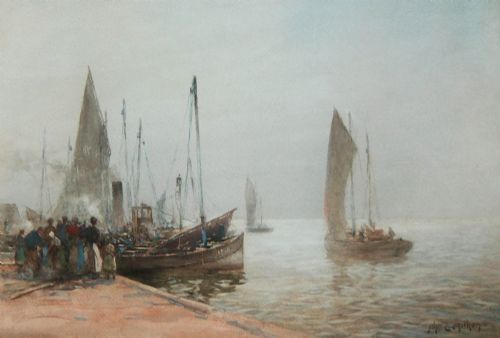
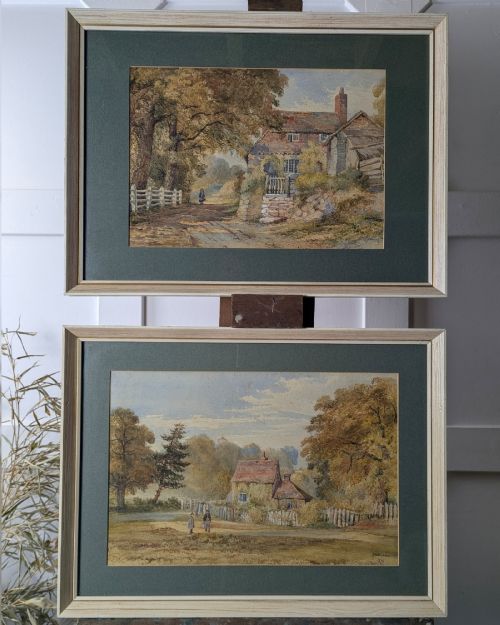
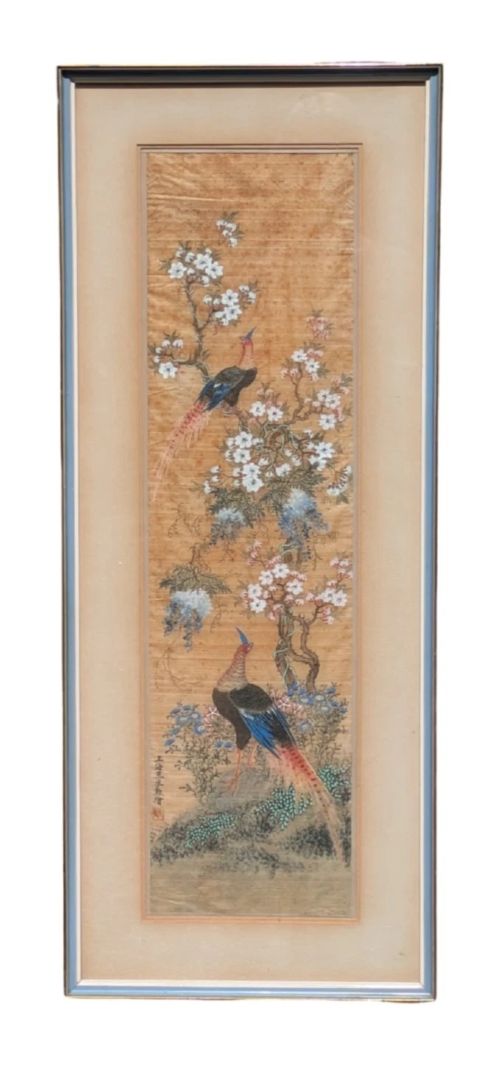
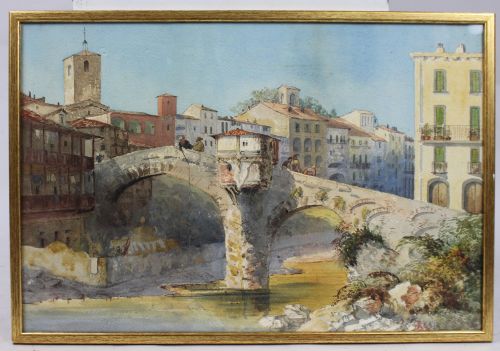
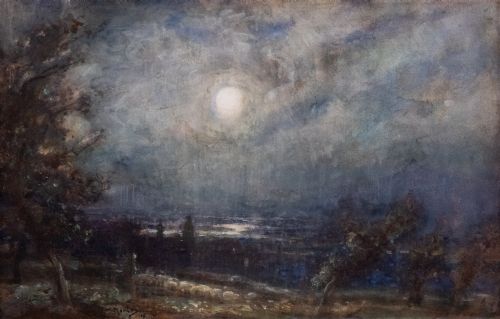
A 19th century landscape watercolour is an original painting executed on paper using water-soluble pigments, recording views from British rivers, Welsh mountains, and coastal harbours. The examples found here span the Victorian and Edwardian periods, reflecting an era when topographical recording and picturesque scenery dominated artistic output.
Most pieces on this page represent rural and pastoral subjects, including woodland clearings, highland cattle, and river valleys. These works often bear signatures from named practitioners of the British School, framed behind glass in wood or gilt mouldings.
How They Were Made
Artists applied watercolour pigment suspended in water onto heavy paper sheets, sometimes utilising a monochrome grisaille underpainting to establish tone before adding colour. Gum arabic was frequently mixed with the pigment to deepen hues and provide a glossy finish to specific areas of the composition.
Finished sheets were mounted behind glass within wooden frames, occasionally accented with gold leaf. This method protected the fragile paper support from atmospheric moisture while allowing natural light to illuminate the translucent layers of pigment.
Retail Price Guide 2026
Typical UK retail prices for 19th century landscape watercolour, calculated from the Sellingantiques database of over a million retail prices indexed since 2003. This retail price guide relies exclusively on Sellingantiques data; no external sources or auction records are used, so the figures do not describe the wider market.
Represented periods span the 18th century through the Edwardian era, capturing evolving British landscape painting traditions.
What Varies in Quality
The distinction between ordinary and exceptional works rests upon the surety of the brushwork and the handling of atmospheric light. Master practitioners achieve depth through transparent washes and precise pencil underdrawing, whereas lesser examples rely on heavy, opaque applications that obscure the paper support.
Compositional balance and the preservation of the paper also dictate the standing of a piece. Works that retain their original pigment intensity without excessive fading demonstrate superior storage and higher-grade materials from the outset.
Stuart Lloyd·Edmund George Warren·Cornelius Pearson·Arthur Willett·John D Walker
The 19th Century Landscape Watercolour Glossary
- Grisaille
- A painting executed entirely in shades of grey, neutral grey, or monochrome to resemble relief or establish foundational tone before glazing with colour. This technique was frequently employed for early sketches and topographical studies.
- Gilt Wood
- Timber framing coated with a thin layer of gold leaf or metallic powder, commonly used on Victorian frames to enhance the presentation of works on paper. It provides a reflective boundary between the image and the wall.
- Watercolour Pigment
- Finely ground colour particles mixed with a water-soluble binder such as gum arabic, applied in washes to paper. The transparency of the medium relies on the white of the paper shining through the pigment layers.
- British School
- A loose categorization for artists trained or working within Britain, sharing stylistic approaches to landscape and portraiture across the eighteenth and nineteenth centuries. It encompasses both named academicians and regional painters.
Frequently Asked Questions
How should I frame these watercolours?
These works require framing behind glass with acid-free mounts to prevent the paper from touching the glazing. Keeping the backing sealed protects the fragile pigment from humidity and dust.
Direct sunlight causes watercolour pigments to fade permanently over time. Position these pieces on interior walls away from direct windows to preserve the original colour intensity.
How do I identify a Victorian landscape?
Victorian landscapes often feature detailed topographical views of rivers, coastlines, or pastoral scenes with livestock. Signatures, dates, and framing styles frequently corroborate the period.
Examining the paper stock and framing materials helps distinguish authentic nineteenth-century works from later reproductions. Early papers often show distinct watermarks and heavier textures.
What is grisaille used for?
Grisaille involves painting entirely in monochrome grey tones to establish light and shadow before applying transparent colour washes. Artists used this method to map out complex topographical views.
Some nineteenth-century works remain as finished grisaille sketches rather than fully tinted compositions. These monochromatic pieces focus purely on form and tonal gradation.
Are these works signed?
Many pieces feature artist signatures, initials, or inscriptions noting the location depicted in the lower corners. Researching these names often reveals biographical details within the British School.
Unsigned works do occur, attributed instead to a period or regional school based on technique and paper type. Verso inscriptions sometimes provide clues regarding the subject or date.