




19th Century Kazak Rug
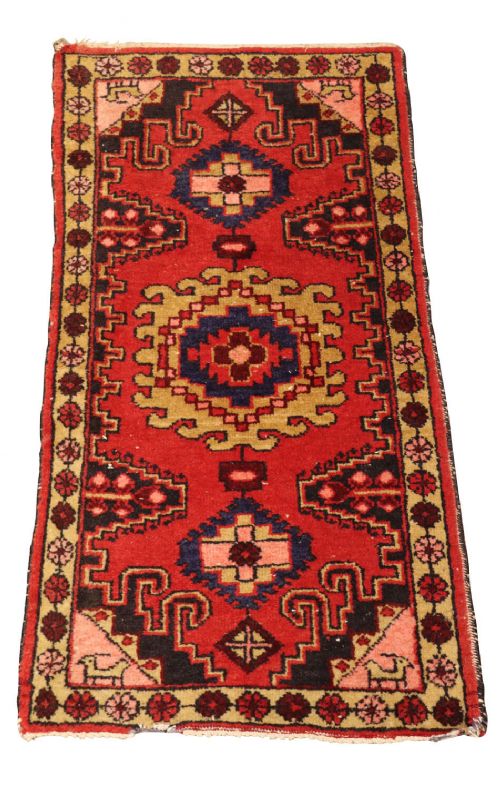
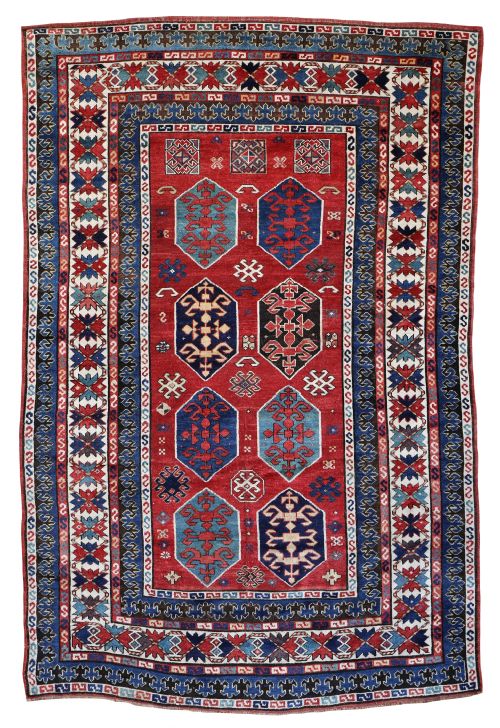
When a 19th century kazak rug catches your eye, you are looking at tribal wool floor coverings from the Caucasus region defined by bold geometric medallions and folk motifs.
19th Century Kazak Rug
A 19th century kazak rug brings distinct Caucasian tribal weaving traditions into domestic spaces, appearing as square formats, prayer niches, long runners, and standard area rugs. The pieces recorded here span from the mid-nineteenth century through to about nineteen hundred, showcasing regional subgroup designs such as Bordjalou, Gendje, Karachov, Moghan, Sewan, Fachralo, and Chelaberd.
Makers utilised characteristic formats including triple medallions, hooked motifs, key hole designs, Memling guls, animal figures, and diagonal stripes. These floor coverings served practical functions within nomadic and village communities before entering the wider antique market.
How They Were Made
Weavers constructed these textiles using wool and hand-spun wool, employing hand-knotting techniques to build a durable pile that often retained a glossy finish. Natural dyes yielded the saturated blue, yellow, and red grounds seen across the regional variations.
The density of the knotting and the quality of the spun wool determined the resilience of the pile, allowing surviving examples to endure generations of use while maintaining their structural integrity.
19th Century Kazak Rug Retail Price Guide 2026
Typical asking prices for 19th century kazak rug among the pieces listed under this phrase on Sellingantiques today, from the lower quarter to the upper quarter. They describe what is for sale here now, not the wider market.
Several rugs capture historical village life by including charming folk art depictions of horses and people alongside traditional geometric guls.
What Varies in Quality
The visual strength of a piece depends on the crispness of the geometry and the saturation of the colour palette, where scarce grounds like yellow or blue elevate the work. Consistency in the hand-spun wool and regularity in the execution of tribal symbols separate standard village output from the most accomplished regional weaving.
Proportion and scale also dictate distinction, whether found in an unusual square format or a balanced triple medallion layout. The preservation of the original borders and the retained length of the glossy pile contribute significantly to the standing of any individual textile.
The 19th Century Kazak Rug Glossary
- Kazak rug
- A tribal hand-knotted wool floor covering originating from the Caucasus region during the nineteenth century. These pieces are recognised by their bold geometric designs and saturated primary colours.
- Prayer rug
- A textile featuring a niche design intended for devotional use. The architectural arch points toward Mecca during daily prayers.
- Memling gul
- An octagonal guls motif with hooked edges, named after the fifteenth-century painter Hans Memling who depicted similar carpets. This geometric emblem appears frequently in Caucasian and Anatolian weaving.
- Boteh
- A teardrop or almond-shaped motif with a curved upper end, symbolising a cypress tree or a floral spray. It appears across runner and long rug designs.
- Latch hook
- A geometric extension attached to medallions or borders that creates stepped, zigzag outlines. This technique is characteristic of Caucasian tribal design vocabulary.
19th Century Kazak Rug: Frequently Asked Questions
Where were kazak rugs made?
These textiles were woven by tribal and village communities in the Caucasus region, spanning areas that encompass modern-day Armenia, Azerbaijan, and Georgia. Different valleys and settlements developed distinct visual vocabularies.
Local weaving groups passed down specific medallion layouts and border patterns through generations, creating recognisable regional styles such as Bordjalou, Gendje, and Karachov.
How do I care for a nineteenth century rug?
Protect the textile by placing it in a low-traffic area away from direct sunlight, which can fade natural wool dyes over time. Use a quality underlay to prevent slipping and cushion the wool pile against hard floors.
Vacuum gently using suction only without a rotating brush roll to avoid pulling the hand-spun knots. Professional cleaning by a specialist in antique oriental textiles is recommended when deep maintenance is required.
What is a prayer niche design?
A prayer niche format incorporates a pointed arch or mihrab shape at one end of the rug field. This architectural motif directed the user toward Mecca during daily devotional practices.
Collectors value these compositions for their focused symmetry and the symbolic iconography contained within or around the arch.
How do I identify a Bordjalou kazak?
Bordjalou examples typically feature large, bold geometric medallions, often incorporating hooked motifs or distinctive panel designs along the field. The layouts tend toward stark abstraction and powerful visual contrast.
Strong primary colours combined with these specific medallion arrangements set them apart from other regional subgroups like Gendje or Moghan.