

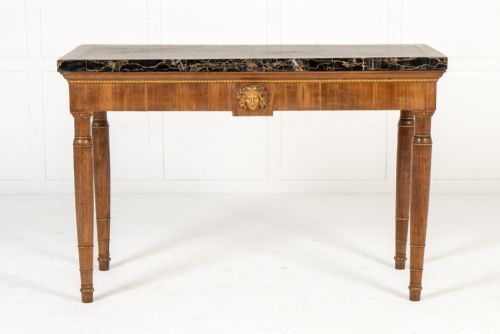
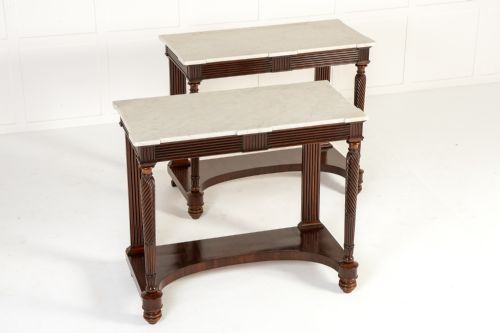


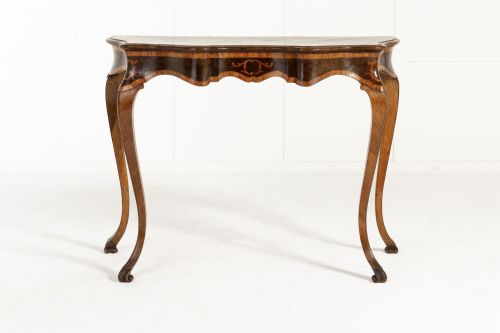


19th Century Italian Console
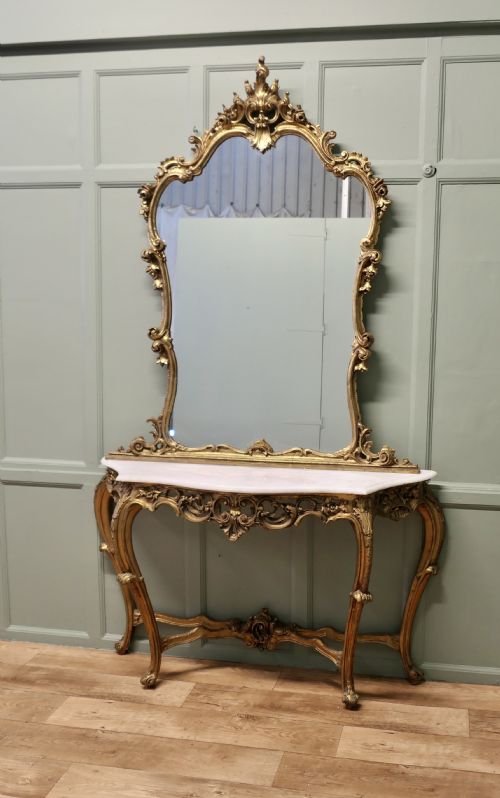
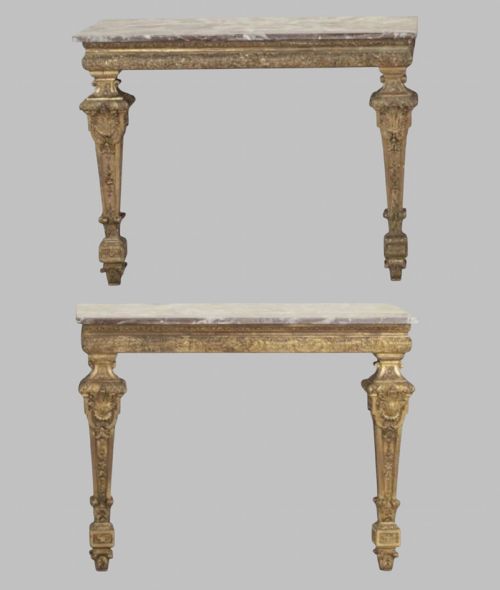
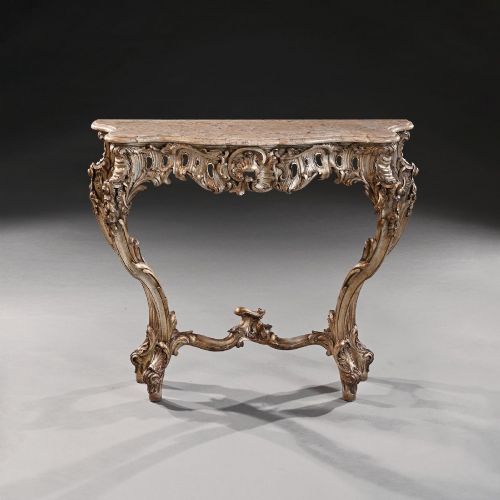
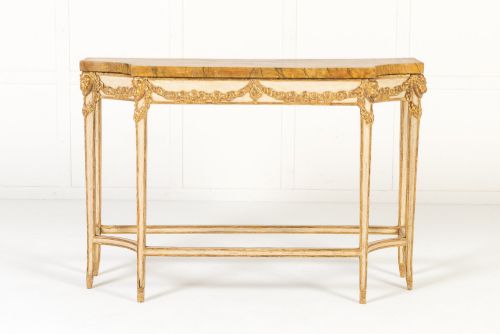
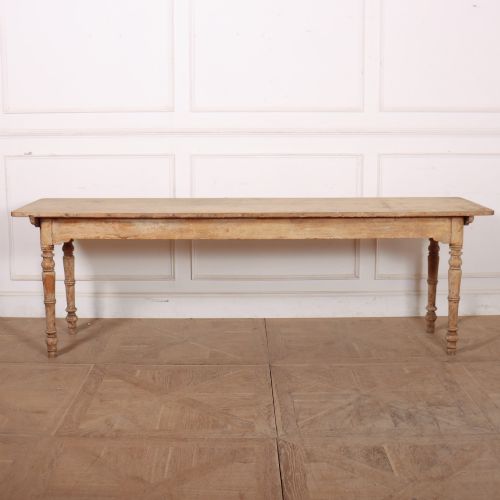
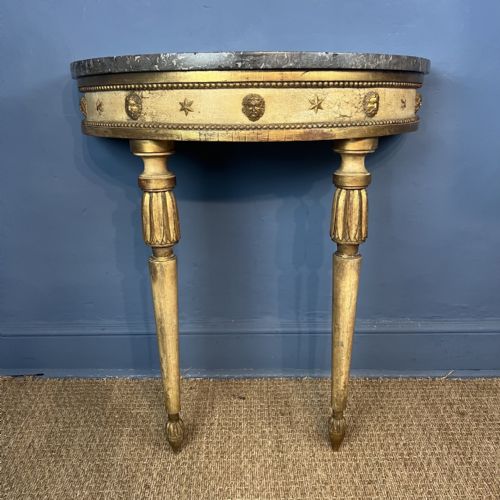
A 19th century italian console brings architectural scale and rich carving to a hallway, often paired with marble tops and gilded finishes.
19th Century Italian Console
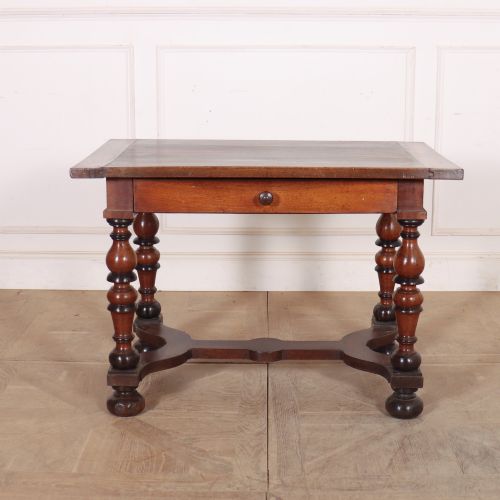
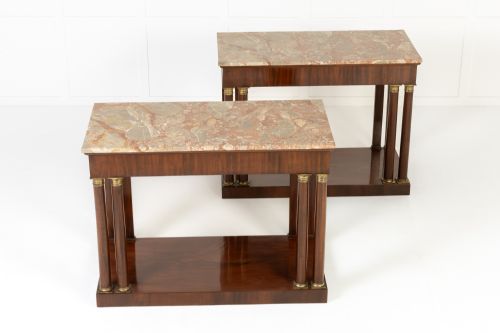
When you search for a 19th century italian console, you encounter tables designed to stand against a wall, frequently topped with marble. Console tables and side tables dominate the selections, alongside wall brackets and centre tables.
The aesthetic vocabulary draws heavily from Italian Neoclassical, Baroque, Empire, and Rococo Revival styles. Walnut, mahogany, and painted or gilt surfaces recur constantly across the pieces.
Most examples originate from the nineteenth century, though earlier eighteenth-century influences and later revival dates into the early twentieth century appear. Grand-scale northern pieces and delicate painted side variants both emerge in the records.
Construction and materials
Carpenters utilised European timbers such as walnut, mahogany, fruitwood, and burr yew to build the structural frames. Giltwood and gesso applied over wood provided the foundation for gold leaf and silver gilt ornamentation.
Surfaces frequently combined paint with parcel gilt highlights, or displayed exposed flame mahogany and carved walnut details. Heavy marble tops, including pink Salome varieties, required sturdy timber base structures to support their weight.
19th Century Italian Console Retail Price Guide 2026
Typical asking prices for 19th century italian console among the pieces listed under this phrase on Sellingantiques today, from the lower quarter to the upper quarter. They describe what is for sale here now, not the wider market.
Design influences stretch from Italian Baroque and Renaissance Revival to Neoclassical and Brighton Pavilion styles.
Judging quality in these tables
Quality rests on the depth and crispness of the wood carving, particularly on giltwood dolphin supports, putto figures, or intricate pier lamp bases. Master carvers executed figural details with a precision that elevates the piece beyond standard production.
The selection of materials dictates distinction, with figured burr yew, flame mahogany, and specially chosen marble slabs marking out superior workshops. Original painted and parcel gilt finishes retain an integrity that heavy restoration diminishes.
Luigi Frullini
The 19th Century Italian Console Glossary
- Console table
- A table supported by wall brackets or console legs, designed to stand flat against a vertical surface. They often feature shaped marble tops.
- Parcel gilt
- A finishing method where only specific portions of a painted or wood surface receive gold leaf. It highlights carved details like foliage or mouldings.
- Gesso
- A plaster mixture applied to wood surfaces as a smooth base for gilding and painting. It allows carvers to achieve sharp relief details.
- Pier table
- A table designed to fit against the wall space between two windows, frequently positioned beneath a mirror.
19th Century Italian Console: Frequently Asked Questions
Where do you place a console table?
These tables find their natural home in hallways, entrance passages, or against primary walls in reception rooms. Because they traditionally anchor against a vertical surface, they serve well beneath large mirrors or paintings.
Their shallow depth allows them to fit narrow circulation spaces without blocking movement. Grand-scale examples also function effectively in larger dining rooms as serving tables.
How do marble tops affect the weight?
Marble adds substantial mass to the upper section of the furniture, requiring robust joinery in the timber base. Most pieces balance this weight using sturdy console legs or wall brackets.
When moving or positioning these tables, lifting the marble separately from the wooden base prevents structural strain on the frame.
What is the difference between walnut and mahogany?
Walnut surfaces often display rich grain patterns and warm brown tones, favoured heavily in Italian Baroque and Renaissance Revival designs. Mahogany, including flame varieties, provides a denser, darker reddish-brown appearance associated with grander formal statements.
Both timbers were prized by cabinetmakers for their ability to hold crisp carved details.
How do I identify a giltwood finish?
Giltwood consists of a thin layer of gold leaf applied over a prepared gesso and bole ground on timber. Under magnification, you may see the subtle seams where individual gold leaves overlap.
Over time, wear reveals the reddish bole underneath the gold, which helps indicate age and authenticity.
What is a wall bracket?
A wall bracket is a decorative architectural support fixed directly to the wall to hold objects or smaller display surfaces. In this collection, they share the carved giltwood vocabulary of the console tables.
They provide vertical display interest without occupying floor space.