


19th Century Hanging Cabinet
A 19th century hanging cabinet offers clever wall storage through compact cupboards, corner designs and display shelves crafted to save floor space.
19th Century Hanging Cabinet
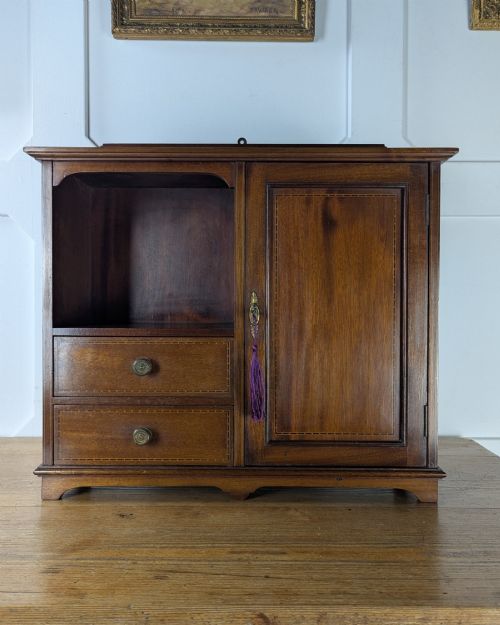
When you search for a 19th century hanging cabinet, you encounter wall cupboards, corner cabinets and display shelves originating from English, French, Dutch, and Scandinavian workshops. These pieces span the Victorian era, Georgian period, and late nineteenth century, taking forms from simple kitchen racks to inlaid parlour cabinets.
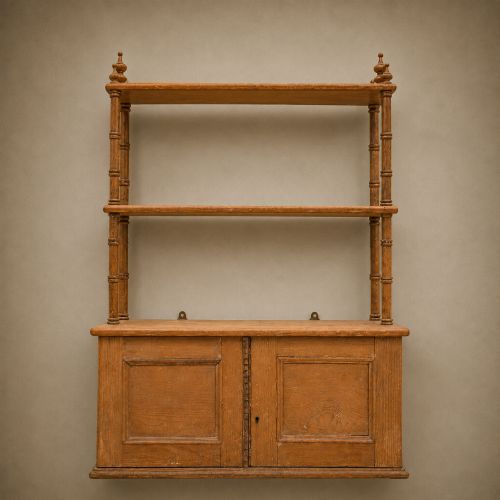
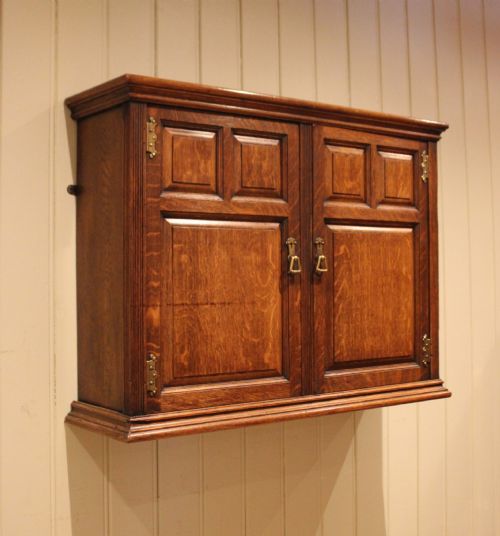
The most common versions on this page are pine and painted wall cupboards from Scandinavia alongside mahogany corner cupboards and oak wall cabinets from Britain. Makers utilised domestic timber for practical household storage, mounting them on walls to keep provisions, spices, and precious objects close at hand.
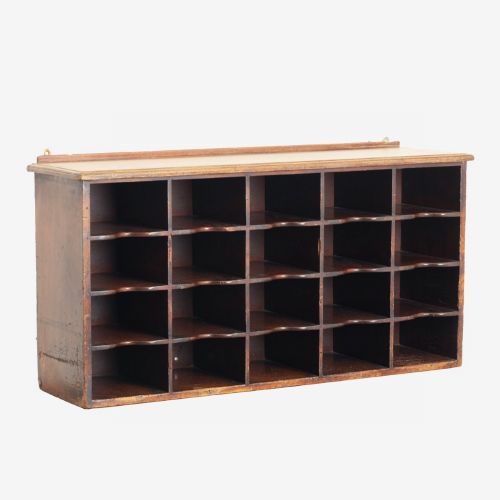
Beyond standard cupboards, the selection includes specialised desk organisers, kitchen knife boxes, and glazed display cases designed to mount securely on walls. These objects reflect the varied domestic and regional requirements of nineteenth-century households across Europe.
How they were made
Cabinet makers constructed these pieces predominantly from solid oak, mahogany, and pine, frequently employing contrasting veneers such as satinwood, ebony, and abalone for inlay work. Workshops also utilised walnut, limewood, and beech, shaping them with carved details, barley twists, or geometric mouldings.
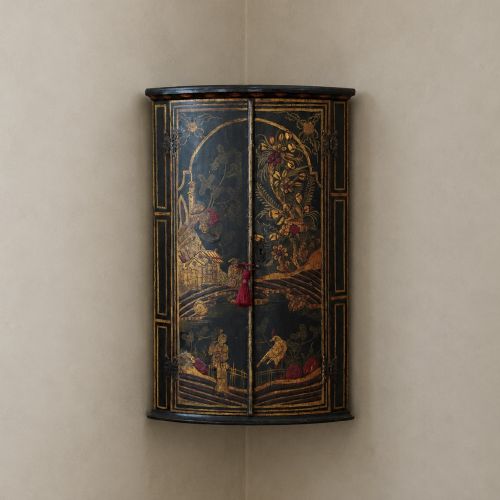
Surface treatments varied widely from clear polished flame mahogany and waxed oak to painted finishes in Scandinavian folk art styles and japanned Chinoiserie. Brass hinges, iron fixings, and glass panels completed the construction, securing doors and protecting the contents displayed within.
Materials span native pine and oak alongside exotic satinwood, abalone, and bone inlay.
What varies in quality
Quality rests in the selection of timber, the crispness of the carving, and the sophistication of the joinery rather than mere age. Pieces featuring figured flame mahogany, intricate satinwood inlay, or well-preserved original paint surfaces stand apart from plain utilitarian boxes.
The structural integrity of the hanging mechanism and the fidelity of period details, such as hand-cut dovetails and original brass hardware, define the upper tier of these wall-mounted pieces.
Town and Emanuel·William Yale
The 19th Century Hanging Cabinet Glossary
- Japanned
- European imitation of East Asian lacquerwork, created by applying layers of varnish and metallic powder to a wooden surface. This technique appeared on fashionable cabinets during the period.
- Bow front
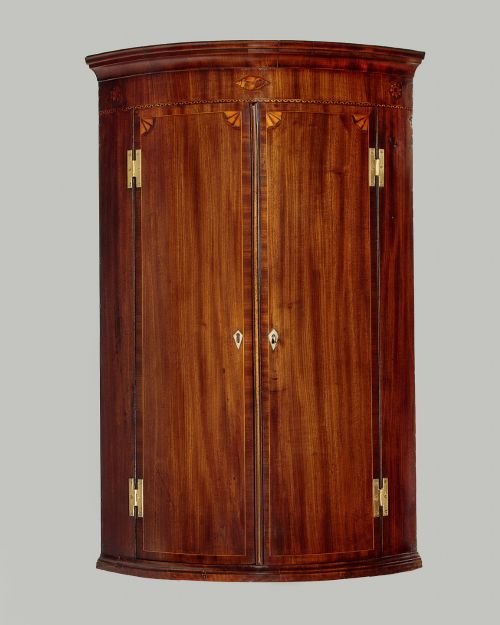
- A convex, curved cabinet front that projects outward in a smooth arc. This shape softened the corners of rooms, particularly in corner cupboards.
- Flame mahogany
- Mahogany timber sliced to reveal a distinctive, flamy grain pattern resembling flickering fire. Cabinet makers prized this veneer for principal doors and panels.
- Barley twist
- A decorative column or spindle carved in a spiral resembling a twisted rope. This turning style appears frequently on nineteenth-century furniture frames.
- Aesthetic Movement
- A late nineteenth-century design style emphasising visual beauty over narrative meaning, drawing inspiration from Japanese art. Anglo-Japanese walnut cabinets typify this approach.
19th Century Hanging Cabinet: Frequently Asked Questions
How were hanging cabinets mounted?
These cabinets relied on internal screw fixings or sturdy rear brackets fastened directly to wall studs or masonry. Carpenters designed them to bear the weight of heavy contents like ceramics and books safely.
Today, hanging them securely requires locating appropriate wall supports to ensure the antique structure bears no undue strain.
What rooms suit a wall cabinet?
Kitchens, hallways, and studies accommodated these compact units originally, providing accessible storage without cluttering floor space. Spice boxes and knife racks served culinary areas, while larger glazed cases held books or collections.
In modern interiors, they function effectively in bathrooms for toiletries or in living spaces for displaying small objects.
How do I spot original paint?
Original painted surfaces display natural wear, stable craquelure, and subtle colour softening accumulated over generations. Pigments settled into the wood pores differently than modern synthetic paints.
Examining the edges and interior surfaces reveals whether the pigment dates to the nineteenth century or stems from later redecoration.
Why choose a corner cupboard?
Corner cupboards made efficient use of awkward domestic angles in smaller nineteenth-century rooms where floor space remained at a premium. Their curved or angled doors directed attention into the room while concealing ample shelving.
They break up flat wall expanses and introduce architectural depth to domestic interiors.