



19th Century Glass Chalice
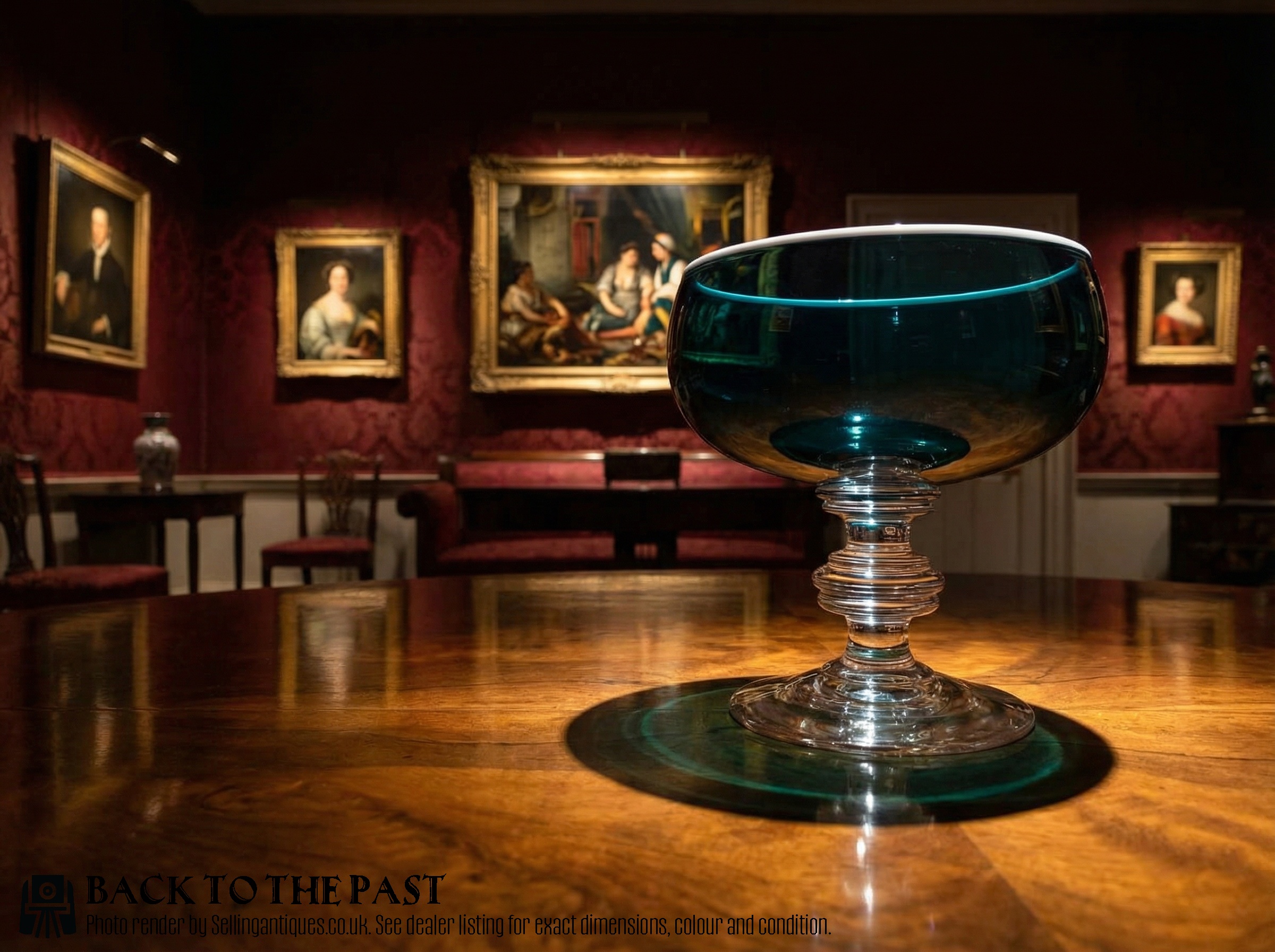
A 19th century glass chalice is a heavy, ceremonial drinking vessel, and here you find heavy lead glass rummers, enamelled goblets, and cut crystal pieces.
19th Century Glass Chalice
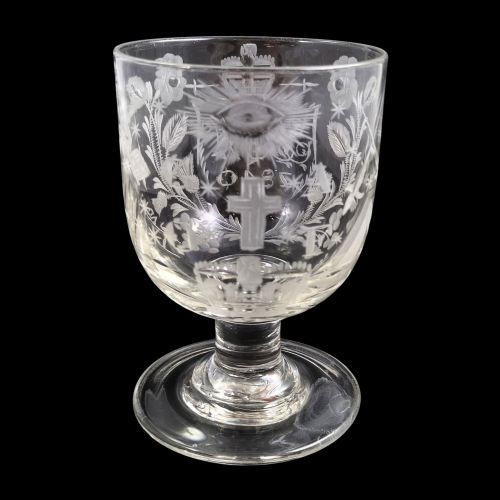
When you search for a 19th century glass chalice, you encounter substantial stemmed vessels originating from Georgian, Regency, and Victorian periods. These pieces include large table rummers, engraved goblets, and decorative vessels produced across England, France, and Bohemia.
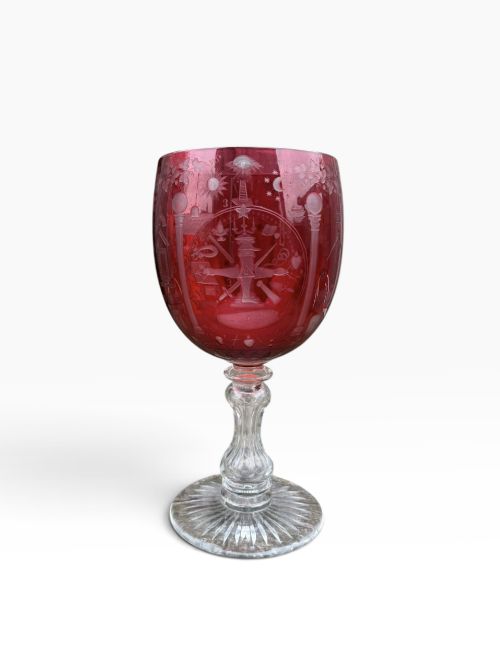
The version you most frequently meet on this page is the English lead-glass rummer or the heavily decorated Victorian and Bohemian goblet. These range from simple cut crystal forms to elaborate enamelled and gilt creations spanning the entirety of the nineteenth century.
How they were made
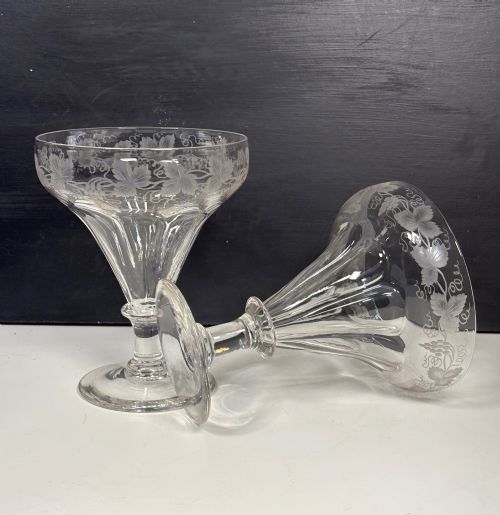
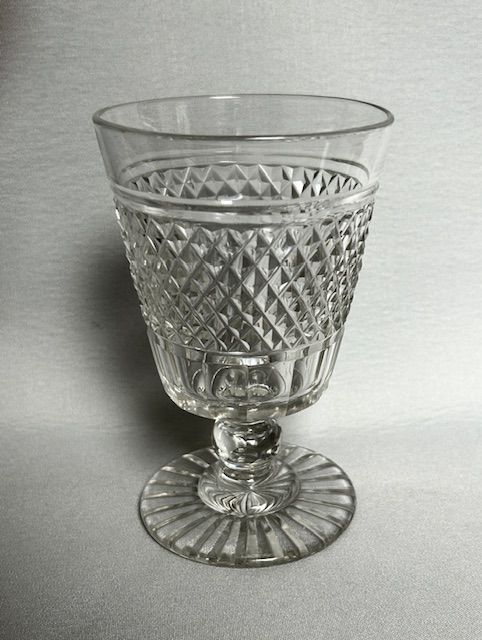
Maker utilise lead crystal, flint glass, and coloured glass such as cranberry and deep green, often shaping them through heavy blowing and pedestal moulding. Surface decoration involves intricate wheel-cutting, hobnail patterns, intaglio engraving, and frosted finishes.
Many elaborate examples receive further embellishment through gold leaf application, surface gilding, and polychrome enamelling. French and Bohemian workshops frequently employ triple cased glass techniques and delicate armorial enamel work.
Hops and barley motifs appear frequently on English rummers, reminding drinkers of the ale inside.
What varies in quality
The standard of cutting and engraving largely dictates the merit of a piece, separating crisp, deep wheel-cut facets from soft, shallow impressions. The clarity of the lead glass and the precision of the stem and foot formation also indicate superior workshop production.
In decorated examples, the preservation of original gold leaf gilding and hand-applied enamel work defines the upper tier. Superior vessels display careful attention to proportion, balanced weight, and minimal internal glass impurities.
Lobmeyer
The 19th Century Glass Chalice Glossary
- Rummer
- A heavy, large-bowled drinking glass popular during the Georgian and Regency periods. It typically sits on a short stem and sturdy foot, originally designed for ale, wine, or punch.
- Lead Crystal
- A high-clarity glass containing lead oxide, which increases the weight, refractive index, and workability for cutting. It produces a distinct ring when struck.
- Intaglio
- A technique where the design is sunk below the surface of the glass rather than raised. Artisans achieve this by fine wheel-engraving.
- Cased Glass
- Glass composed of two or more distinct layers of different colours. Artisans cut through the outer layer to reveal the contrasting colour beneath.
- Armorial
- Bearing a coat of arms or heraldic crest. These are often enamelled or engraved onto presentation and ceremonial goblets.
19th Century Glass Chalice: Frequently Asked Questions
What is a 19th century glass chalice used for?
These vessels served primarily for ceremonial toasts, formal dining, and celebratory gatherings throughout the Georgian and Victorian eras. Larger rummers and goblets held ale, wine, or punch.
Today, collectors appreciate them as cabinet display pieces or centrepieces rather than for daily use. Their substantial weight and decorative cutting make them striking decorative objects.
How do I tell Georgian from Victorian examples?
Georgian and Regency pieces tend to feature simpler, heavier forms with thick lead glass, bucket bowls, and straightforward hobnail or linear cutting. They emphasise the purity and weight of the metal itself.
Victorian and later nineteenth century pieces frequently introduce colour, such as cranberry and green, alongside elaborate enamelling, gilding, and figurative designs. They reflect the historicism and eclectic tastes of the later period.
Are these glasses safe to drink from?
While technically usable, antique lead glass requires gentle handling and hand washing to protect delicate rims and historic surfaces. Thermal shock and harsh detergents can damage nineteenth century material.
Most collectors treat these pieces as historical artefacts rather than functional tableware. Displaying them safely preserves the remaining gilding and delicate engraving.
Where were these chalices manufactured?
Production centres span North-East England, London, France, and Bohemia, each region contributing distinct stylistic traits. English makers focused heavily on heavy lead-glass rummers with wheel-engraved hops and barley.
Continental workshops, particularly in Bohemia and France, excelled in coloured glass, opalescent finishes, and elaborate enamel work. This geographic variety creates a diverse range of forms on the market.