
19th Century Fusee Clock
When you search for a 19th century fusee clock, you encounter timepieces driven by a conical pulley and chain or cord to equalise the mainspring pull.
19th Century Fusee Clock
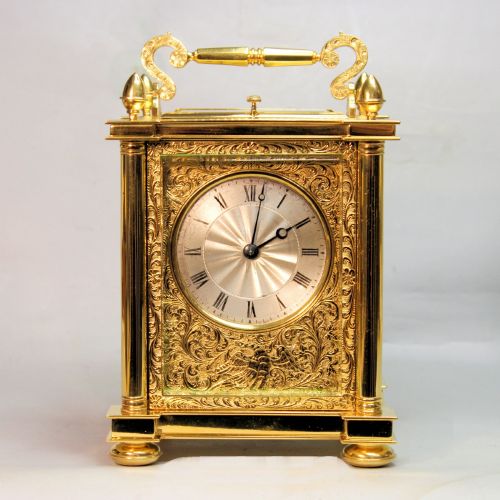
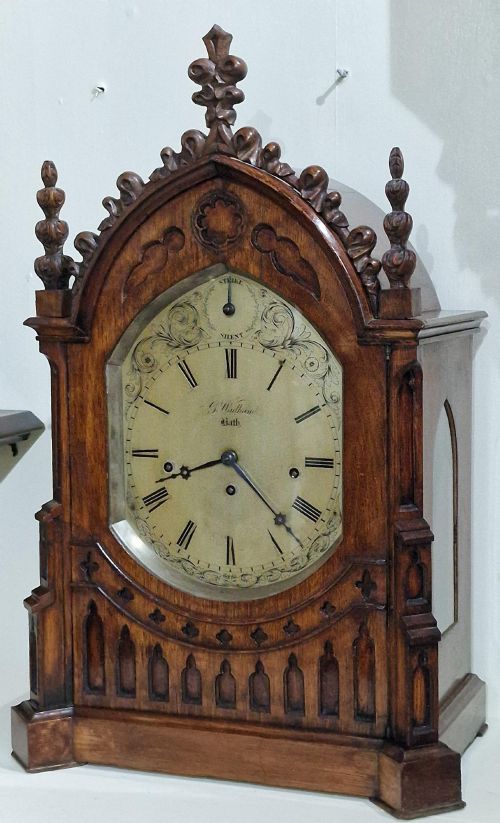
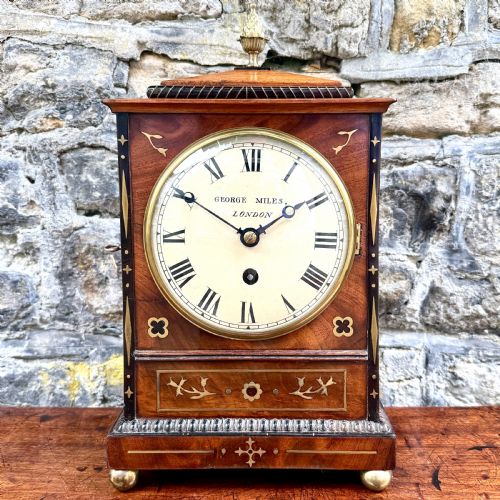
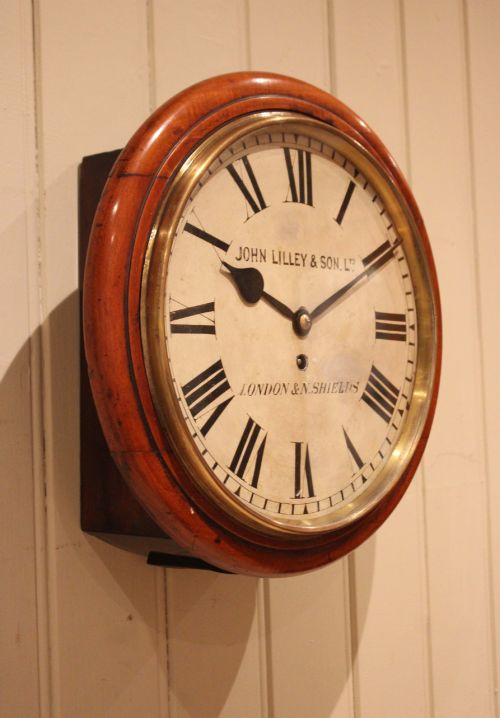
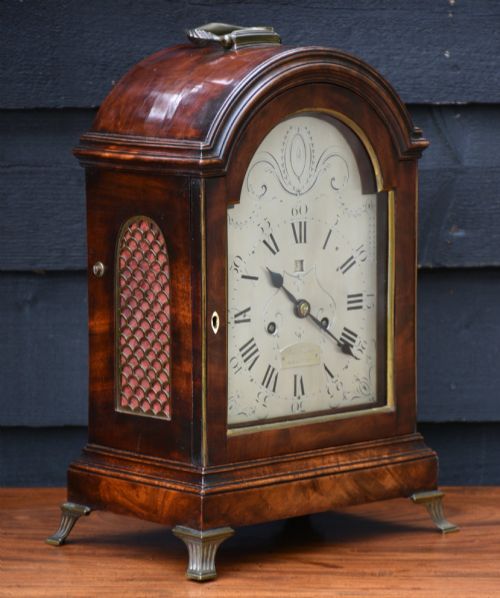
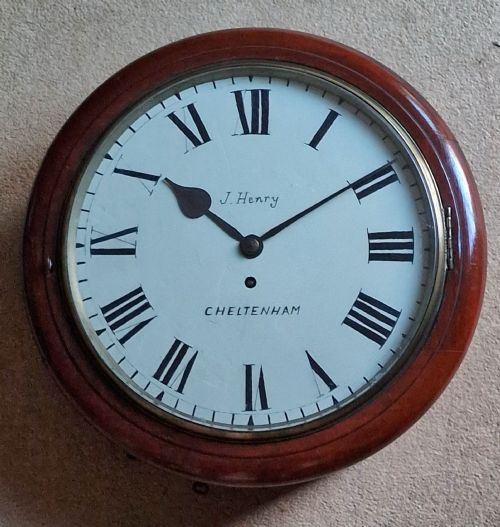
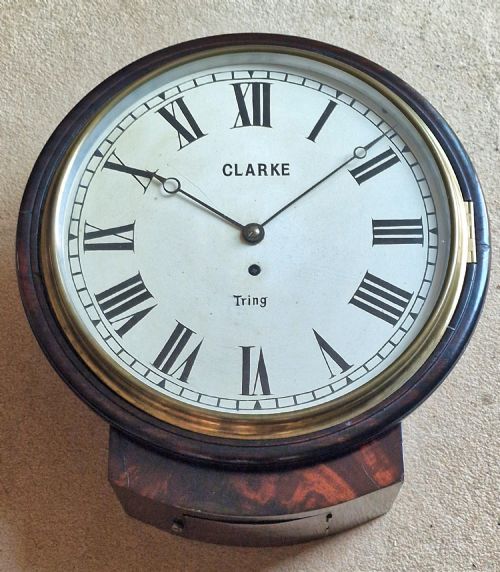
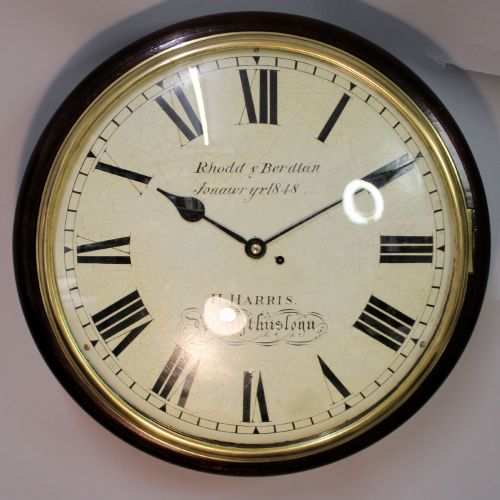
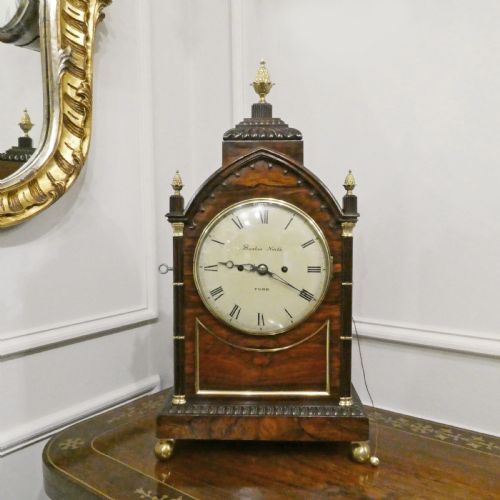
A 19th century fusee clock encompasses several distinct forms designed for different domestic and public settings, ranging from simple wall-hung dial clocks to ornate bracket and skeleton clocks. The records show high numbers of mahogany dial clocks, often called station or office clocks, alongside library pieces and complex bracket clocks with twin or triple fusee movements.
The periods represented stretch from the Georgian and Regency eras through the reign of Victoria, capturing shifts in design from austere provincial timepieces to elaborate Victorian Gothic and Rococo revival styles. Wall-mounted dial clocks dominate the everyday finds, while skeleton clocks and brass-inlaid table pieces occupy the finer end of the surviving selection.
Makers working in London and provincial towns across England signed these movements, creating a record of regional clockmaking from York to Bath and small market towns. Buyers searching this phrase meet both simple timepieces meant for keeping steady time in a hallway and striking table clocks intended to dominate a mantelpiece.
How they were made
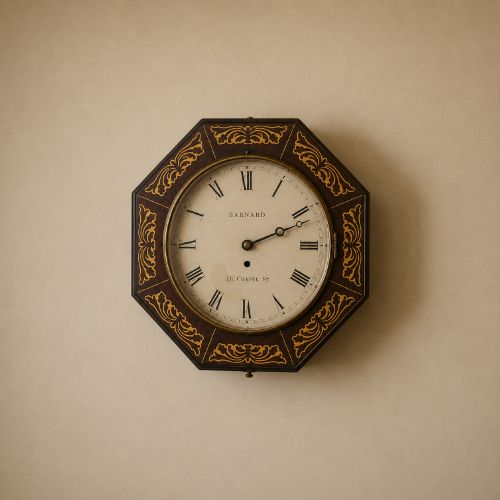
Casework relies heavily on native and imported timbers, with mahogany and rosewood forming the primary housings for wall and bracket clocks, supplemented by ebonised wood, oak, and occasional brass inlay. Dials use painted iron, silvered metal, white enamel, or turned wood, protected by heavy glass bezels.
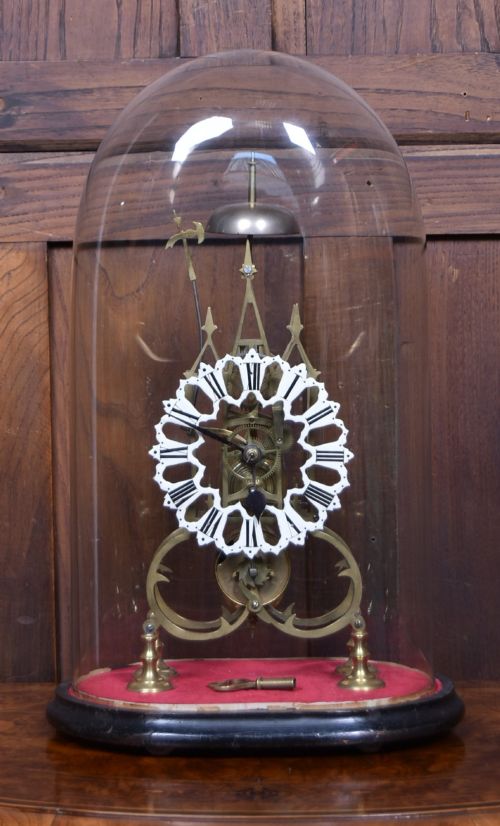
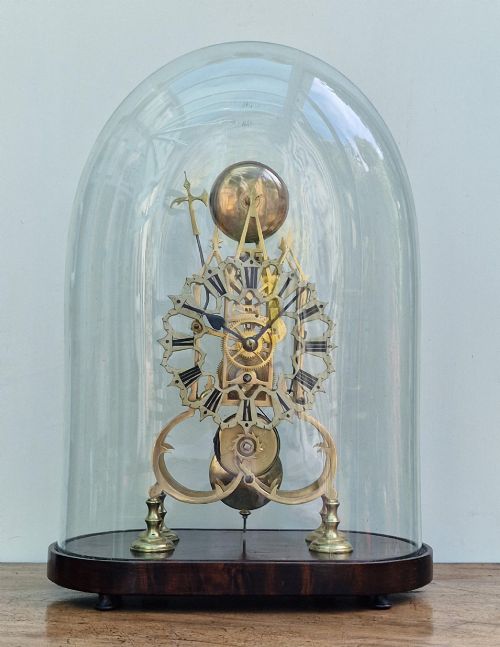
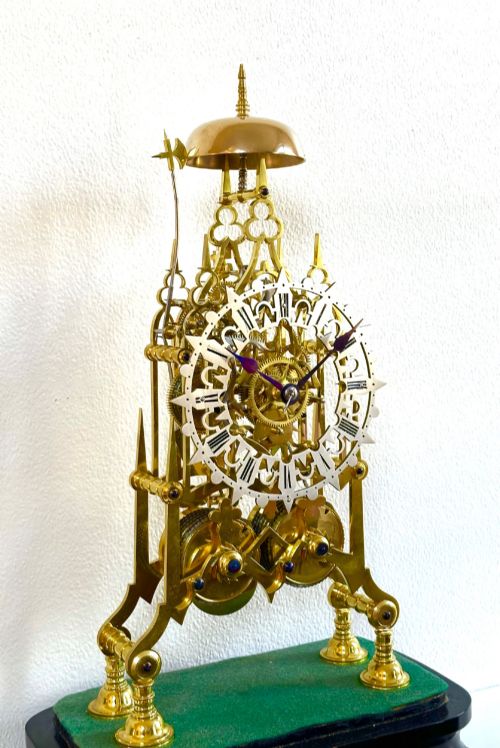
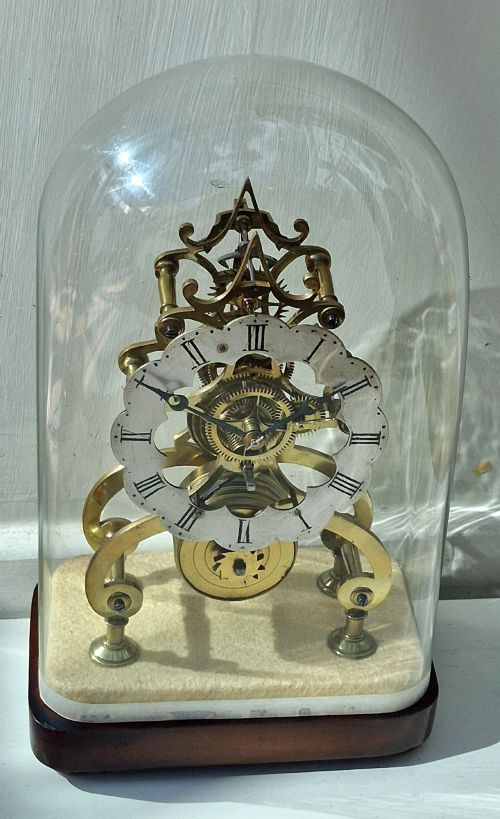
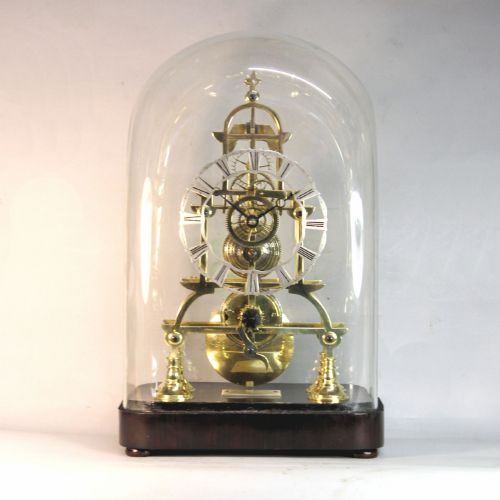
The technical heart of each piece is the fusee movement, a cone-shaped drum that moderates the decreasing power of the mainspring as it unwinds, ensuring even tension across the eight-day duration. Skeleton clocks expose this brass gear train between open metal plates, sometimes beneath a glass dome, while dial clocks conceal the mechanism behind a hinged wooden or metal bezel.
The listings show dial clocks housed primarily in mahogany and rosewood cases, spanning the Georgian, Regency, and Victorian periods.
What varies in quality
Quality separates simple time-only utility pieces from complex triple-fusee bracket clocks that strike bells or chime quarters. The crispness of the brass engraving on the dial plates, the caliber of the London or provincial maker, and the sophistication of the case joinery dictate the standing of an individual clock.
Cousens And Whiteside·George Wadham·George Clarke·Henry Harris·Richard Winter·Barber And North·Webster Cornhill·Spurge Dunmow·Mappin And Webb·Dent·L Morris·John Barwise·Phillips Brothers·Geo Carter·Thomas Connold·Camerer Cuss·John Walker·J Baker·Fred Cox·Beha·Bragg Windsor
The 19th Century Fusee Clock Glossary
- Fusee
- A conical pulley connected to the mainspring by a chain or cord. This ingenious device ensures the force delivered to the gear train remains constant as the spring unwinds.
- Bracket clock
- A portable table or mantel clock designed in the seventeenth and eighteenth centuries to sit on a wall bracket. By the nineteenth century, the term applied broadly to larger wooden table clocks.
- Skeleton clock
- A timepiece with openwork brass plates that expose the entire gear train to view. They are frequently housed beneath a rectangular or oval glass dome on a wooden plinth.
- Drop dial wall clock
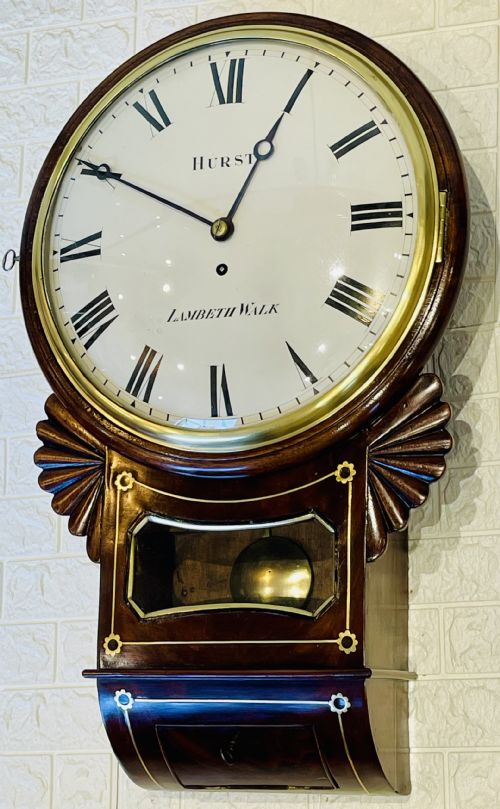
- A wall-hung timepiece featuring an extended wooden trunk beneath the circular dial. This drop case accommodates the longer pendulum swing required for accurate timekeeping.
- Twin fusee
- A movement featuring two separate fusee cones and gear trains. One train drives the timekeeping while the second powers the striking mechanism for bells or gongs.
19th Century Fusee Clock: Frequently Asked Questions
What is a fusee clock?
A fusee clock is a mechanical timepiece that uses a conical drum to regulate the force of the mainspring. This mechanism ensures consistent power delivery to the escapement as the spring runs down over its eight-day cycle.
Such movements were fitted into wall dials, table clocks, and skeleton clocks throughout the nineteenth century, prized for their superior timekeeping accuracy compared to standard spring-driven alternatives.
How do I wind a fusee clock?
Winding requires inserting a key into the dial winding square and turning it carefully until the chain or cord is drawn up the conical fusee. Care must be taken not to overwind older movements.
Most nineteenth-century examples run for eight days on a single wind, requiring regular attention from the owner to maintain correct time.
Where were these clocks placed?
Wall-mounted dial clocks were typically hung in offices, stations, hallways, and public spaces where clear visibility and reliable timekeeping were essential. Smaller bracket and skeleton clocks sat upon mantelpieces, library desks, and drawing-room tables.
Library clocks and heavy mahogany bracket models were designed to be portable yet substantial enough to anchor the decor of a formal room.
How do I date a 19th century clock?
Dating relies on stylistic shifts in the casework, dial materials, and the engraved signatures of the maker. Regency and early Georgian pieces often feature distinct brass inlay and pad tops, whereas late Victorian examples adopt simpler mahogany surrounds or walnut housings.
Maker signatures and registration marks on the dial or backplate provide direct links to working historical periods and documented workshops.