


19th Century Floral Carpet
A 19th century floral carpet brings character and deep natural pile into a room through traditional regional weaving.
19th Century Floral Carpet
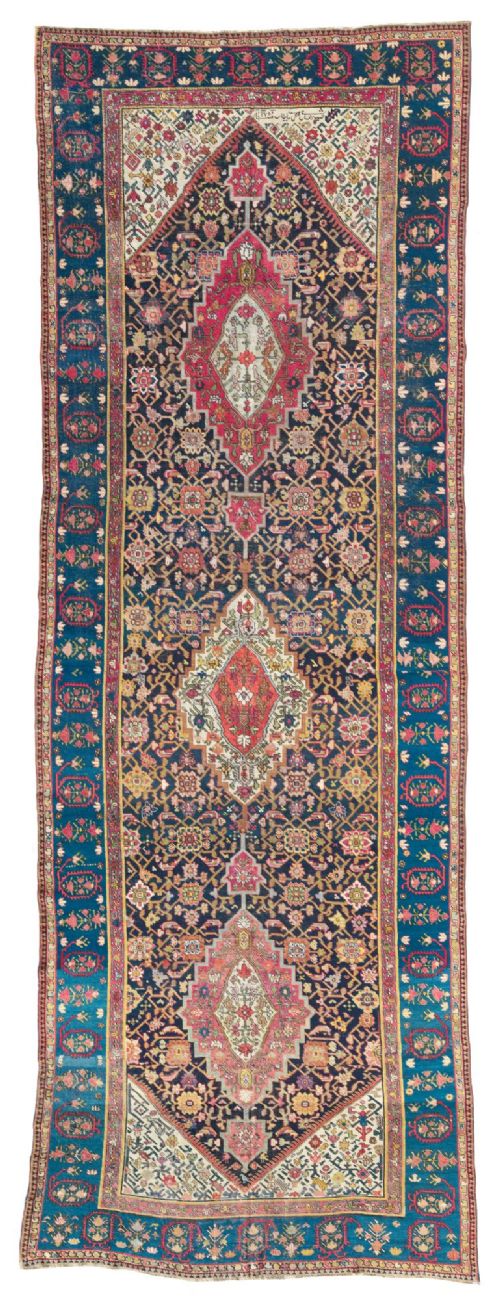
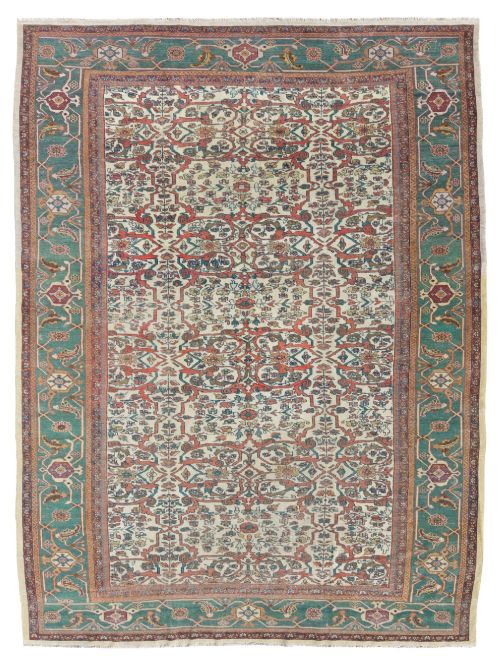
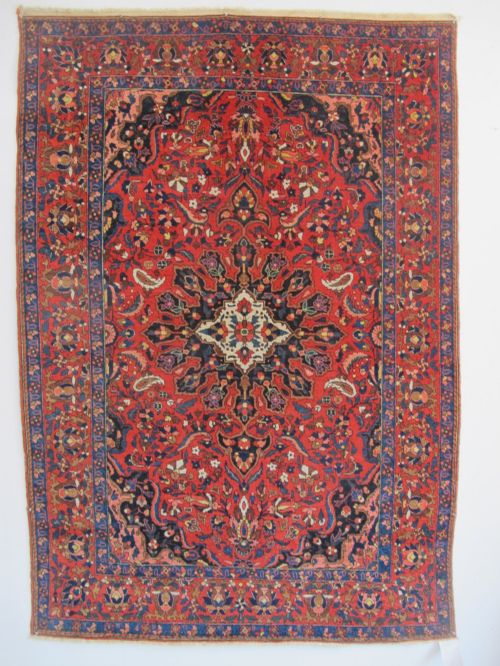
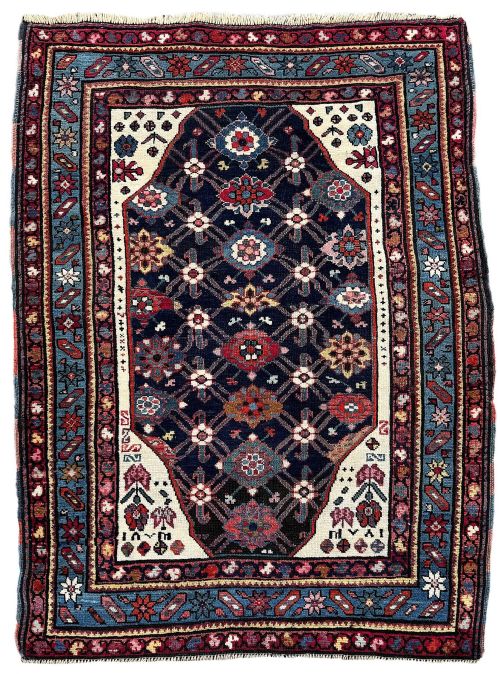
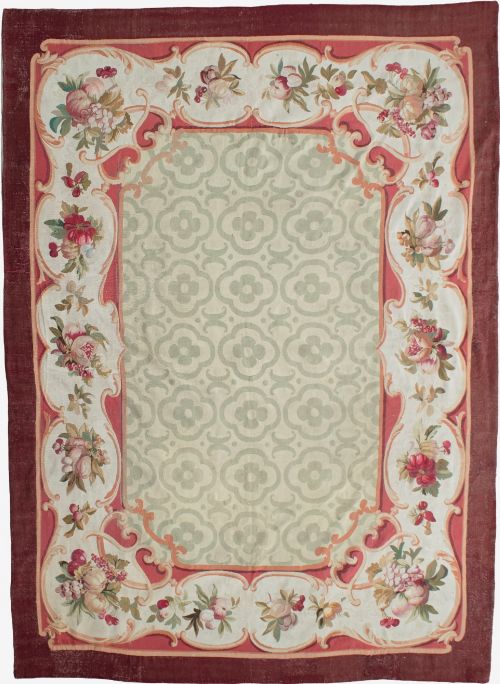
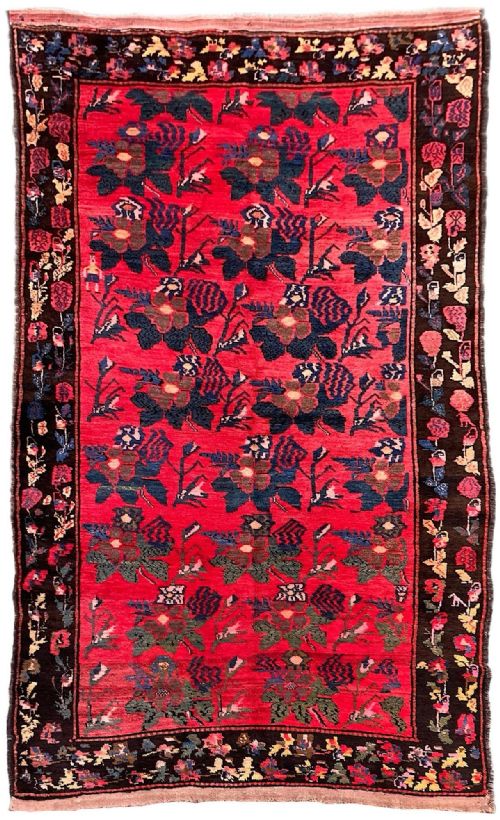
When you search for a 19th century floral carpet, you encounter woven floor coverings originating from Persia, the Caucasus, Turkey, France, Ukraine, and Tibet. These textiles include large room-size carpets, runners, smaller area rugs, prayer rugs, kilims, and saddle covers.
The pieces on this page span from the middle of the 19th century into the early decades of the 20th century. Persian workshop carpets and Caucasian tribal rugs dominate the selection, alongside European flatweaves.
Buyers select these textiles to ground traditional interiors with historic patterns. The floral motifs range from structured all-over trellis designs to fluid French botanical compositions.
Materials and construction
Weavers constructed these carpets predominantly using wool pile hand-knotted or flatwoven onto sturdy cotton foundations. Leather also appears in the physical construction of specific items.
Makers utilised natural dye traditions to create rich colour palettes across Persian, Caucasian, and European workshops. Flatwoven kilims from Bessarabia and Ukraine relied on distinctive tapestry weaving techniques without a raised pile.
A Tibetan saddle cover sits among the grand Persian carpets, reminding us that antique warmth often travelled on horseback.
Judging quality in historic floor coverings
Quality rests upon knot density, the integrity of the foundation, and the precision of the design execution. Tightly packed wool pile ensures longevity under foot traffic, while looser flatweaves depend on the strength of the wool and cotton yarns.
The clarity of the botanical motifs and the harmonious ageing of the dyes dictate the visual standing of each piece. Finer workshop carpets display intricate drawing, whereas regional tribal rugs demonstrate bolder geometric interpretations of floral themes.
The 19th Century Floral Carpet Glossary
- Kilim
- A flatwoven carpet or rug produced without a pile. These pieces rely on interlocking weft threads to create geometric and floral patterns.
- Kelleh
- A large rectangular format of Persian carpet traditionally used in long rooms. It is narrower than a standard room-size carpet.
- Prayer rug
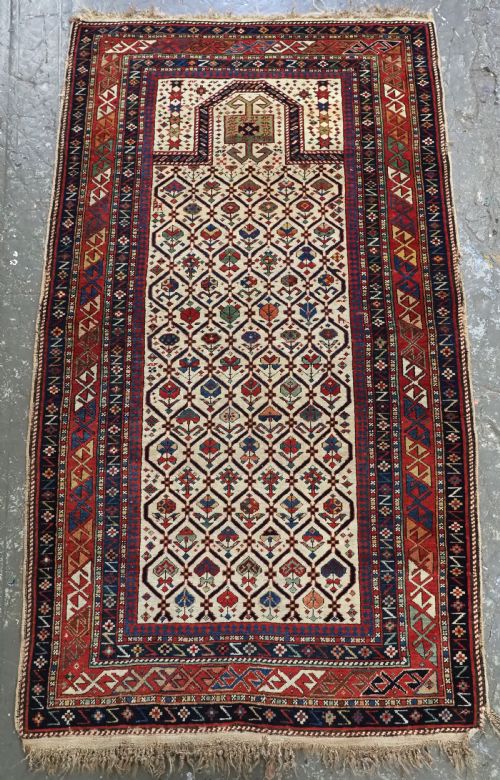
- A small rug featuring a mihrab or niche design used historically for daily prayers. They often incorporate floral lattices in the field.
- Runner
- A long, narrow carpet format designed for hallways and corridors. They frequently display repeating medallion or lattice patterns.
- Foundation
- The underlying structure of a knotted carpet consisting of warp and weft threads. Cotton and wool form the primary structural grid.
19th Century Floral Carpet: Frequently Asked Questions
How do I clean an old carpet?
Professional specialist cleaning is essential for historic textiles to prevent dye bleeding and fibre damage. Avoid standard household washing methods entirely.
Gentle surface vacuuming without a rotating brush helps control dust between professional interventions.
Are these rugs suitable for daily use?
Most wool pile carpets withstand normal residential foot traffic well when supported by a proper underlay. High-traffic areas require careful placement to distribute wear evenly.
Flatwoven kilims experience faster wear and suit lighter traffic zones or wall display.
How do I identify Caucasian rugs?
Caucasian pieces typically feature geometric floral lattice designs with saturated, contrasting primary colours. The weaving structure tends to be robust and straightforward.
They originate from mountain regions spanning the Caucasus and differ visibly from court workshop styles.
What is a Ziegler carpet?
Ziegler carpets represent commercial 19th century Persian production tailored for Western European interior tastes. They often feature muted palettes and softened botanical designs.
Workshop weavers in regions such as Sultanabad produced these specific carpets for export.