
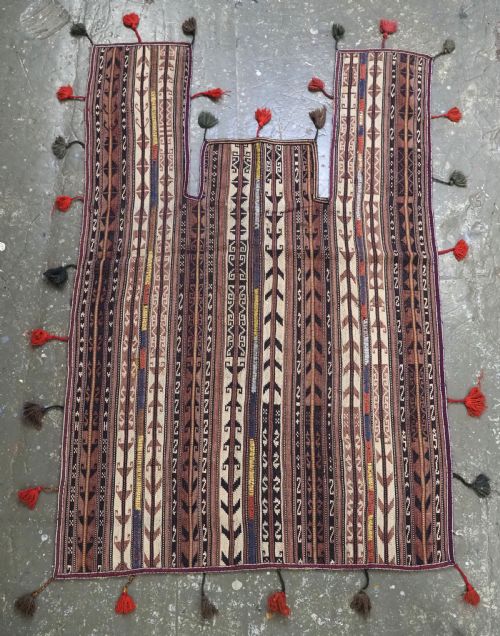

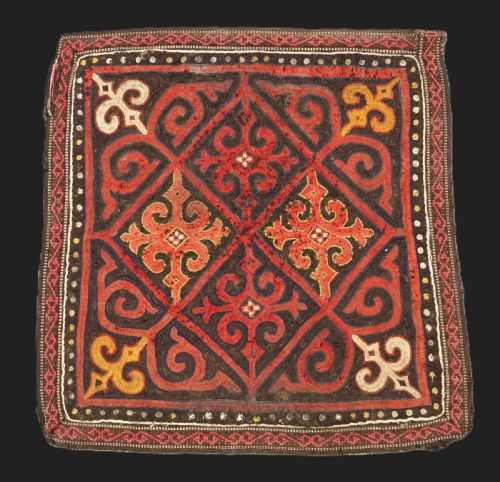


Brown Wool Tapestry Rug
A brown wool tapestry rug brings rich tribal texture and earthy warmth to a floor, offering durable flatweave craftsmanship from diverse historical traditions.
Brown Wool Tapestry Rug
When a buyer searches for a brown wool tapestry rug, they seek flatweave textiles that combine durable animal fibres with earthy coloration. These pieces encompass tribal flatweaves, nomadic covers, and embroidered panels created across Central Asia, Anatolia, and Eastern Europe.
The selections available here span from the nineteenth century through the mid-twentieth century, showcasing diverse regional aesthetics from Turkmen tribes to Bessarabian workshops. Buyers encounter various utilitarian flatweaves, tent bands, and ceremonial horse covers that function successfully as floor coverings or wall hangings.
Central Asian nomadic and Anatolian tribal styles dominate the forms, reflecting centuries-old weaving traditions rooted in practical domestic use. Each piece demonstrates specific regional motifs, structural banding, or embroidered additions on wool and camel hair grounds.
Materials and construction methods
Makers utilised locally sourced sheep wool and hand-spun yarn, frequently combining these with cotton foundations or supporting structures of camel hair and felt. Natural dyes provided the palette, producing grounded brown, neutral, and polychrome tones that deepened over decades of exposure and use.
Weavers employed flatweave tapestry techniques, such as kilim construction and embroidery over felted bases, avoiding deep pile in favour of tight, durable surfaces. Tent bands and mafrash panels demonstrate structural warp-faced weaving designed to withstand the rigorous demands of nomadic life.
Materials documented across the listings include wool, cotton, felt, natural dyes, hand-spun wool, and camel hair.
Distinctions in quality and execution
The upper tier of these textiles reveals exceptional tightness in the weave and precision in the geometric or pictorial layout, executed by experienced tribal or regional makers. Superior examples maintain structural integrity across large expanses, preserving dense wool density and crisp colour contrast.
Lesser examples display irregularity in tension or degraded natural dyes that compromise the visual rhythm of the design. The handling of edge finishes and the purity of the wool fibre separate everyday utility objects from those retaining high decorative and ethnographic interest.
The Brown Wool Tapestry Rug Glossary
- Tapestry rug
- A flatweave textile lacking pile, produced by interlocking weft threads tightly over warp threads to create flat, pattern-defined surfaces.
- Flatweave
- A textile constructed without vertical pile knots, created entirely by the interlacing of warp and weft threads.
- Kilim
- An untufted flatwoven carpet or rug originating from regions including Anatolia, Central Asia, and Eastern Europe.
- Mafrash
- A tribal storage bag face or side panel, typically woven in flatweave or soumak techniques by nomadic groups.
- Camel hair
- A natural fibre gathered from camels, utilised in textiles for its strength, insulation, and distinctive warm brown hue.
Brown Wool Tapestry Rug: Frequently Asked Questions
How do I clean a flatweave rug?
Gentle surface brushing and regular light vacuuming without a beater bar remove embedded dust and prevent fibre abrasion. Professional textile cleaners experienced with antique wool and natural dyes should handle deeper washing.
Water saturation and harsh chemical detergents damage historical fibres and alter natural dye stability. Keeping the textile in a dry environment prevents mould and insect activity.
Can these textiles be hung on walls?
Many flatweave pieces and embroidered panels function effectively as wall hangings to reduce sound and add texture to architectural spaces. Distributing the hanging weight evenly across the upper edge prevents distortion of the wool and cotton foundation.
Using a sleeve attachment or specialised textile clips avoids piercing the original fabric with nails or direct stitches. Direct, prolonged sunlight should be avoided to protect natural dye pigments from fading.
What is the difference between a kilim and a carpet?
Kilims are constructed entirely through flatweaving without knotted pile, resulting in a lighter, thinner textile that lies flat on surfaces. Carpets often incorporate knotted piles that create a denser, more plush surface texture underfoot.
Both forms utilise wool and natural dyes, but their structural mechanics require different looms and weaving techniques.
How are tribal regions identified?
Specific geometric motifs, border arrangements, structural banding, and colour palettes indicate the likely geographic origin of a textile. Turkmen, Yomut, Afghan, and Anatolian pieces each employ distinct tribal vocabularies passed down through generations of makers.
Material choices, such as specific grades of hand-spun wool or the inclusion of camel hair, offer further clues to provenance.