

19th Century European Painting
These 19th century european painting selections bring continental portraiture, landscapes and still lifes into domestic interiors.
19th Century European Painting
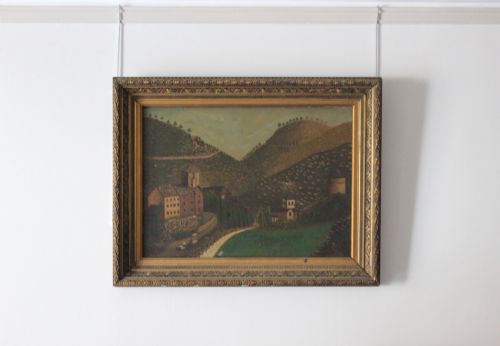
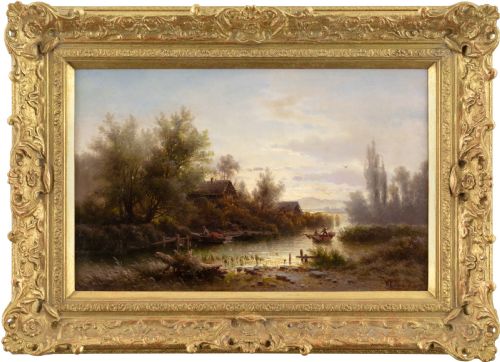
When buyers search for 19th century european painting, they encounter a diverse array of canvas works, panels and watercolours originating from studios across the continent. These artworks capture landscapes, intimate domestic scenes, architectural views and traditional portraiture produced during a period of significant artistic transition.
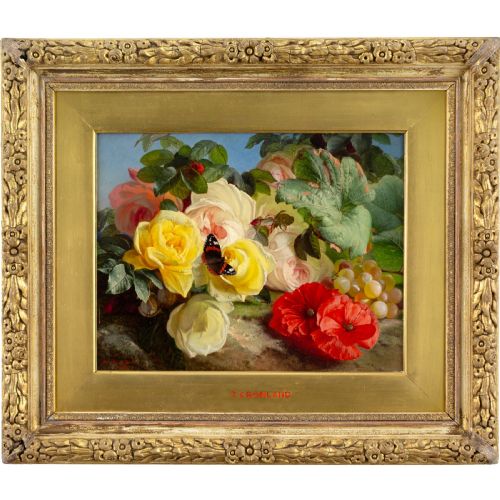
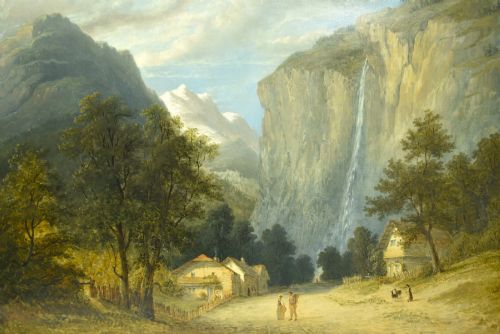
The selections on this page most frequently present framed oil paintings on canvas and wood panel, alongside works on paper. Subjects range from Alpine vistas and Alpine waterfalls to serene river landscapes and finely rendered floral arrangements.
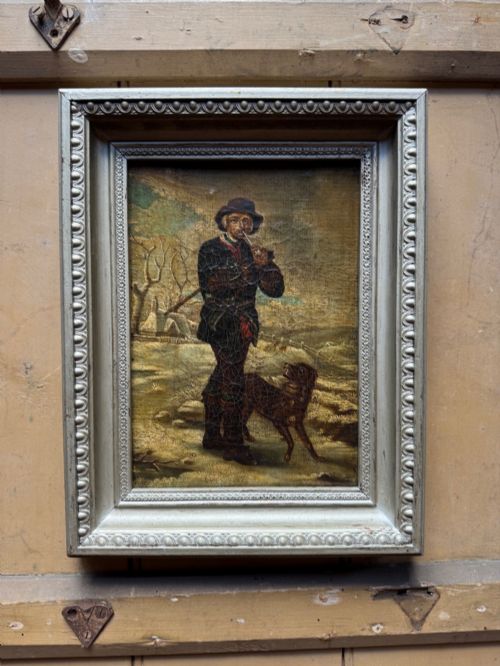
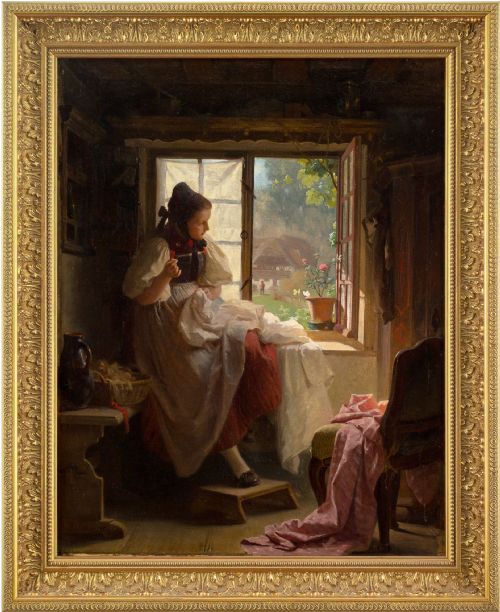
Regional European schools emerge strongly across the inventory, spanning Italian, Dutch, Belgian, German and Austrian artists. Works vary from grand topographical scenes to quiet genre paintings depicting everyday rural life and figures in pastoral settings.
Materials and Techniques
Paintings from this era rely primarily on oil paint applied to stretched canvas or prepared wooden panels, with watercolour frequently utilised for lighter landscape studies on paper. Pigments are worked with brushes and palette knives to build texture, depth and atmospheric light effects, particularly within Luminist and Realist compositions.
Frames form an integral part of the physical object, constructed from wood and embellished with gesso and gold leaf or giltwood mouldings. These gilded surrounds often complement the tone of the artwork while providing structural support and protection to the edges of the canvas.
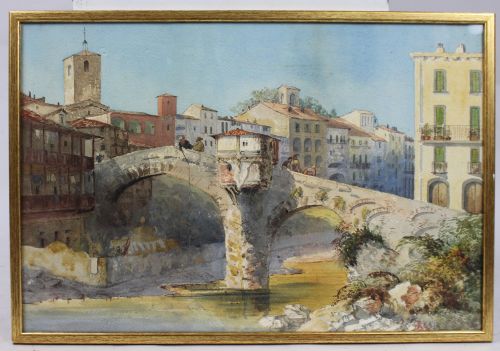
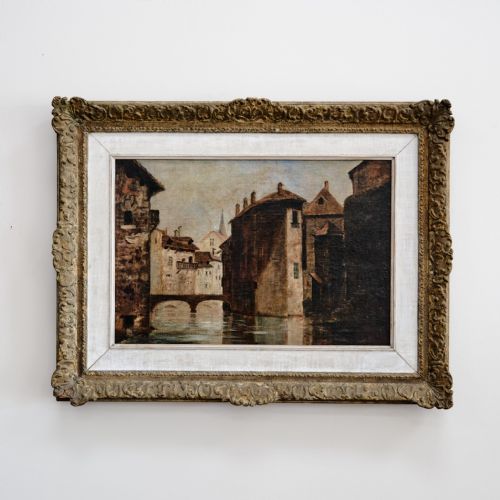
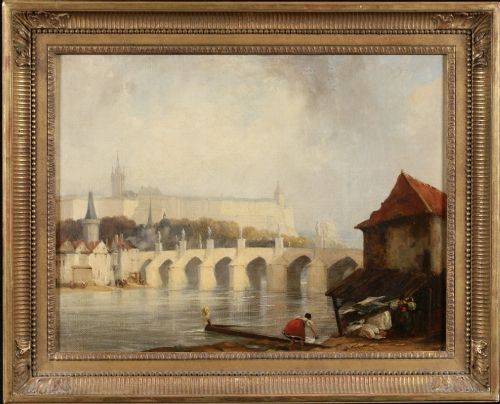
The inventory records landscape views depicting Swiss waterfalls, German rivers, and urban architectural scenes in Italy.
Quality Variations in 19th Century Art
The distinction between standard works and exceptional pieces rests upon the handling of light, brushwork fluidity and anatomical precision in figures. Masterful execution creates a palpable sense of atmosphere and spatial depth, whereas lesser works may display rigid perspective or flat application of colour.
The preservation of the original surface and the integrity of the support structure dictate the standing of a canvas. Intact brushwork without heavy overpaint, combined with an appropriate period giltwood frame, elevates the overall standing of the piece within the market.
Theude Grönland·Max Kaltenmoser·Albert Rieger·Frans Gailliard·Frederick Tully Lott·William George Meadows·Hendricus Joseph Dillens
The 19th Century European Painting Glossary
- Oil on Canvas
- Pigment mixed with drying oil applied to a woven fabric support stretched across a wooden frame. This medium allowed artists to achieve rich colour saturation and subtle blending.
- Giltwood
- Wood carved and coated with gold leaf or gold paint to create a decorative metallic finish. It is commonly found on the ornate frames housing nineteenth-century artworks.
- Gesso
- A paint mixture consisting of a neutral binder mixed with chalk, gypsum or pigment. It served as a preparation layer for wooden panels and frames before gilding.
- Luminism
- An American and European painting style characterised by effects of light in landscapes, using concealed brushstrokes and glowing skies. Works in this mode emphasise tranquillity and vast expanses of atmosphere.
- Realism
- An artistic movement focused on the faithful, unidealised depiction of everyday subject matter and ordinary people. This approach rejected classical idealism in favour of contemporary truth.
19th Century European Painting: Frequently Asked Questions
How do I identify a nineteenth-century European painting?
Examine the materials of the stretcher, canvas preparation, and the style of the giltwood frame. Pigment analysis and artist signatures often provide direct attribution to regional schools.
Look closely at the canvas weave and tacking edges, as older frames and stretchers exhibit hand-cut nails and aged timber characteristics consistent with the period.
Where were these paintings originally displayed?
These artworks hung primarily in bourgeois townhouses, country salons and institutional galleries across Britain and continental Europe. Landscapes and portraits served to signal cultural refinement and regional pride.
Many smaller works were created for intimate domestic settings, while large topographical canvases were commissioned for prominent reception rooms.
How should I care for an antique oil painting?
Keep paintings away from direct sunlight, high humidity and dramatic temperature fluctuations to prevent canvas slackening and paint cracking. Dust the surface gently with a soft, dry brush without applying pressure.
Avoid using liquid cleaners or household solvents on the painted surface or the giltwood frame, as these can permanently damage the historic pigments and gold leaf.
What is the difference between a school and a named artist?
An artwork attributed to a specific school indicates it was produced within a particular country or region sharing common stylistic traits, without a confirmed individual creator. Named artists carry documented signatures or definitive provenance.
Works by established continental masters typically command greater scholarly interest, whereas school pieces are valued for their representative regional aesthetic.