


19th Century Empire Candlesticks
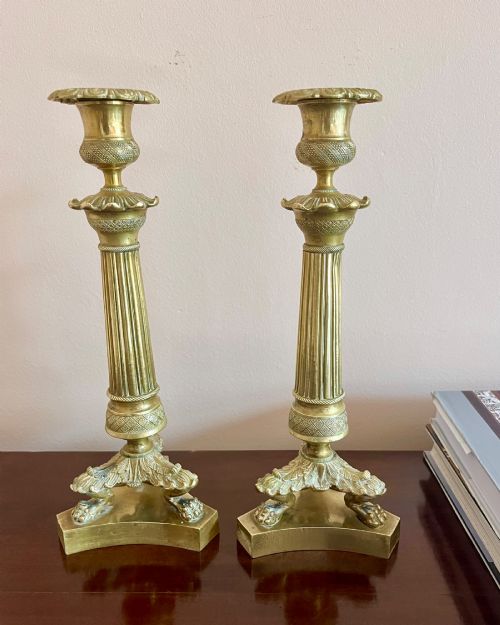
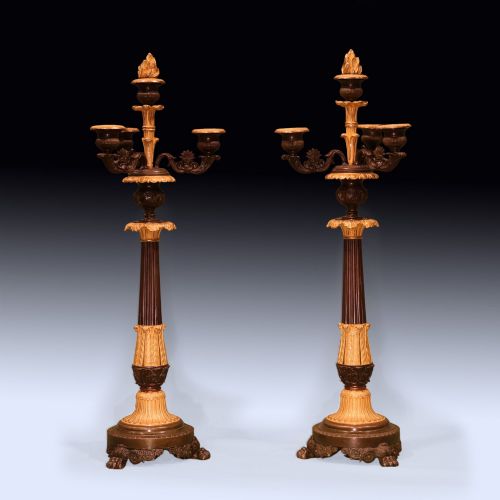
19th century empire candlesticks bring classical dignity and heavy cast metal grandeur to a room, combining patinated bronze with gleaming ormolu.
19th Century Empire Candlesticks
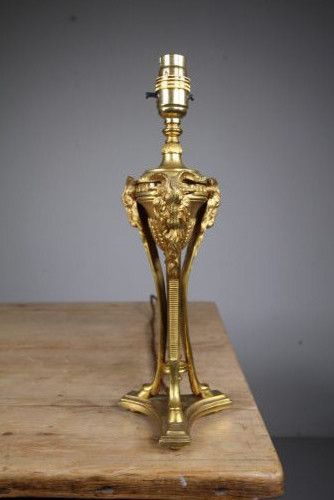
When you search for 19th century empire candlesticks, you encounter heavy metal lighting designed with classical discipline and sculptural authority. These objects stem predominantly from French and English workshops, adapting the severe grandeur of ancient Rome, Greece and Egypt into domestic lighting. Forms vary from simple single-light sticks to multi-armed candelabra and table lamps.
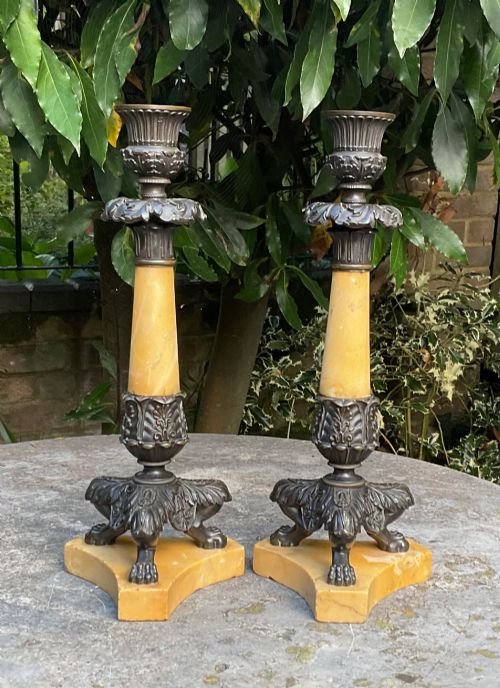
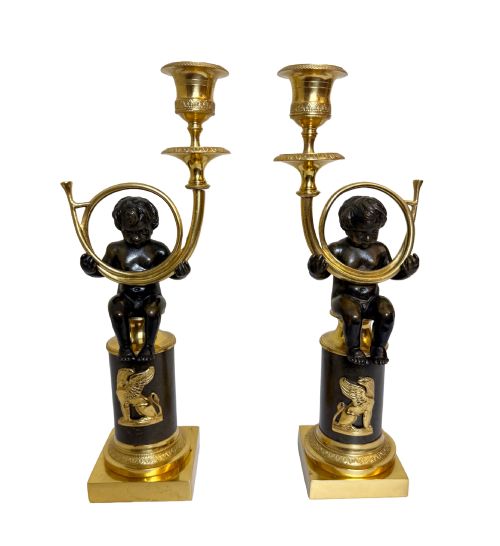
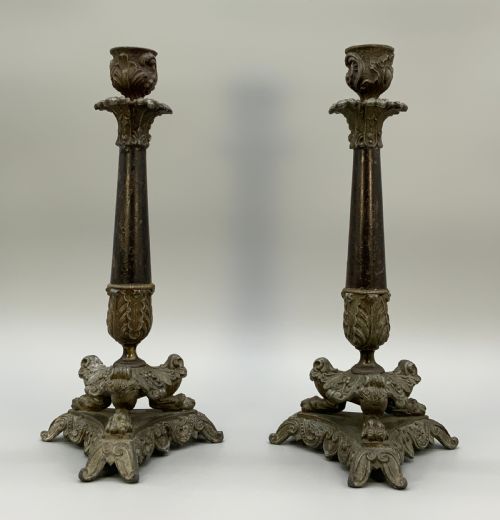
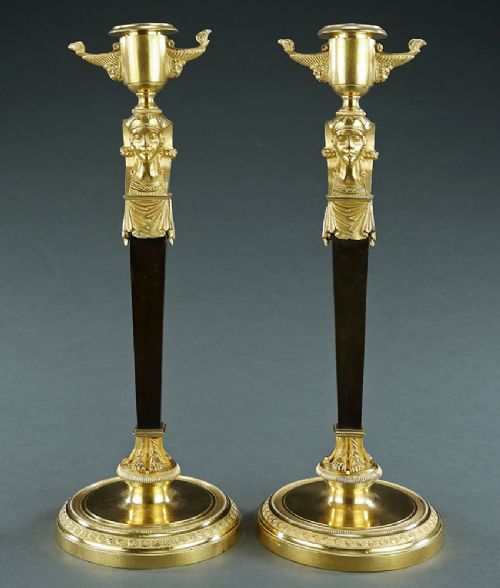
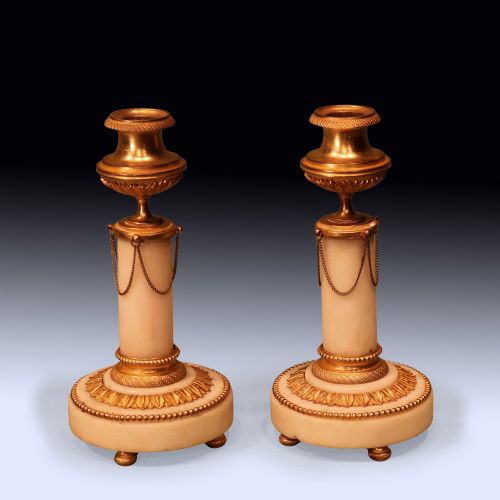
The version most commonly met on this page is a matched pair utilising patinated bronze combined with gilt bronze or ormolu mounts. Such pieces frequently incorporate stone bases, using white marble, sienna marble or slate to ground the heavy metal work. Motifs of caryatids, dolphins, cherubs and rams heads frequently support the candle holders.
Materials and technique
Foundry workers built these pieces through intricate sand casting of bronze and brass components, followed by meticulous hand chasing to sharpen the cast details. Patination baths darkened the bronze to a deep chocolate or black tone, creating a strong visual contrast against gilded elements. Ormolu surfaces gained their rich golden lustre through mercury gilding, a hazardous technique applying a gold and mercury amalgam heated to fuse the precious metal to the bronze base.
Stonemasons shaped marble, onyx and slate to form the architectural plinths and columns that elevate the metal shafts. Craftsmen then assembled these disparate elements using threaded metal rods and concealed pins, uniting metalwork and stone into a stable, weighted structure.
Listings feature periods spanning from the Georgian era through the 1920s, with a heavy concentration of 19th-century French production.
What separates the grades
The choice and execution of materials further divide the standard. Finer specimens employ heavy, unblemished sienna or white marble plinths combined with thick mercury gilding that retains its warm, buttery glow. Poorer variants rely on thin brass plating over base metals, lighter castings that flex under pressure, and stone bases marred by natural fissures or crude repairs.
The 19th Century Empire Candlesticks Glossary
- Ormolu
- Gilded bronze produced by applying a mercury and gold amalgam to a bronze base and heating it until the mercury vaporises. This technique leaves a durable, rich golden surface characteristic of fine French decorative arts.
- Patinated bronze
- Bronze treated with chemical solutions to darken its surface into deep browns, greens or blacks. This dark finish provides a visual counterpoint to polished or gilded metal mounts.
- Candelabra
- A branched lighting fixture holding multiple candles on separate arms. These pieces often feature a central shaft flanked by symmetrical candle nozzles.
- Caryatid
- A sculpted female figure serving as an architectural support in place of a column or pilaster. They frequently form the main shaft of classical candlesticks.
- Retour d Egypte
- A French design style inspired by Napoleon's military campaign in Egypt, incorporating pharaohs, sphinxes and lotus motifs into decorative objects.
19th Century Empire Candlesticks: Frequently Asked Questions
Were these originally wired for electricity?
None of these objects left the nineteenth-century workshop with electrical wiring, as they were designed entirely for wax candles. Many surviving examples have since been adapted into table lamps by running a cord through the centre.
Buyers should inspect whether conversion work involved drilling through original bronze components, which alters the historical fabric of the piece. Unconverted pairs retain their original socket cups and stub extinguish elements intact.
How do I tell Empire from Regency style?
French Empire design draws direct inspiration from strict Roman and Napoleonic military motifs, favouring martial trophies, laurel wreaths and solemn classical figures. Regency pieces produced in England often blend these same French influences with more whimsical elements like dolphins, chinoiserie or Egyptian revivals.
French workshops tended to utilise mercury gilding and heavy cast bronze more universally across standard production. English makers frequently incorporated brass alongside bronze and often mounted their wares upon simpler turned wooden or marble bases.
Why are pairs often mismatched in height?
Nineteenth-century foundry production relied on hand assembly where individual cast components cooled and shrank at slightly different rates. Even within a matched pair, minor variances in chasing and final lathe-turning mean height discrepancies frequently occur.
Hand-finished pieces were fitted together individually rather than stamped from identical automated factory templates. These subtle asymmetries confirm the traditional manufacturing methods of the period.