


19th Century Earthenware Vase
A 19th century earthenware vase brings regional glaze traditions and domestic figural ceramic forms directly into a room.
19th Century Earthenware Vase
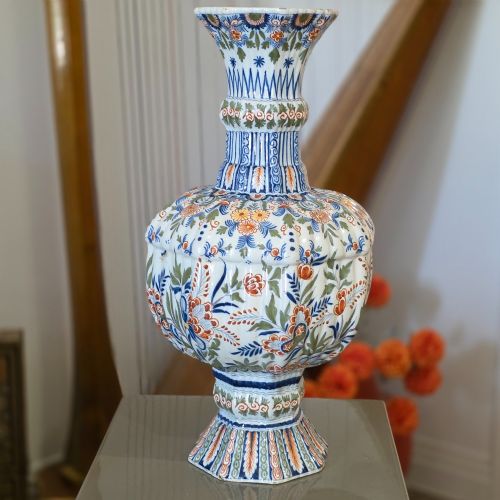
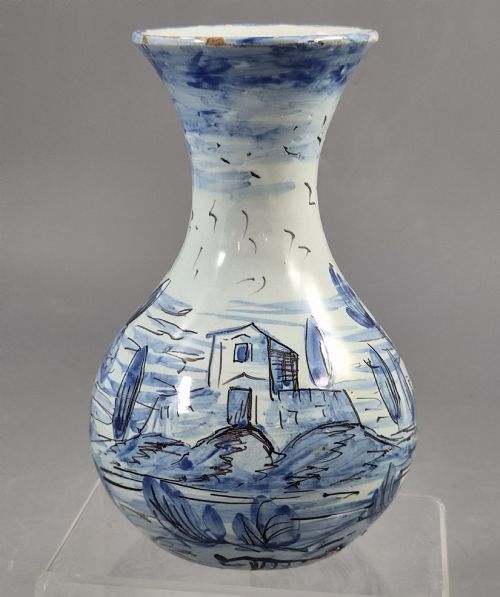
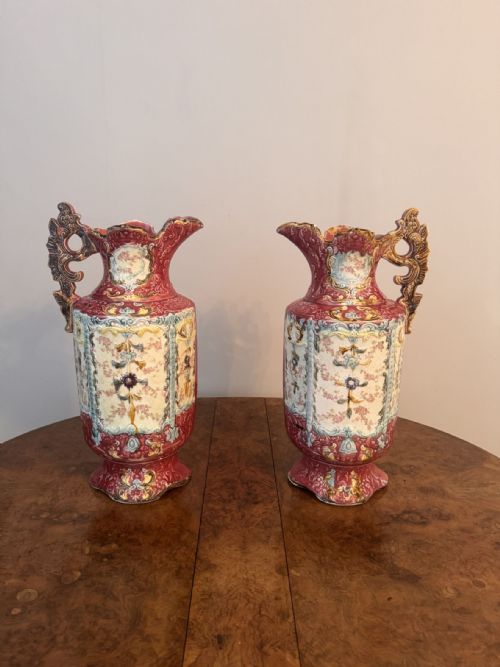
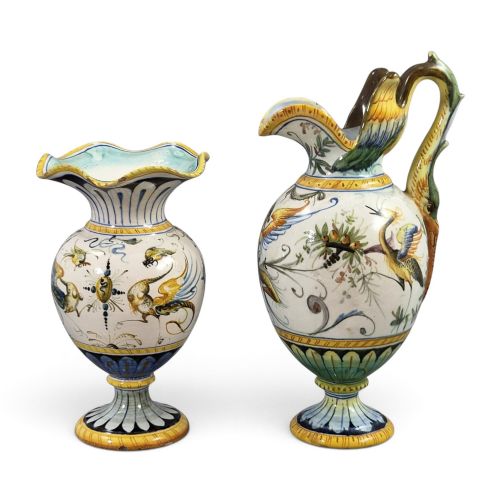
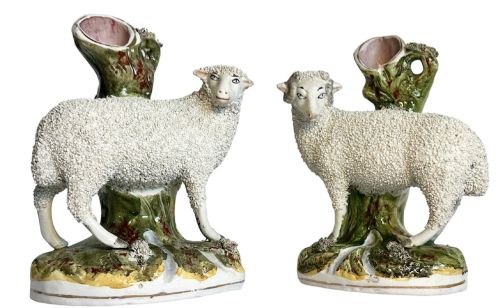
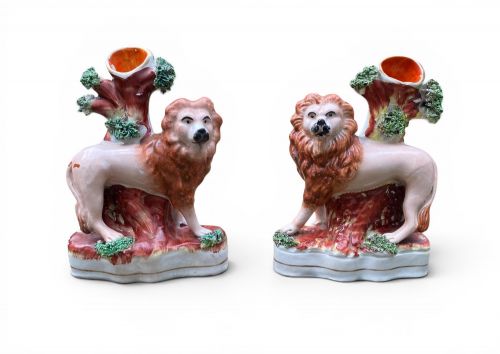
When you search for a 19th century earthenware vase, you encounter a diverse gathering of European faience, majolica, delftware, and Japanese satsuma pottery produced across the Victorian era. The selection spans decorative cabinet vessels, large covered urns, apothecary jars, and confit pots alongside animal spill vases from Staffordshire potteries.
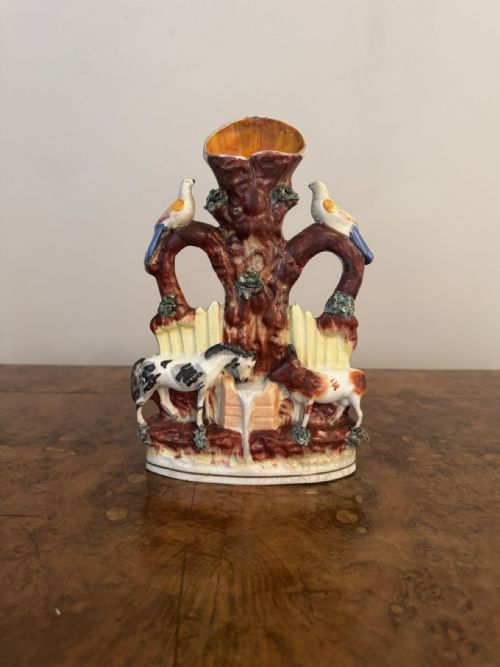
You are most likely to meet Victorian Staffordshire animal spill vases depicting sheep, lions, and deer, alongside French faience and Japanese earthenware vessels decorated with gilt figural processions or samurai scenes. These items reflect the varied global export markets and domestic ceramic production centres active during the 1800s.
The material grouping encompasses tin glaze, terracotta, pearlware, ironstone, and bisque, demonstrating the broad interpretations of ceramic vessel manufacture during this period. Pieces range from modest earthenware figures to monumental majolica exhibition pieces.
How they were made
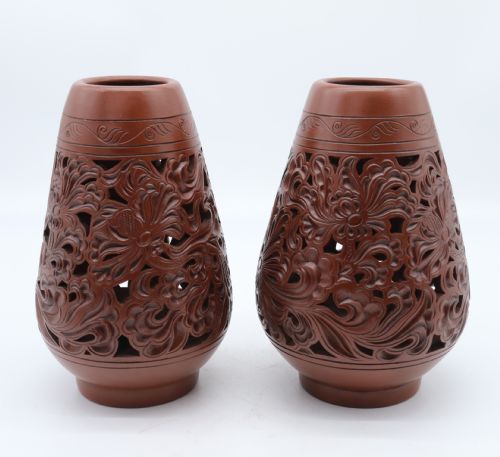
Potters built these vessels using regional clay bodies, shaping them on wheels or casting them in moulds before applying tin glaze, enamel, or coloured lead-based glazes. Many items incorporate surface embellishments such as gold leaf application, reticulated cutting, and hand-painted blue and white or polychrome decoration.
Listings feature 19th century earthenware vases from English, French, Italian, Danish, and Japanese production centres.
What varies in quality
The distinction between standard domestic production and top-tier workshop output lies in the ambition of the form and the precision of the hand decoration. Pieces signed by known potteries or individual artists typically exhibit greater complexity in glazing and surface modeling.
Fourmaintraux Courquin Desvres·Sir Edmund Harry Elton·P Ipsens Enke·Miles Mason
The 19th Century Earthenware Vase Glossary
- Earthenware
- Porous pottery fired at lower temperatures, requiring a glaze to hold liquids. It forms the base body for majolica, faience, and Staffordshire figures.
- Spill Vase
- A small hollow vessel designed to hold wooden spills used for lighting candles or pipes. These often take the form of animals or figures placed beside a vertical tube.
- Majolica
- Pottery decorated with tin glazes and colourful metallic oxide paints, fired over an opaque white background. The style experienced a major revival during the Victorian period.
- Confit Pot
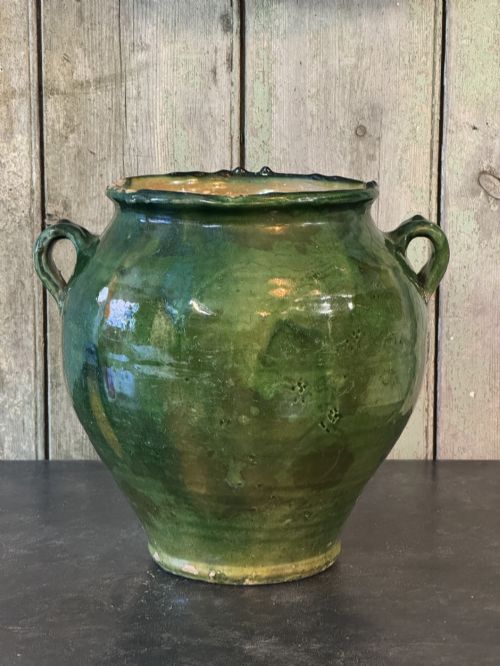
- A French utilitarian earthenware jar featuring a fully glazed interior and upper rim, historically used for food preservation. They are collected today for their rustic green or natural terracotta glazes.
- Satsuma
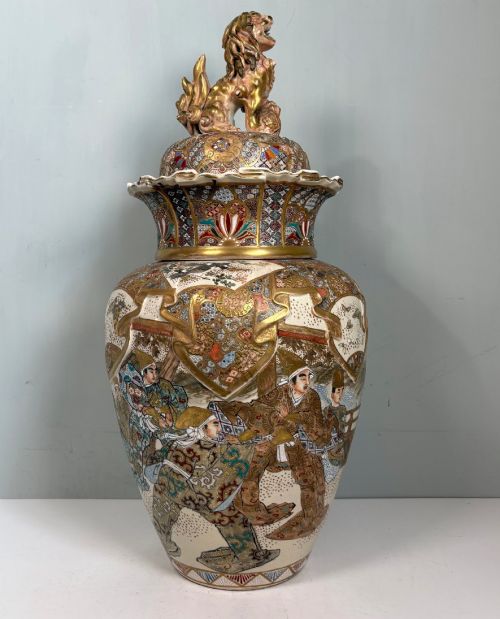
- Japanese earthenware pottery featuring a crackle-glaze ivory body decorated with intricate enamels and gold leaf. Production expanded significantly during the Meiji period for export markets.
19th Century Earthenware Vase: Frequently Asked Questions
How do I clean an antique earthenware vase?
Dust the surface gently with a soft, dry brush to prevent dirt accumulation in crevices and glaze crackle lines. Avoid submerging porous earthenware in water, particularly if the glaze shows hairline fractures or historical repairs.
Keep pieces away from direct sunlight and damp environments to protect painted enamel details and gold leaf applications. Professional conservation is recommended for any structural instability.
What is the difference between faience and majolica?
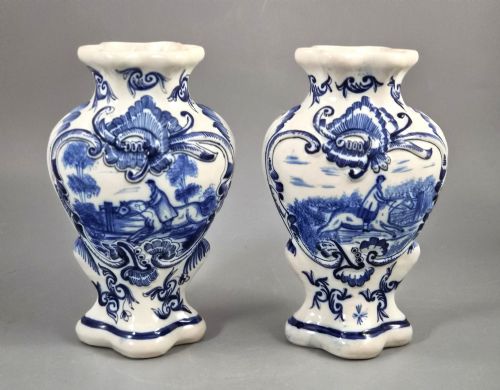
Faience generally refers to tin-glazed earthenware produced in France, the Netherlands, and other European regions, often featuring blue and white or manganese decoration. Majolica typically describes brightly coloured polychrome tin-glazed ceramics, which gained immense popularity during the Victorian Renaissance Revival.
Both techniques rely on an opaque tin-oxide glaze applied over a fired clay body before painting. The terminology often reflects the geographic origin and period stylistic preferences of the workshop.
How were Staffordshire spill vases used?
Staffordshire spill vases served a practical domestic function in 19th-century households before the widespread availability of safety matches. The hollow cylindrical section held wooden splints that residents transferred from the fireplace to light lamps and candles.
Potters combined this utilitarian holder with popular figural subjects including sheep, swans, and historical castles. These earthenware figures doubled as chimney-piece ornaments when not actively holding spills.
How can I identify a Meiji period Satsuma vase?
Meiji period Satsuma pieces feature a characteristic cream-coloured earthenware body covered in a fine network of transparent crackle glaze. Decoration typically incorporates dense polychrome enamels and raised gold leaf depicting figural processions, samurai, or landscapes.
Many export pieces from this era bear maker seals on the base, reflecting production centres in Kyoto and surrounding regions. The careful miniature painting distinguishes them from heavier European earthenware vessels.