




19th Century Eagle Mirror
A 19th century eagle mirror brings fierce presence and optical depth to a room through convex glass and carved timber.
19th Century Eagle Mirror
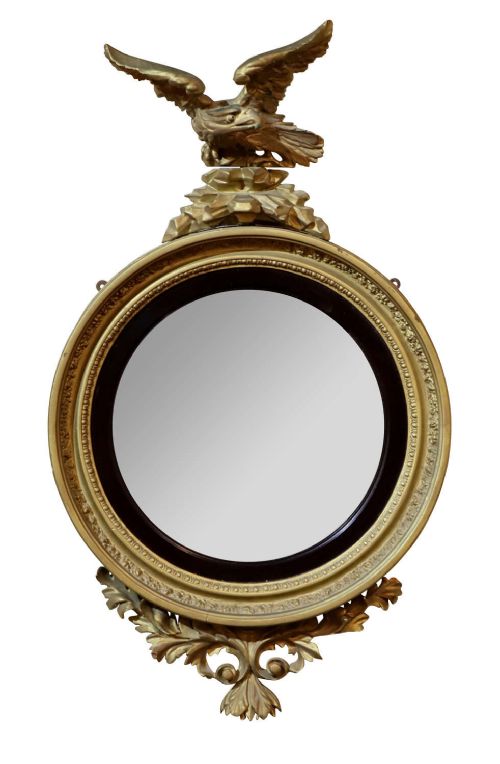
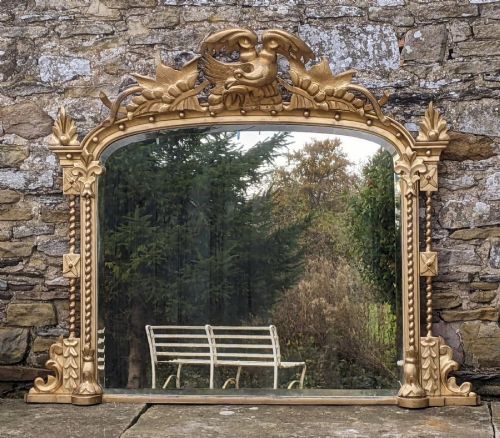
A 19th century eagle mirror is primarily a circular convex wall glass crowned by a carved bird of prey, dominating period interiors with its curved reflection. When you search for a 19th century eagle mirror, you encounter pieces spanning the Regency, William IV, and Victorian eras, alongside later revivals.
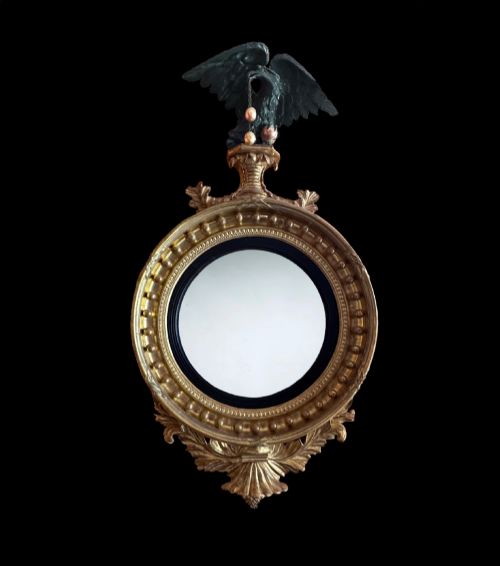
The most common form on this page is the circular convex mirror enclosed in a giltwood or gesso frame, topped by an eagle with outstretched wings. These items function as focal points in hallways and principal reception rooms, capturing light across a curved surface.
Materials and construction
Makers shaped these frames from timber such as mahogany, walnut, and ebonised wood, often applying a layer of gesso before finishing the surface. Giltwood application required meticulous leafing over bole to achieve a bright metallic sheen on the carved details.
Carvers rendered the eagles and decorative flourishes by hand, attaching the crests securely to the top of the circular or architectural frames. Glass was blown or cast into convex discs to distort the room's perspective, held firmly within moulded bezels.
19th Century Eagle Mirror Retail Price Guide 2026
Typical asking prices for 19th century eagle mirror among the pieces listed under this phrase on Sellingantiques today, from the lower quarter to the upper quarter. They describe what is for sale here now, not the wider market.
Several eagles clutch chains in their beaks, dangling small brass balls to measure whether guests were slouching at dinner.
Assessing quality and craftsmanship
Depth and sharpness in the carving of the eagle distinguish superior examples from simpler production, particularly in the rendering of feathers, talons, and beak. A well-executed crest integrates harmoniously with the frame rather than appearing stiff or disproportionate.
The integrity of the gilding and the preservation of the original gesso surface dictate the visual weight of the object. Quality shows in the retention of the original convex glass plate, which carries subtle optical ripples characteristic of period production.
The 19th Century Eagle Mirror Glossary
- Convex glass
- A curved glass plate that bends reflections outward, providing a wide-angle view of the interior space. It was a defining feature of principal wall mirrors in the Regency period.
- Giltwood
- Timber coated with gold leaf applied over a prepared gesso ground. This finish catches candlelight and natural illumination.
- Gesso
- A plaster-like mixture applied to wood frames to create a smooth surface for subsequent gilding or painting. It allowed carvers to achieve crisp relief detail.
- Surmount
- The ornamental fixture attached to the top of a mirror frame. In these pieces, it takes the form of a carved eagle.
- Pier glass
- A tall mirror designed to hang on the wall space between windows. Examples often incorporated carved bird motifs at the crest.
19th Century Eagle Mirror: Frequently Asked Questions
Why are the mirrors curved?
Convex glass was designed to gather light from across an entire interior and distribute it back into the room.
This optical property made dark or narrow period spaces appear brighter and more expansive before electric lighting existed.
How do I hang a heavy mirror?
These pieces carry substantial weight due to dense timber construction, gesso, and glass plates.
Secure installation requires fixing directly into wall studs or utilising heavy-duty masonry anchors suited to the specific wall type.
Are the eagles original to the frames?
The eagle surmount was typically carved as an integral part of the composition or joined securely during manufacture.
Close inspection of the joint where the crest meets the circular frame reveals whether the timber grain and gilding match the surrounding structure.
What is the difference between Regency and Victorian styles?
Regency pieces often display restrained classical lines with bold convex forms and crisp gilded surfaces.
Victorian interpretations frequently incorporate heavier revival styles, darker walnut timbers, or elaborate fretwork borrowed from earlier centuries.