





19th Century Cradle
A 19th century cradle is a timeless piece of wooden or metal infant furniture designed for rocking, and collectors seek them for their craftsmanship and domestic history.
19th Century Cradle
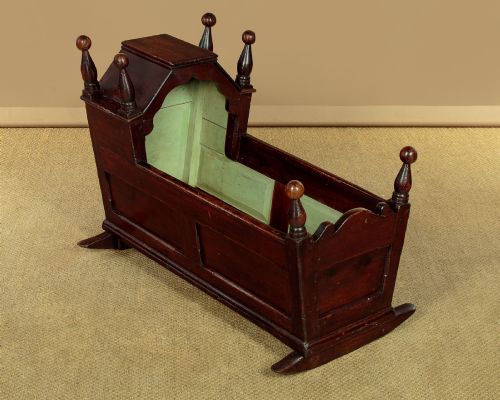
A 19th century cradle encompasses rocking beds, hooded nursery cots, and child beds constructed across the Georgian, Regency, and Victorian eras. These items served a practical domestic purpose in nurseries before transitioning into decorative objects for modern homes.
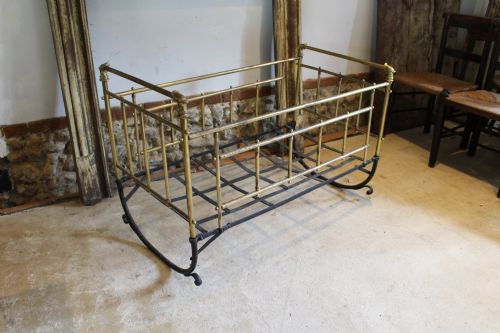
The most common examples met on this page are rocking cradles and cribs fashioned from pine, mahogany, and oak. Pieces range from simple country pine rockers to mahogany designs and elaborate Victorian brass-mounted cots.
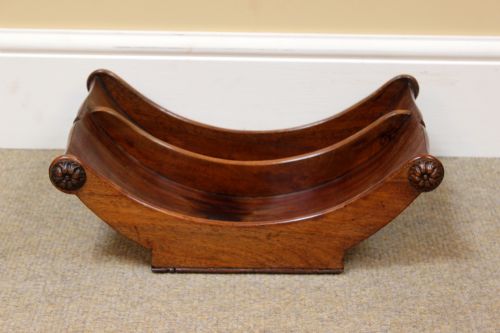
Regional variations appear in Scandinavian country painted pine models and British oak panelled versions. Alongside infant furniture, the broader search returns related items such as mahogany wine bottle cradles and cheese coasters.
How they were made
Makers utilised solid timbers including pine, mahogany, oak, and cane, often combining wood with wrought iron or brass fittings. Pine examples frequently received painted or lacquered surfaces, while mahogany pieces relied on rich natural grain and polished finishes.
Construction techniques involved panelled sides, dovetail joints, and curved rockers attached to the base or suspended within a frame. More decorative models incorporated carved details, caned panels, or canopy tops.
What varies in quality
Quality rests in the choice of timber and the precision of the joinery, distinguishing sturdy hardwood construction from simpler softwood builds. The elegance of the rocker curve and the preservation of original painted or polished surfaces dictate the visual appeal.
Refined pieces display careful hand-carving, original brass or iron hardware, and intact caning or panelwork. Simpler folk art and country examples derive their character from honest wear and regional decorative traditions.
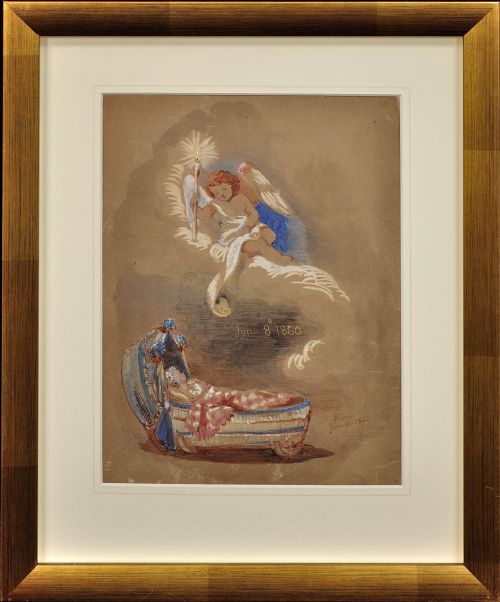
Princess Alice Maud Mary
The 19th Century Cradle Glossary
- Rocking cradle
- A child bed fitted with curved wooden rockers underneath to allow motion. These pieces form the majority of infant beds from the period.
- Cheese coaster
- A small trolley or tray fitted with rollers, designed to hold a cheese dish on the dining table. Several variants appear alongside wine bottle cradles in these listings.
- Wine cradle
- A decorative metal or wooden holder designed to support a bottle at an angle for pouring. These table accessories share materials and period aesthetics with larger nursery pieces.
- Canopy top
- An overhead framework attached to a cradle to support fabric curtains. This feature protected sleeping infants from draughts in grander Victorian nurseries.
- Panelled crib
- A bed constructed with fitted wooden panels held within a structural frame. This method provided durability and strength for everyday use.
19th Century Cradle: Frequently Asked Questions
What materials were used?
Makers built these pieces primarily from woods such as mahogany, pine, and oak. Metal elements in brass and wrought iron also appear across frames and fittings.
Paint and lacquer finishes were common on country pieces, whilst fine wood grains remained polished on formal items.
How do I date a piece?
Dating relies on stylistic clues, construction methods, and materials tied to specific periods like the Georgian, Regency, or Victorian eras. Regional folk art traditions also help place items within the nineteenth century.
Documented maker inscriptions or historical associations offer precise chronological markers when present.
How can I display one?
Full-sized infant beds work well as standalone decorative objects in large rooms or bedrooms. Smaller items like wine cradles and cheese coasters suit tabletop presentation.
Placing items on flat surfaces allows their wood grain, paintwork, or metal fittings to remain visible.