
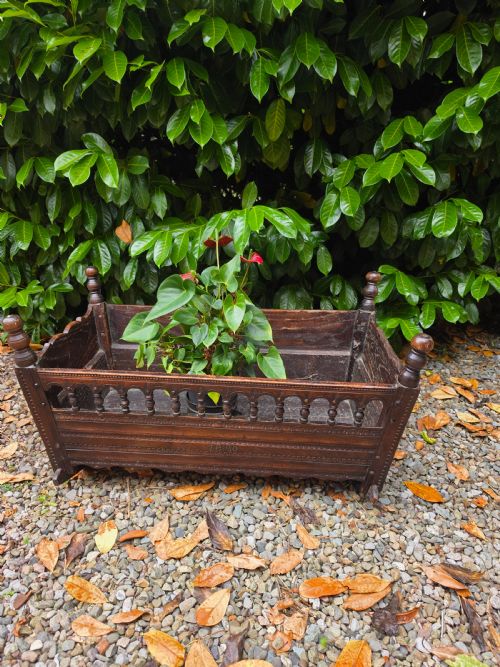


Dark Oak Baby Crib
These dark oak baby crib pieces span centuries of sturdy joinery, offering a tangible link to historical domestic life.
Dark Oak Baby Crib
A dark oak baby crib is a traditional wooden infant bed, frequently encountered on this page as a rocking cradle from periods such as the seventeenth and nineteenth centuries. These items serve as functional historical furniture, often featuring low profiles designed for placement near the floor.
The objects listed display various regional forms and stylistic revivals, including Jacobean, Elizabethan, and William and Mary influences. Buyers frequently find panelled structures and hooded designs among these listings.
Most examples function on wooden rockers or integrated bases, utilising solid timber construction typical of early English cabinet making. Some later nineteenth-century interpretations adapt these forms for decorative domestic use.
How they were made
Maker construction relies heavily on solid oak and fruitwood timbers, shaped using traditional hand woodworking techniques suited to heavy domestic furniture. Timbers are frequently joined through panelled construction methods designed to withstand seasonal wood movement.
Surface decoration on these pieces typically involves carved details, field panelling, and fitted hoods to shield infants from draughts. Rockers are integrated into the base structure to allow gentle movement.
The listings on this site feature oak and fruitwood materials across periods ranging from the sixteenth century to the Victorian era.
What varies in quality
Quality differences in a dark oak baby crib stem from the depth of carving, the precision of panel joinery, and the integrity of the original timber. Earlier seventeenth-century examples often demonstrate different standards of hand craftsmanship compared to later nineteenth-century revival pieces.
The preservation of original surface patination and structural elements heavily influences the character of each piece. Variations also emerge in the complexity of panel moulding and the execution of applied hood structures.
The Dark Oak Baby Crib Glossary
- Cradle
- A low infant bed mounted on rockers or fixed bases. These forms allow movement to soothe young children.
- Panelled
- A method of construction using solid wooden panels fitted within a grooved frame. This technique accommodates wood shrinkage.
- Fruitwood
- Dense timber derived from fruit-bearing trees, utilised alongside oak for contrasting details. It provides a smooth surface for detailed turning.
- Rockers
- Curved wooden pieces attached to the base of the crib. They facilitate gentle motion for the occupant.
- Hood
- A protective canopy structure fitted over the head end of the crib. This feature shields the infant from cold air.
Dark Oak Baby Crib: Frequently Asked Questions
What is a dark oak baby crib?
A dark oak baby crib is a historical wooden cradle constructed from sturdy hardwoods, designed with integrated rockers or panelled sides.
These pieces reflect domestic furniture traditions spanning from the sixteenth to the nineteenth century, utilising materials like oak and fruitwood.
How were these cribs used historically?
Historically, these items served as infant sleeping quarters placed close to the floor or beside hearths for warmth.
The integrated rockers allowed parents to soothe infants without lifting the heavy wooden structure.
How do I distinguish between periods?
Period distinction relies on evaluating joinery methods, timber patination, and stylistic markers such as Elizabethan panelling or Victorian carving.
Earlier pieces show seventeenth-century construction traits, while later nineteenth-century examples often incorporate revival styles.
Can I use these cribs today?
These historical pieces are generally collected as decorative or historical furniture rather than for modern nursery use.
Contemporary safety standards for infant sleep differ significantly from the design specifications of early wooden cradles.