




19th Century Corner Seat
A 19th century corner seat offers ingenious space-saving design combined with the rich character of Victorian craftsmanship, making it an essential piece for any period interior.
19th Century Corner Seat
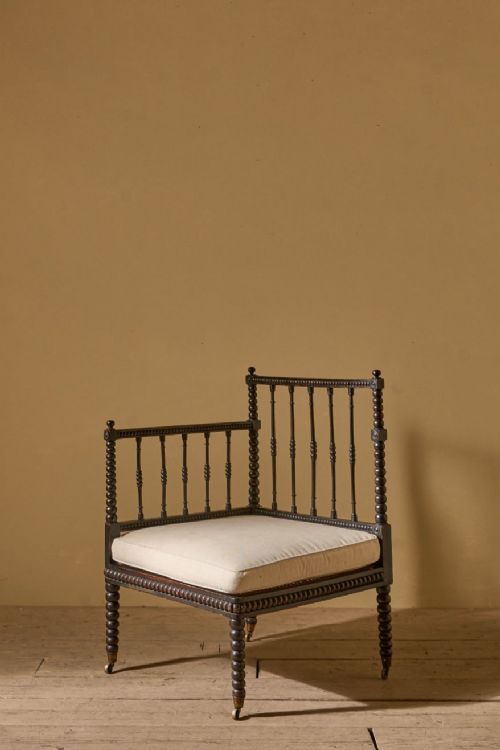
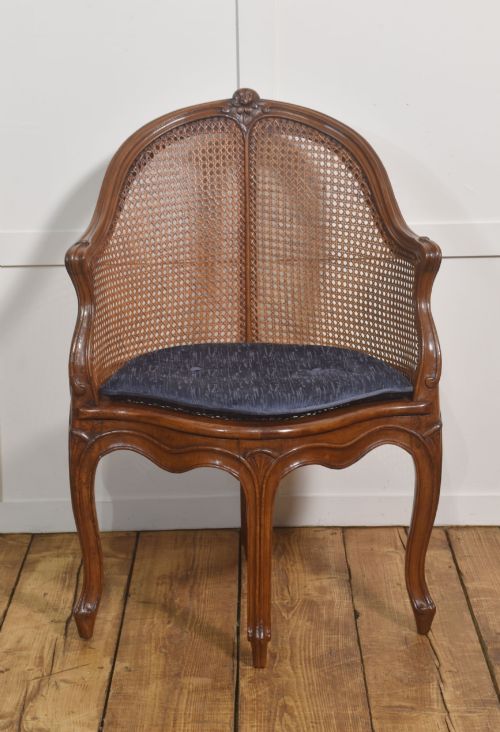
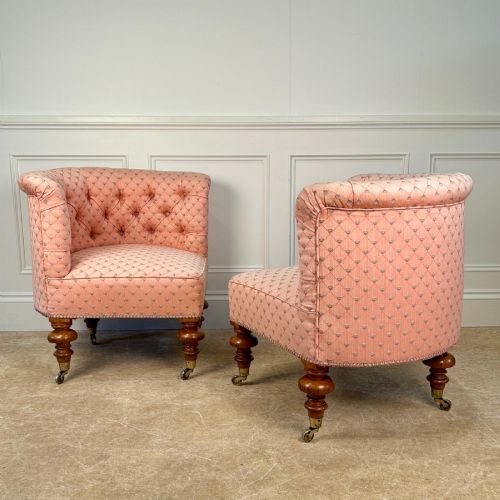
A 19th century corner seat is designed specifically to fit into the junction of two walls, making efficient use of awkward room layouts while providing a comfortable spot to sit. These pieces typically take the form of corner chairs, armchairs, or compact bedroom chairs originating from the Victorian era and spanning various regional styles.
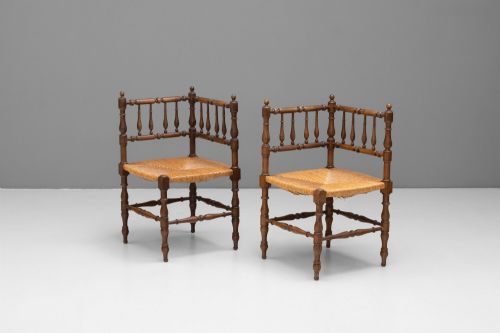
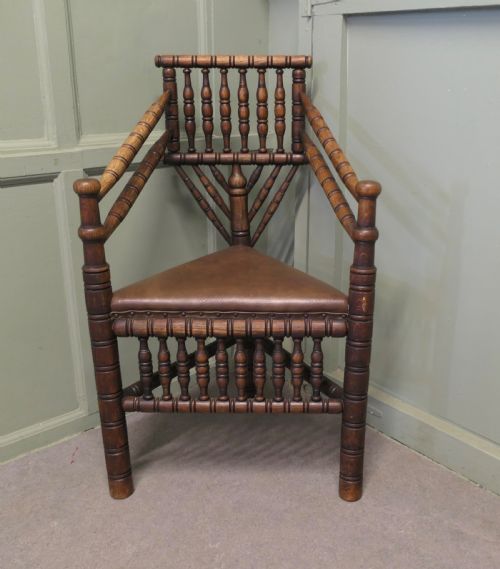
You will most commonly encounter sturdy oak versions featuring turned members or carved ornamentation, alongside occasional examples rendered in walnut, mahogany, ebonised timber, or pine. Some pieces incorporate rush seats, cane panels, or modern upholstery fabrics that replace original textiles.
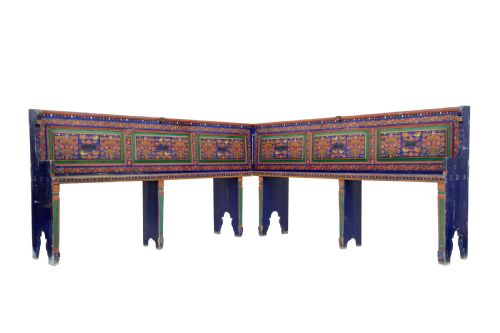
The selection ranges from vernacular rustic country pieces and European folk art designs to revival styles such as Renaissance Revival, Saxon Revival, and French Louis XV. Certain examples utilise specialised forms like the traditional turner's chair or low-slung boudoir seating.
Materials and construction
Makers relied heavily on solid hardwoods like oak, walnut, mahogany, and beech for the primary frames, employing traditional joinery such as mortise and tenon to ensure structural rigidity. Turning techniques played a major role, producing decorative bobbin and spindle details across many frames.
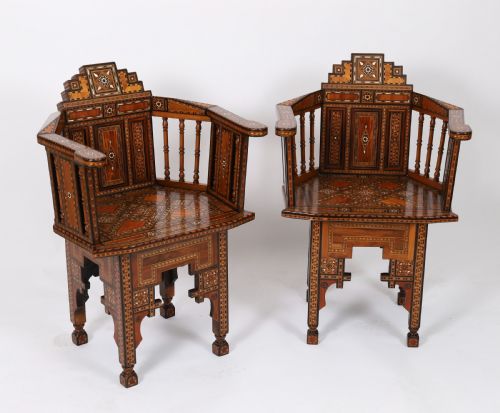
Surface finishes vary from polished ebonised timber and hand-painted folk art details to intricate parquetry inlay work using exotic woods. Seating surfaces incorporated drop-in frames, woven rush, cane work, or padded upholstery secured over brass tacks and webbing.
Styles span Victorian, French Louis XV, Renaissance Revival, Saxon Revival, Levantine parquetry, and European folk art.
Evaluating quality and execution
Quality in a 19th century corner seat is largely determined by the crispness of the carved or turned detail and the tightness of the frame's construction. Pieces displaying deeply cut foliage, well-defined bobbin turnings, or complex parquetry inlay represent finer workshop output.
The choice of primary timber and the integrity of secondary materials, such as undamaged cane panels or sturdy rush weaving, distinguish standard utilitarian items from exceptional decorative examples. Original surface patination and minimal structural alteration preserve the historical integrity of the piece.
Miles & Edward's
The 19th Century Corner Seat Glossary
- Bobbin chair
- A type of seating characterised by turned wooden members resembling reels or bobbins threaded together. This style gained significant popularity during the Victorian period.
- Turner's chair
- A sturdy, three-legged chair constructed entirely from turned wooden spindles and posts. It traces its lineage back to earlier centuries but saw enthusiastic revival production in the nineteenth century.
- Parquetry
- A geometric mosaic of wood pieces used for decorative veneer on furniture surfaces. Levantine examples frequently showcase this intricate woodworking technique.
- Club fender
- A low, upholstered-top metal frame placed around a fireplace hearth to provide extra seating. Brass is the predominant metal seen in nineteenth-century examples.
- Drop-in seat
- A removable upholstered frame that fits into a recess within the chair rails. This feature allowed for easier reupholstery over time.
19th Century Corner Seat: Frequently Asked Questions
What is a corner chair used for?
These chairs were historically placed in the corners of parlours, bedrooms, or studies where wall space was limited yet additional seating was required. Their diagonal orientation allowed occupants to converse easily with others in the room without blocking central floor space.
Today, they function equally well as striking accent pieces in hallways or living areas, offering a distinct architectural silhouette that standard armchairs cannot match.
How do I identify a Victorian corner seat?
Look for characteristic nineteenth-century timber choices such as dark oak, walnut, mahogany, or ebonised wood, often paired with revival design motifs like Saxon carving or French Louis XV shaping. Turned bobbin elements and heavy brass hardware are also strong indicators of the period.
Examining the underside of the frame and the construction methods used for joinery will further help confirm nineteenth-century origin against later reproductions.
Are rush and cane seats fragile?
Original rush and cane seating materials require gentle care and a stable indoor environment to prevent drying out or snapping under heavy, concentrated pressure. While durable for normal sitting, they should be treated with respect given their age.
Many surviving pieces have been successfully re-woven or reinforced over the decades to maintain their structural usability for modern homes.
How do I style a corner chair?
Position the chair in an empty room corner where its unusual angled lines can be fully appreciated, perhaps accompanied by a small floor lamp or side table. Avoid crowding it with large cushions that obscure the turned woodwork or carved back rails.
Selecting a fabric for the drop-in seat or upholstery that complements your existing interior palette will help integrate the antique smoothly into a contemporary room.