



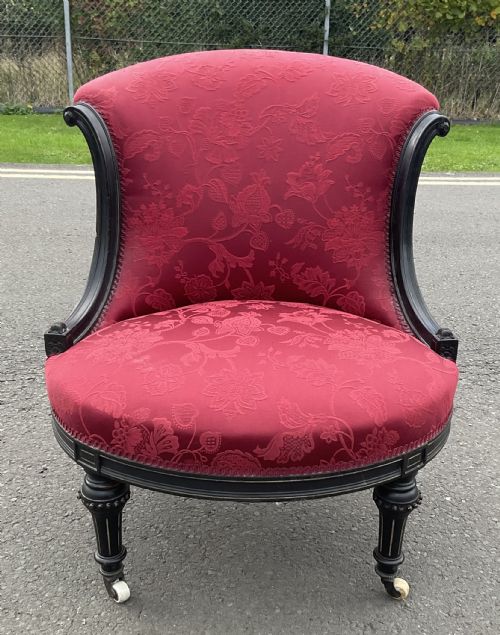
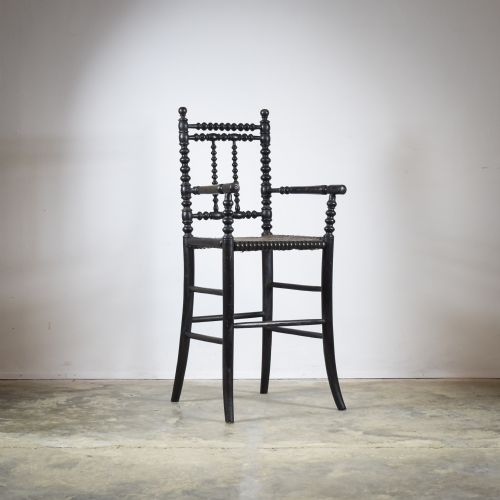
Black Turned Armchair
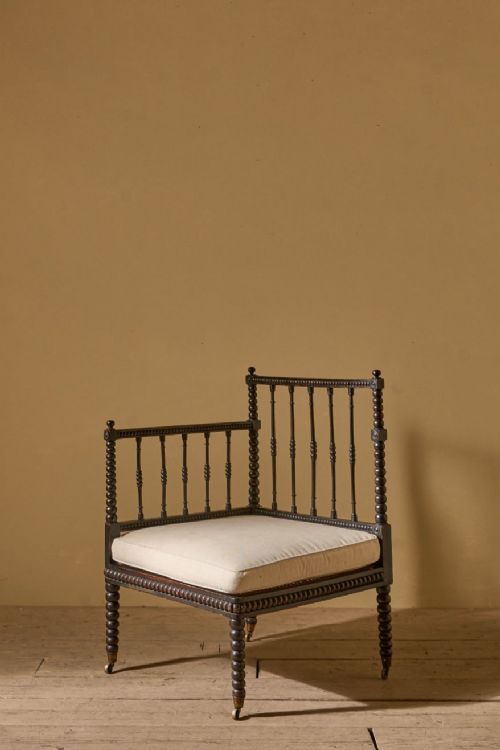
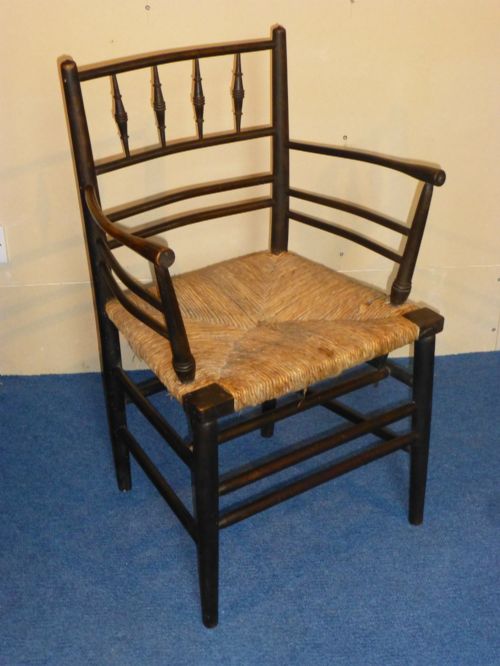
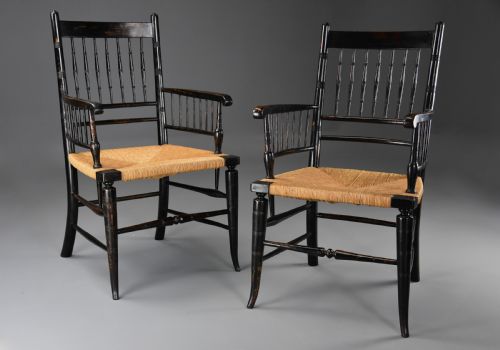
These black turned armchairs are robust vernacular seats with centuries of character, offering sturdy frames and distinct spindlework.
Black Turned Armchair
A black turned armchair brings together heavy timber frames and repetitive spindle or bobbin turnings, frequently seen across Victorian and nineteenth-century eras. The examples here span formats like corner chairs, rocking chairs, desk chairs, and child chairs, originating from English, French, and Scandinavian workshops.
Most pieces meeting this description rely on ebonised wood or original dark paint finishes, highlighting the turned woodwork characteristic of country styles and the Aesthetic Movement. You will encounter various regional interpretations, from country house armchairs to Morris & Co. Sussex chairs.
Materials and construction
Makers shaped these chairs using dense hardwoods like mahogany and oak, turning structural components on a lathe to create bobbin or spindle profiles. Surfaces were then ebonised, painted, or left in their original dark finishes.
Seating areas frequently incorporated woven rush, leather, or upholstered pads covered in traditional fabrics. Brass fittings occasionally appear on revolving desk chairs and specialised seating formats.
Judging quality in turned seating
Quality rests in the precision of the lathe work and the integrity of the joined frame, where crisp, uniform turnings indicate careful craftsmanship. The distinction between standard utility seating and high-end workshop production is visible in the balance and proportion of the spindles.
Original surfaces carry substantial weight, with genuine ebonising or early paint holding more integrity than later overpainting. Maker attributions, such as work linked to Morris & Co. or Gillows, also elevate the standing of a piece.
Morris & Co·Philip Webb·W.Williamson & Sons·Gillows
The Black Turned Armchair Glossary
- Ebonised wood
- Timber stained or painted to imitate ebony. This dark finish was widely favoured during the Victorian and Aesthetic periods.
- Bobbin turning
- A form of woodwork featuring spherical or spool-like shapes carved along the length of a spindle. It defines much of the nineteenth-century vernacular seating.
- Rush seating
- Woven marsh grass used to form chair seats. It provides a durable, tactile surface common in country and Arts and Crafts chairs.
- Aesthetic Movement
- A nineteenth-century design focus emphasising visual beauty over narrative content. It produced dark, stylised furniture forms.
- Corner chair
- A seating design featuring a diagonal placement intended to fit into room corners. These often include turned supports and multiple armrests.
Black Turned Armchair: Frequently Asked Questions
How do I date a turned armchair?
Dating relies on material construction, tool marks left on the timber, and the style of the turnings. Nineteenth-century examples often utilise ebonised finishes or specific regional chair forms.
Examining the upholstery webbing, joinery methods, and any maker stamps helps narrow the period of origin more precisely.
Are these chairs comfortable for daily use?
Many of these pieces were designed for functional seating in libraries, desks, or parlours. Their ergonomic comfort depends on the seat height and whether they feature padded upholstery or rush.
Adding a loose cushion can improve comfort on wooden or rush seats without altering the antique frame.
What is the difference between ebonised and painted chairs?
Ebonising involves treating the timber itself to achieve a deep black colour, often with a polished or satin sheen. Original paint sits as a surface layer and frequently shows organic wear over time.
Both finishes were utilised across different periods to achieve a dark, unified aesthetic.
Where should I place a turned chair?
These armchairs suit studies, hallways, or living rooms where their strong silhouette and turned woodwork can act as focal points. Corner chairs fit neatly into unused angles of a room.
Keeping them away from direct heat sources protects the timber frames and original surface finishes.