

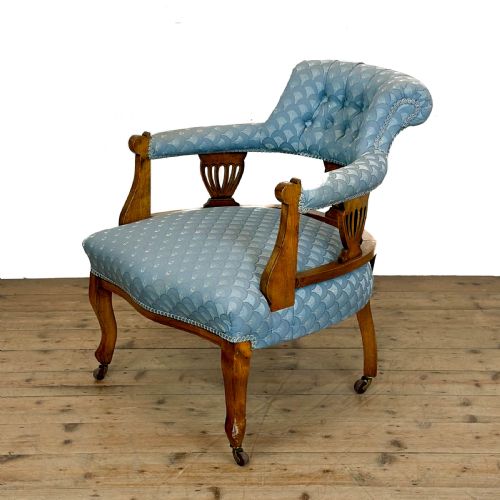


Antique Tub Corner Chair
These antique tub corner chairs offer curving backs and sturdy frames that slot neatly into domestic spaces.
Antique Tub Corner Chair
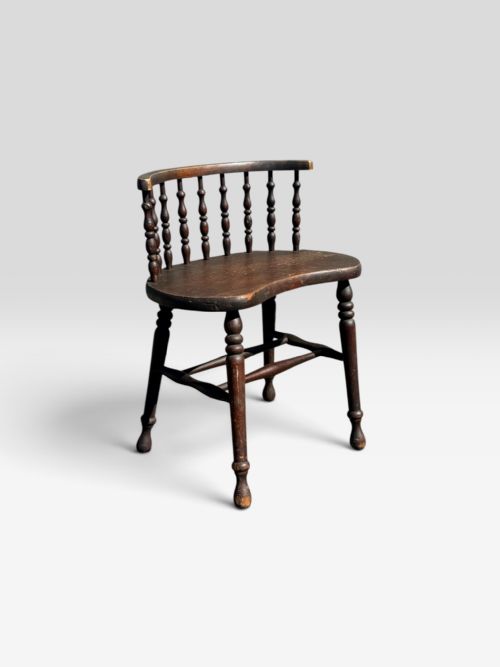
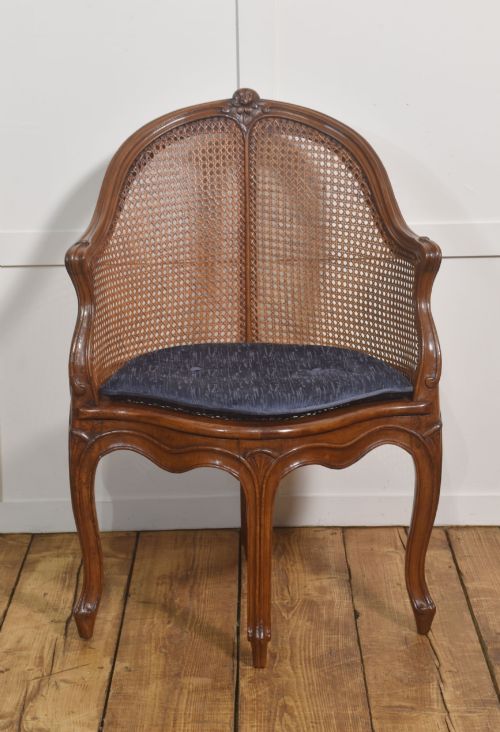
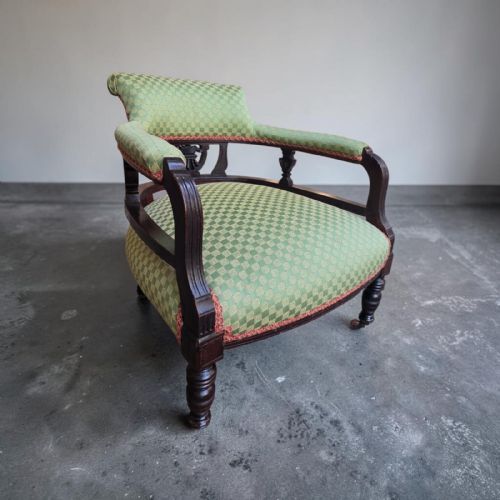
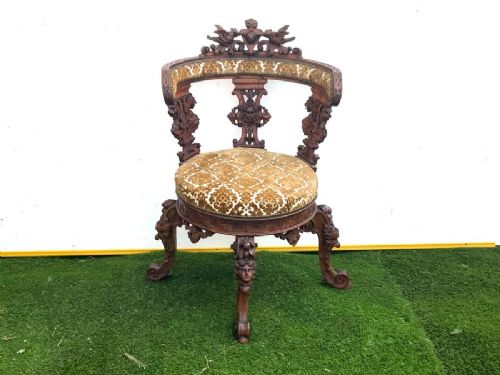
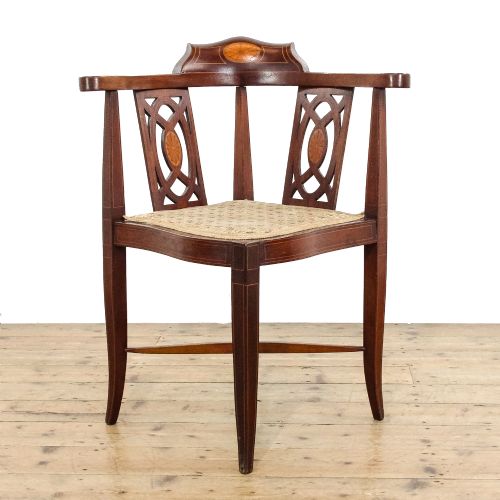
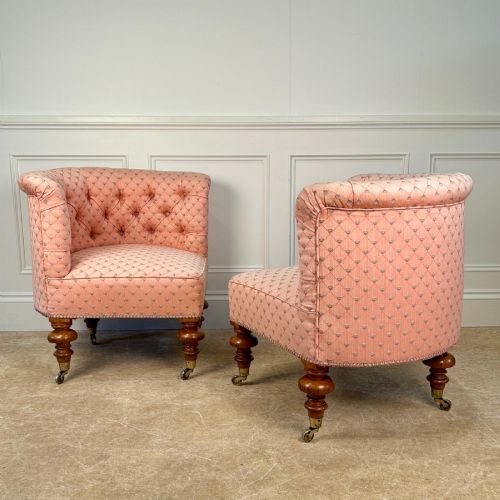
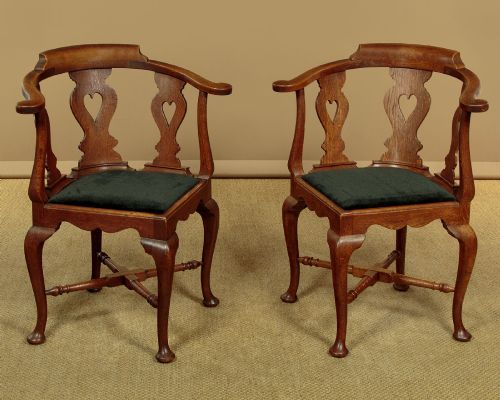
An antique tub corner chair combines the curved enclosing back of a tub seat with the angular geometry designed to fit precisely into a room intersection. The examples seen on this page span the Victorian and Edwardian eras, alongside pieces stretching back to the nineteenth and eighteenth centuries.
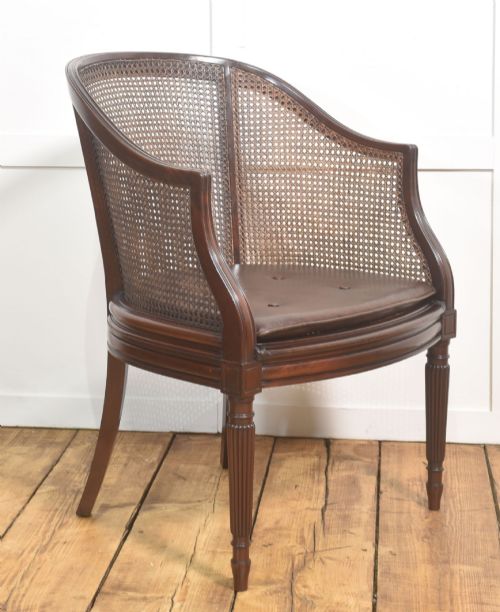
Makers shaped these seating forms in mahogany, oak, walnut and elm, often equipping them with cane panels or upholstered pads in fabric and leather. They appear frequently as occasional chairs, salon seating and occasional armchairs with distinct marquetry or inlaid decoration.
How they were made
Cabinet makers utilised dense hardwoods such as mahogany and walnut for the structural frames, bending timber to form the characteristic curved tub backs. They reinforced these joints to handle the lateral stresses unique to corner placement.
Surface embellishment relied on satinwood inlay, marquetry detailing and elaborate hand carving. Caning and traditional upholstery methods completed the seats, secured with brass tacks or internal webbing.
Several examples feature hidden corner angles specifically engineered so gentlemen could sit comfortably while engaging in card games.
What varies in quality
The sophistication of the timber selection and the precision of the joinery dictate the upper tier of these chairs. Finely figured mahogany and crisp, deep hand-carving separate standard workshop output from exceptional commissions.
The execution of delicate marquetry and inlay work demonstrates the skill invested by the original maker. Original cane work and intact structural integrity elevate an example far beyond pieces that require extensive rebuilding.
Miles and Edwards
The Antique Tub Corner Chair Glossary
- Tub chair
- A low-backed armchair featuring a continuous curved backrest that wraps around the sides to form enclosed armrests. This shape provides a snug and supportive sit.
- Corner chair
- A seating form engineered with a diagonal orientation so that one leg faces directly outward into the room. The backrest typically curves around two adjacent sides to fit room intersections.
- Marquetry
- The art of applying decorative veneer pieces in wood to a structural surface to create pictorial or geometric patterns. Makers used contrasting timber tones to achieve visual depth.
- Caning
- A woven lattice technique using split rattan plant material applied to chair backs and seats. This method introduces a lightweight texture to heavy timber frames.
- Bergere
- A French-style upholstered armchair with enclosed sides usually filled with cane or tightly fitted upholstery. These pieces often feature exposed carved wooden frames.
Antique Tub Corner Chair: Frequently Asked Questions
Where should I place a corner chair?
These chairs find a natural home in empty room intersections or bedroom corners where standard rectangular furniture leaves awkward gaps. Their angled geometry allows them to utilise dead space effectively while providing a functional seat.
They also work well paired beside a desk or as an occasional accent piece in a hallway without blocking thoroughfares.
How do I care for antique wood and cane?
Maintain timber surfaces by applying appropriate furniture wax sparingly and buffing with a soft cloth to preserve the natural grain. Avoid placing these chairs near direct heat sources or strong sunlight which can dry out the wood and finish.
Keep cane panels clean with a gentle brush and occasional light moisture to prevent the natural fibres from becoming brittle over time.
What is the difference between Victorian and Edwardian examples?
Victorian models tend to display heavier proportions, darker mahogany or walnut timbers, and more robust carving traditions. They often feature deep upholstery and rich fabric choices.
Edwardian pieces generally present a lighter aesthetic with satinwood inlay, marquetry decoration, and occasional cane inserts reflecting a shift towards brighter, more refined drawing room furniture.
Were these chairs used for writing desks?
Certain low-backed forms served dual purposes in libraries and studies as comfortable seating for writing desks. Their enclosing tub backs offered support during extended periods of correspondence.
Many other variants functioned primarily as salon or occasional chairs intended for social gatherings rather than task seating.