
19th Century Column
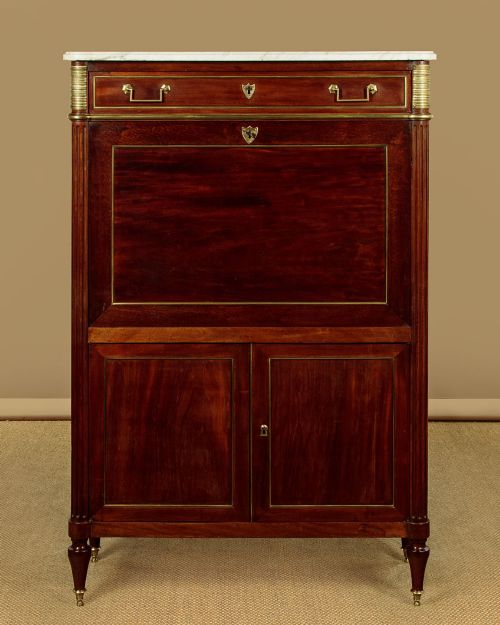
A 19th century column brings classical proportion and architectural weight into an interior through marble, bronze, carved wood, or scagliola.
19th Century Column
A 19th century column encompasses architectural supports, display pedestals, floor standards, and structural framing elements drawn from classical antiquity. Buyers searching for a 19th century column encounter structural pillars, monumental display pedestals, and decorative mirror frames featuring columnar architecture.
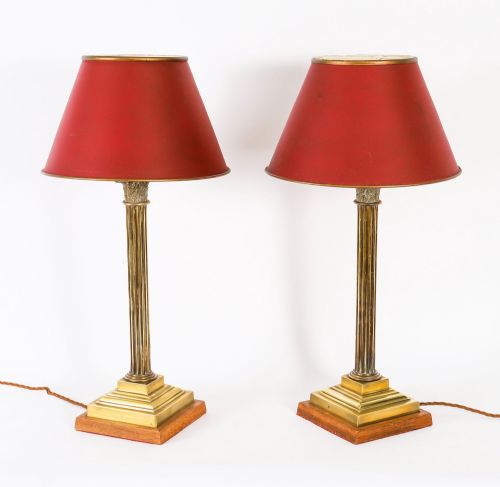
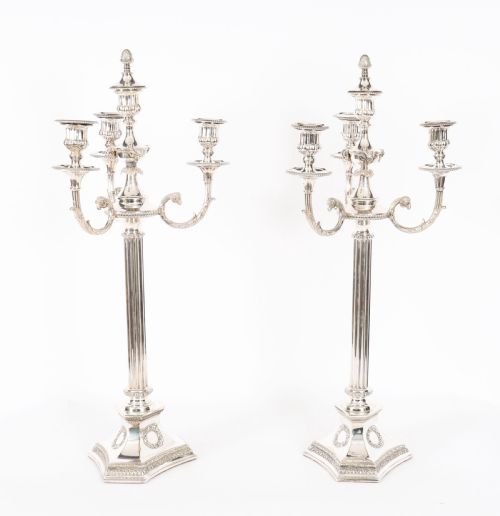
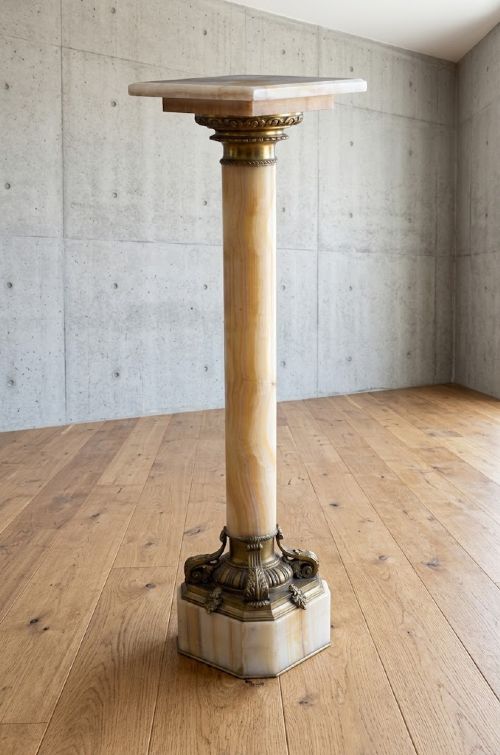
The selection ranges from tall freestanding marble and scagliola shafts designed to elevate busts and urns to converted lighting standards and architectural wood components. Many examples reflect the Victorian and Regency enthusiasm for Neoclassical design, incorporating classical orders into domestic and grand interiors.
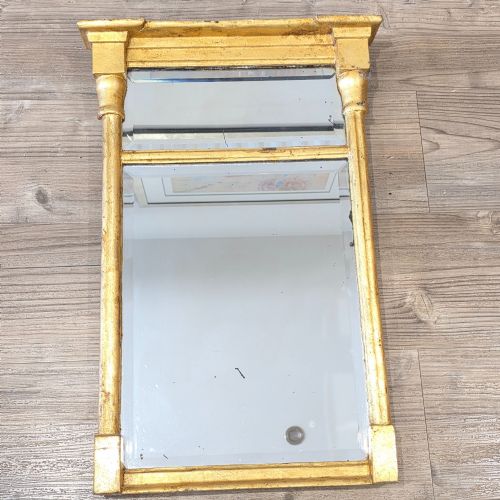
Freestanding forms appear alongside architectural antiques such as overmantle mirrors flanked by carved and gilded columns. Originating from British, French, and Italian workshops, these items serve primarily as display platforms or decorative architectural accents.
What varies in quality
Quality rests upon the purity of the material and the precision of the classical detailing in the capitals and fluting. Superior examples demonstrate crisp carving in wood and stone, or meticulous casting in bronze and brass, avoiding the soft edges seen in commercial reproductions.
The integrity of surface finishes, whether original gilding, painted decoration, or polished marble, distinguishes high-grade items from those with compromised or modernised surfaces. Structural stability in slender marble and wood shafts also marks the division between utilitarian items and superior decorative works.
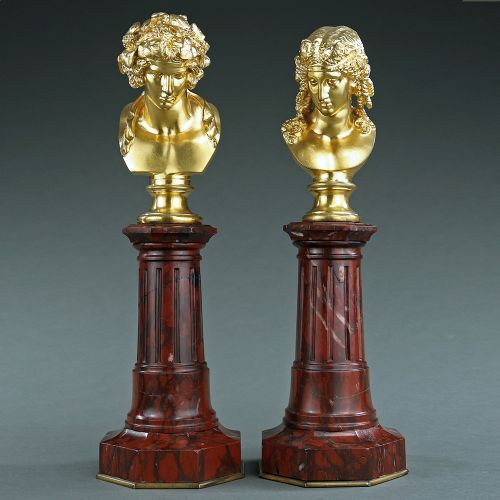
The inventory records columns spanning the Victorian, Regency, and Neoclassical styles, alongside Grand Tour bronzes and French architectural clocks.
The 19th Century Column Glossary
- Scagliola
- A composite material made from pigmented gypsum, glue, and natural pigments, applied and polished to imitate true marble. It allowed 19th-century makers to create lightweight architectural columns with convincing faux-marble surfaces.
- Corinthian
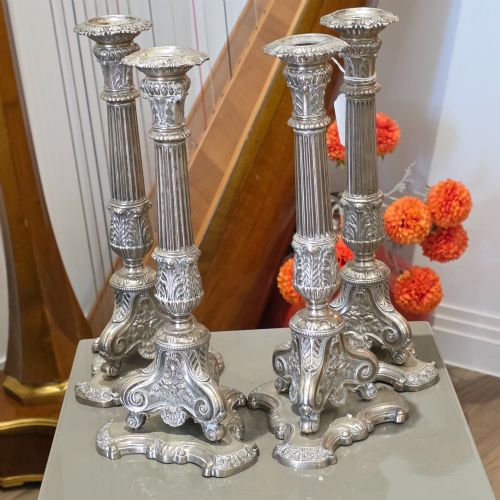
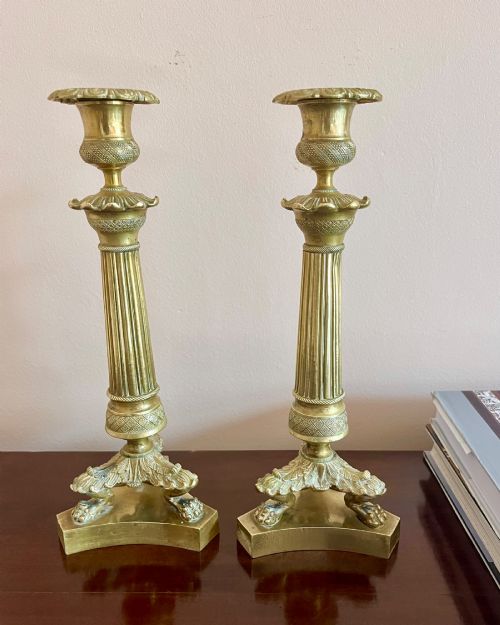
- A classical architectural order identified by ornate capitals decorated with acanthus leaves. This style appears frequently on 19th-century brass and bronze table lamps and floor standards.
- Ormolu
- Gilt bronze applied to furniture mounts, clock cases, and column collars. The technique involves mercury gilding to produce a rich metallic lustre.
- Gesso
- A plaster-like mixture applied to carved wood surfaces as a smooth base for gilding or paint. It is commonly found on 19th-century column-framed overmantle mirrors.
- Gueridon
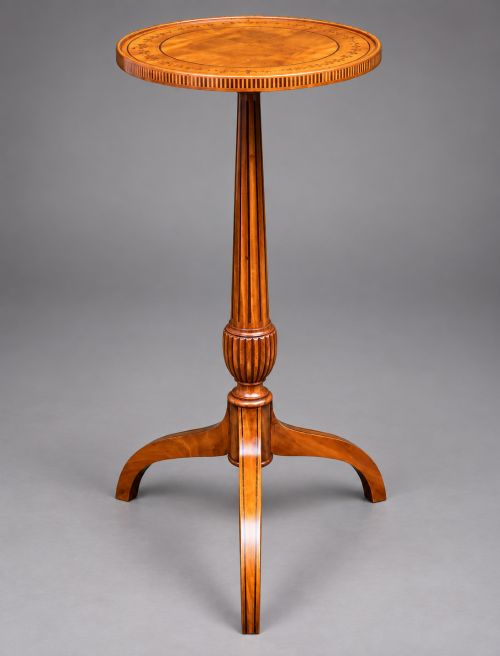
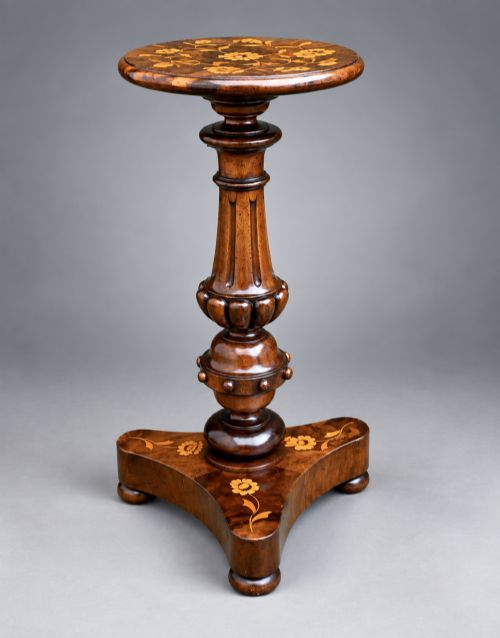
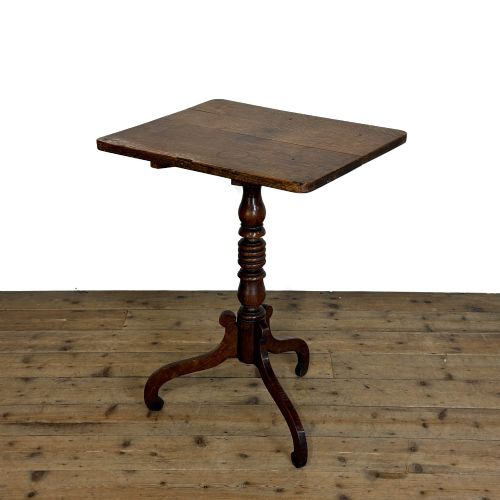
- A small decorative round table supported by a single central column or pedestal. These pieces often feature marble tops and inlaid wood.
19th Century Column: Frequently Asked Questions
What is a scagliola column?
A scagliola column is an architectural support or pedestal made from a composite of plaster, glue, and pigments worked to imitate genuine stone. Artisans polished the surface to replicate the complex veining of marbles like Siena or porphyry.
These pieces offered the visual weight and richness of solid stone at a reduced weight and cost during the 19th century.
How were column pedestals used?
Column pedestals served as elevated display platforms for sculpture, bronzes, table lamps, and decorative urns within 19th-century interiors. They allowed collectors to showcase Grand Tour souvenirs and art objects at eye level.
In domestic settings, they functioned as architectural dividers or focal points in libraries, hallways, and drawing rooms.
Are these columns structural?
Most surviving 19th-century columns are decorative or display pieces rather than load-bearing architectural supports. Freestanding examples were designed to stand against walls or in room corners to hold objects.
Architectural elements like mirror frames incorporate half-columns for visual framing rather than structural weight.
How do I identify Neoclassical style?
Neoclassical pieces draw direct inspiration from the art and architecture of ancient Greece and Rome. They display strict symmetry, fluted shafts, and recognizable architectural orders such as Corinthian or Doric.
Materials like bronze, brass, and white marble dominate this aesthetic, reflecting archaeological discoveries of the period.