


19th Century Chinese Altar Table
A 19th century chinese altar table brings architectural presence and ritual proportion to an interior, shaped by Qing Dynasty tastes.
19th Century Chinese Altar Table
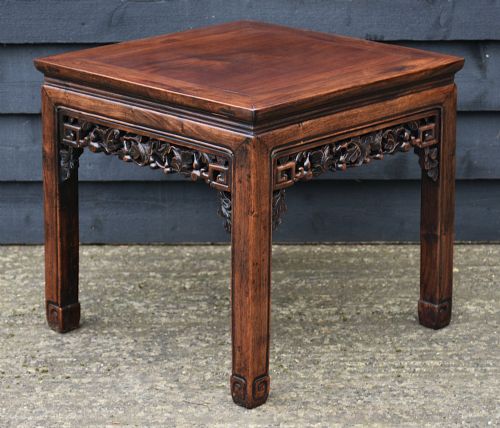
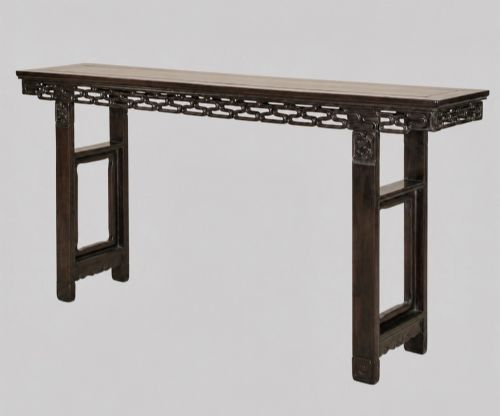
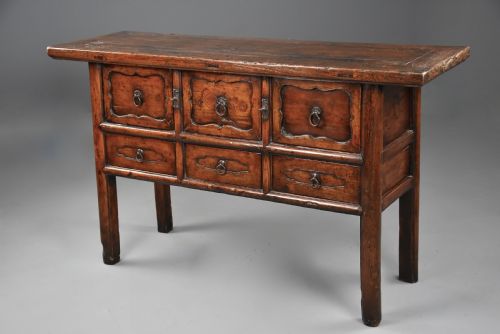
A 19th century chinese altar table sits at the intersection of domestic utility and ceremonial function, taking the form of narrow console tables, low tables, and wider cabinet-backed pieces. These objects originate largely within the Qing Dynasty and provincial Chinese workshops, spanning dates from the early decades through to nineteen hundred.
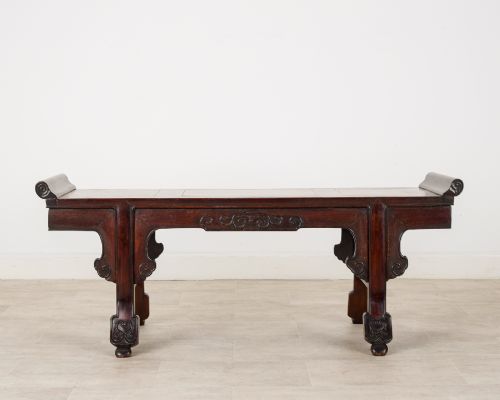
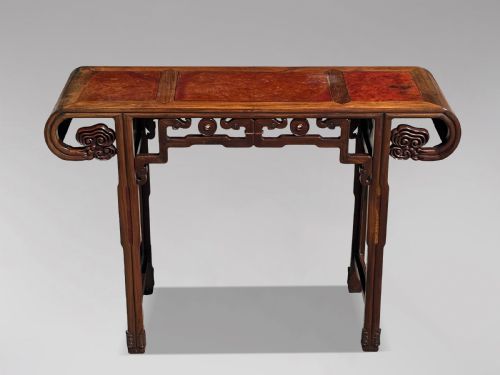
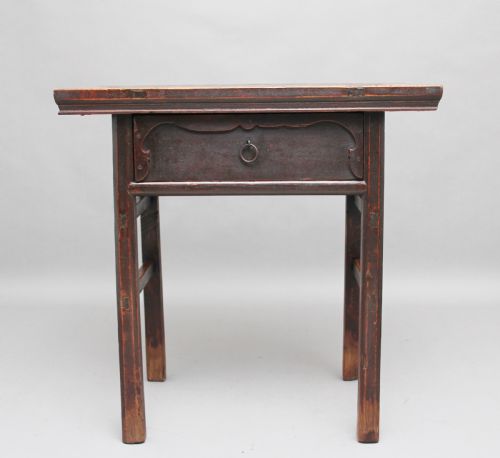
The version most commonly met on this page is the elm or hardwood side table and rectangular altar console, often displaying the characteristic upturned ends of traditional ritual furniture. Alongside these dedicated altars, the category encompasses related forms like benches, sideboards, desks, and scholar's tables produced in the same aesthetic climate.
How they were made
Carpenters constructed these tables using dense timbers such as elm, hongmu, and rosewood, frequently relying on joinery systems that avoided metal nails. Planks were selected for grain and stability, then shaped into trestles, plank-tops, and panelled frames.
Surface finishes range from clear rubbed applications that expose the natural grain and patina of the hardwood to layers of red lacquer, sometimes embellished with gilt or paired with brass and iron mounts.
Upturned flanges at the table ends were originally designed to prevent ritual jade tablets from sliding off during ancestral ceremonies.
What varies in quality
Quality rests primarily in the selection of timber and the crispness of any carved detail, distinguishing dense hongmu and well-figured elm from simpler utility pieces. Weight, balance, and the integrity of the original joints dictate the structural standing of each table.
The survival of an original surface finish, whether deep red lacquer with historic patina or polished hardwood, separates preserved examples from heavily restored or stripped pieces.
The 19th Century Chinese Altar Table Glossary
- Hongmu
- A dense, heavy tropical hardwood prized in Chinese furniture making for its deep colour and durability.
- Elm
- A domestic timber widely utilised in regional Chinese cabinet-making for its fibrous strength and attractive grain patterns.
- Qing Dynasty
- The final imperial dynasty of China, lasting from sixteen forty-four to nineteen twelve, which defined the stylistic vocabulary of these pieces.
- Lacquer
- A durable resin finish applied in multiple layers to wood, often pigmented in dark red or black.
- Console table
- A long, narrow table designed to stand against a wall, frequently employed in ritual altar arrangements.
19th Century Chinese Altar Table: Frequently Asked Questions
Where were altar tables placed?
These tables stood against the main wall of a reception hall or ancestral room, holding ceremonial vessels, scrolls, and offerings during rituals.
In modern interiors, their narrow proportions make them practical surfaces for hallways, living spaces, and behind sofas.
How do I identify elm from hongmu?
Elm presents a pronounced, undulating grain pattern with a lighter, warmer tone and a slightly fibrous texture when touched.
Hongmu is significantly heavier, with a denser, darker reddish-brown appearance that takes a sharp, crisp carved edge.
Can I use an altar table as a desk?
Many surviving examples, particularly scholar's tables and writing desks from the period, provide adequate height and surface area for writing.
Altar tables with upturned flanges at the edges require checking for knee clearance and comfort before everyday use as a desk.
What does red lacquer indicate?
Red lacquer signifies pieces finished with natural tree resin pigment, often associated with celebratory domestic or ceremonial contexts in Qing households.
Over decades of handling, these surfaces acquire a soft craquelure and worn patina that marks their age.