
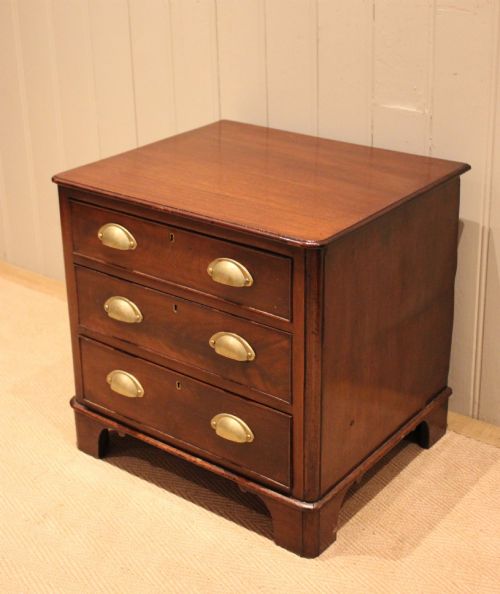
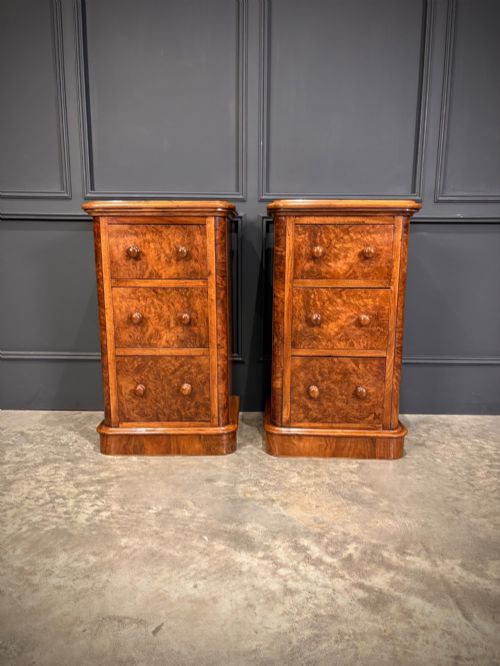
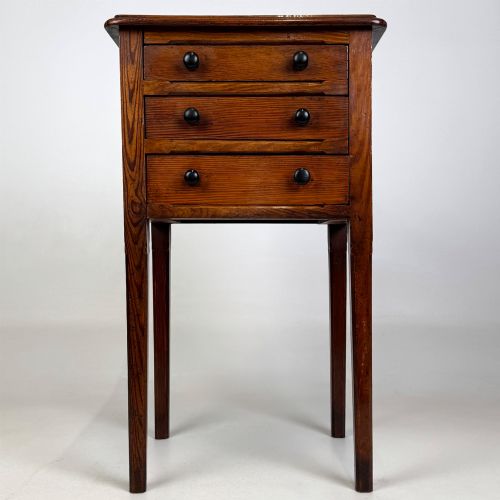
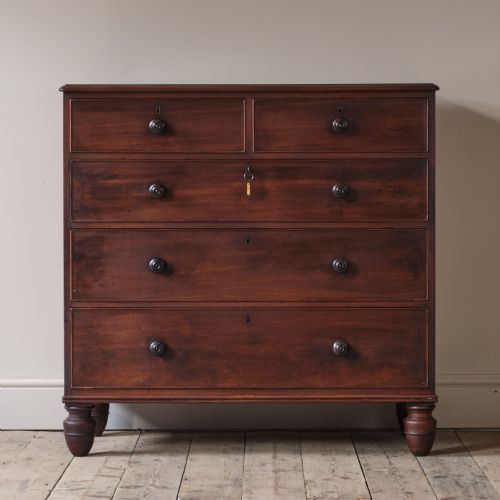



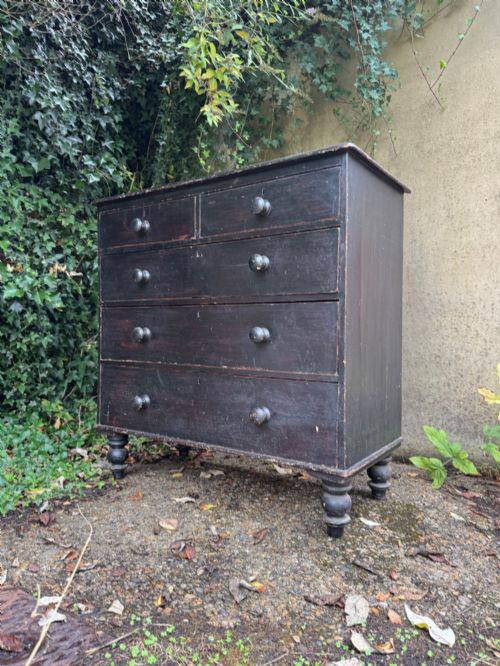
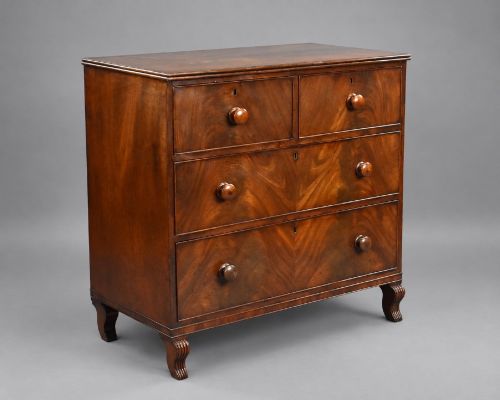
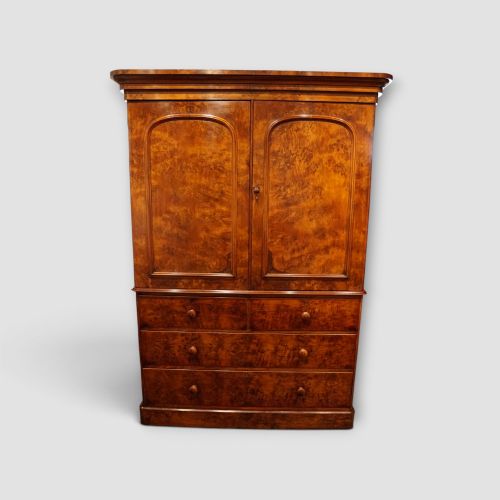

19th Century Chest of Drawers
A 19th century chest of drawers offers substantial period storage, uniting practical utility with craftsmanship across mahogany, oak, and pine.

How they were made
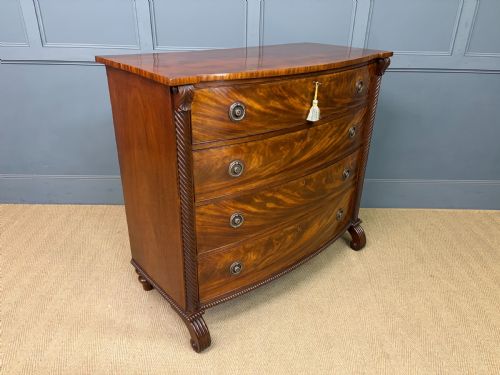
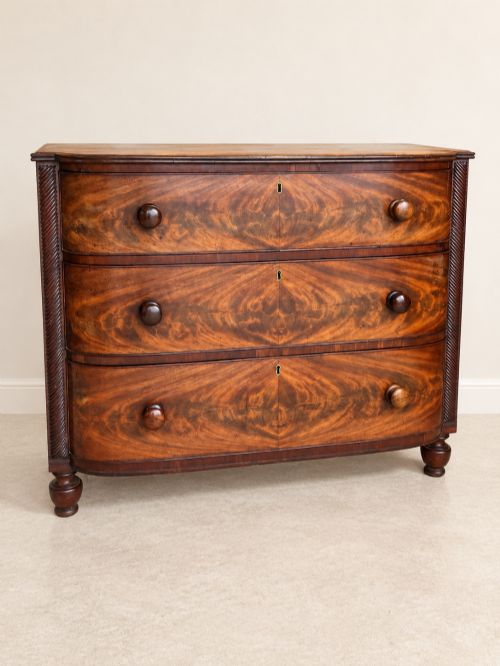
Cabinet makers utilised solid native and imported woods alongside decorative veneers including flame mahogany, burr walnut, and curl mahogany. Brass handles, escutcheons, and campaign mounts provide structural reinforcement and functional hardware.
Secondary timbers such as pine appear within drawer linings and carcases. Surface finishes rely on traditional polishing techniques that highlight the natural grain patterns of walnut and mahogany.
What varies in quality
Construction standards differ between standard domestic output and pieces attributed to known workshops or makers. The selection of timber veneers, from plain mahogany to figured burr walnut, defines the visual hierarchy.
The precision of dovetail joints, the uniformity of drawer linings, and the retention of original brass hardware distinguish finer examples. Regional variations in proportion and carving detail further separate basic utility items from high status commissions.
19th Century Chest of Drawers Retail Price Guide 2026
Typical asking prices for 19th century chest of drawers among the pieces listed under this phrase on Sellingantiques today, from the lower quarter to the upper quarter. They describe what is for sale here now, not the wider market.
Homeopathic and apothecary chests appear alongside standard bedroom drawers, ready to dispense remedies from tiny numbered compartments.
T & G Seddon·Heals Of London·Maple & Co·Gillows
The 19th Century Chest of Drawers Glossary
- Bow front
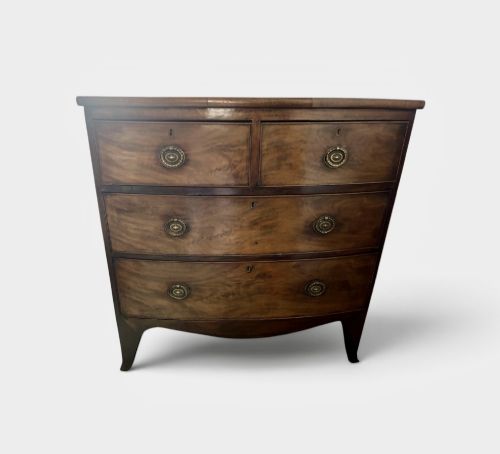
- A cabinet front that curves outwards in a convex arc. This shape gained popularity during the Regency period.
- Secretaire
- A chest or cabinet featuring a fitted pull down writing drawer concealing small compartments and pigeonholes. These items combine desk and storage functions.
- Campaign chest
- Portable modular furniture built in sections with recessed brass handles for military transport. Teak and camphor wood frequently serve as materials.
- Tallboy
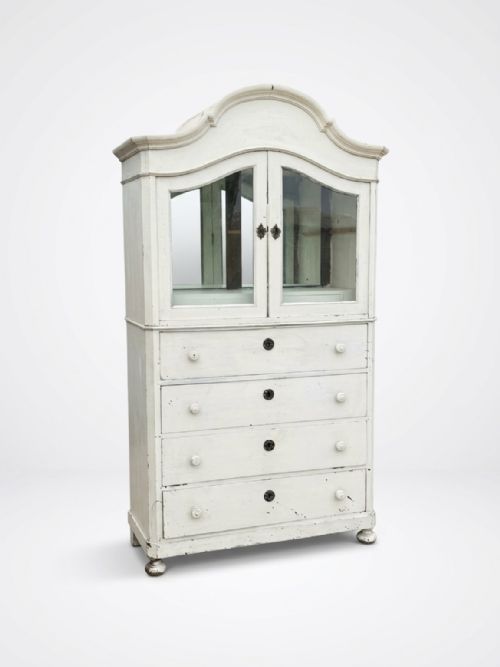
- A tall chest of drawers standing on a base section or formed as a single tall carcase. This configuration maximises vertical storage capacity.
19th Century Chest of Drawers: Frequently Asked Questions
How do I identify a Regency period chest?
Regency pieces often display clean architectural lines, flame mahogany veneers, and bow fronted profiles. Brass ring handles and splayed bracket feet frequently accompany these designs.
Proportions tend to remain balanced and elegant, reflecting classical design influences from the early decades of the century.
Where were campaign chests used?
Campaign chests were built for British military officers travelling on colonial service. Their sectional design allowed easy dismantling for transport on ships or pack animals.
Recessed brass mounts protected the corners from impact during rough transit.
How do I care for a mahogany chest?
Keep wooden furniture away from direct heat sources and dramatic humidity fluctuations to prevent veneer cracking. Regular dusting with a dry cloth maintains the polished surface.
Avoid silicone based sprays and apply traditional beeswax sparingly when the timber appears dry.