






19th Century Chess Board
A 19th century chess board brings functional play and polished timber into a room, offering tactile connection to past parlours.
19th Century Chess Board
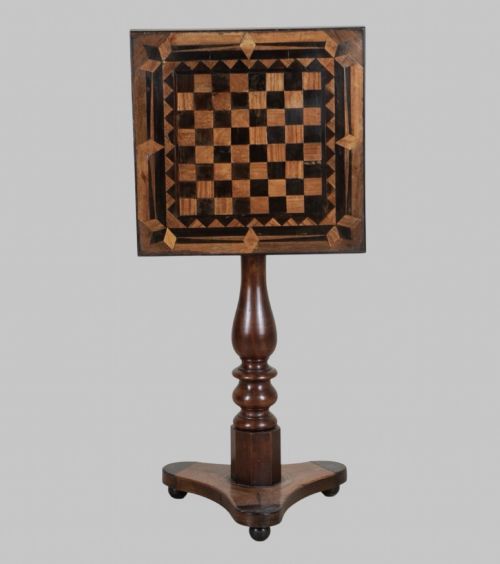
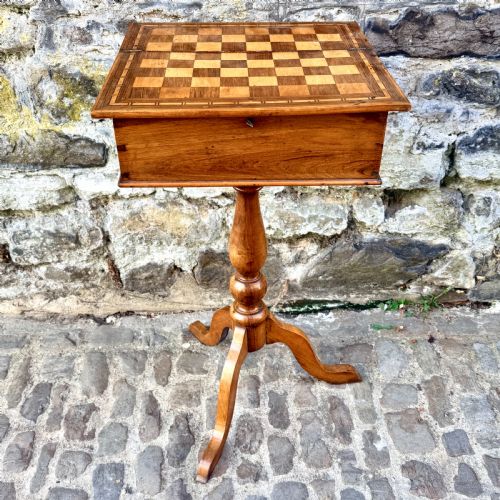
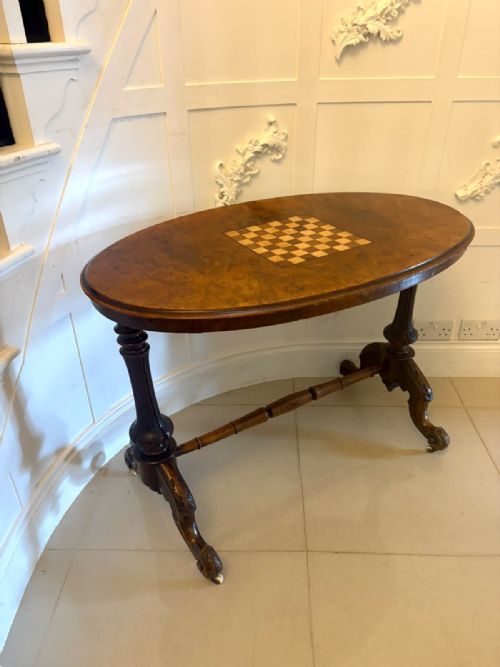
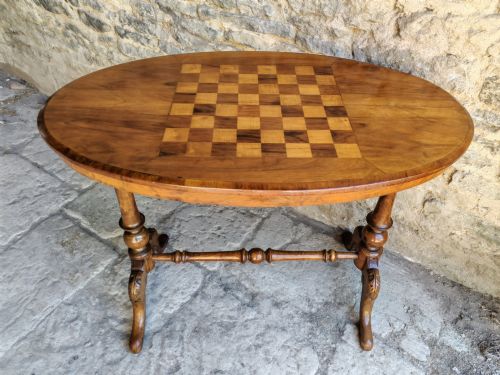
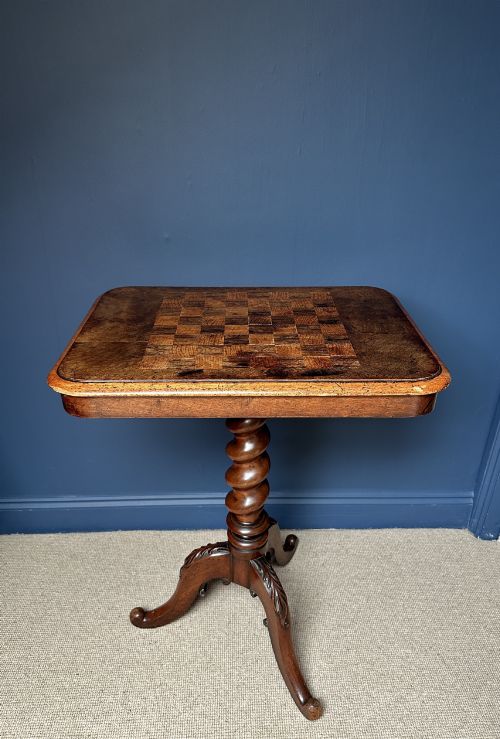
A 19th century chess board encompasses folding boards, standalone games tables, and fitted boxes that combine chess with backgammon interiors. Buyers encounter numerous variations ranging from simple inlaid boards to elaborate occasional tables and multipurpose furniture.
The material palette draws heavily on walnut, rosewood, mahogany, and boxwood, often enhanced by intricate wood inlay or penwork decoration. Many pieces originate from English, French, and Scottish workshops spanning the Georgian, Regency, and Victorian eras.
How they were made
Cabinet makers utilised dense hardwoods like rosewood and walnut for stability, contrasting lighter timbers such as boxwood, sycamore, and satinwood to form the alternating squares. Wood inlay and penwork surface decoration required precise hand-cutting and skilled application to achieve crisp geometric layouts.
More complex forms incorporated turned pedestals, folding hinges for portable play, and secondary interiors lined for backgammon or fitted with sewing compartments. Surface finishes were polished to highlight natural grain patterns and tonal shifts in the timber.
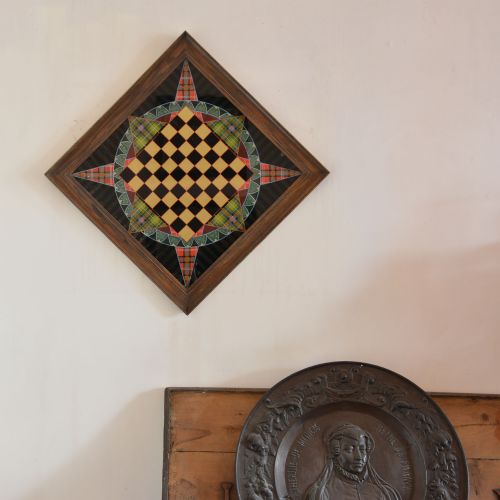
Furniture forms range from folding travel boxes and reverse glass painted boards to heavy pedestal tables with backgammon interiors.
What varies in quality
Precision in the geometric alignment of the squares and the crispness of the timber contrast determine visual success. Finer examples display meticulous matching of wood grains, delicate penwork detail, and stable joinery across folding hinges or pedestal bases.
Material selection marks the tier of a piece, with burr walnut, specimen woods, and mother-of-pearl accents appearing on higher-grade specimens. Structural integrity in the table legs or box hinges separates robust functional items from purely decorative survivors.
Gillows·George Merrifield·Henry Whitty of Liverpool
The 19th Century Chess Board Glossary
- Penwork
- A decorative technique using fine ink drawing on wood to simulate elaborate inlay. It appears frequently on Regency games tables.
- Specimen wood
- Timber selected for its unusual grain, colour, or origin and arranged in geometric patterns. These woods create decorative mosaic effects on tabletops.
- Backgammon interior
- A playing surface integrated into the reverse of a board or inside a folding box. This dual purpose serves domestic entertainment needs.
- Games compendium
- A fitted box containing multiple board games and playing pieces together. These comprehensive sets often include chess, backgammon, and card accessories.
19th Century Chess Board: Frequently Asked Questions
How do I date a 19th century chess board?
Dating relies on stylistic markers, timber choices, and construction methods. Regency pieces often display fine penwork and rosewood frames, while Victorian examples lean towards burr walnut and heavier pedestal bases.
Examining hinge types, dovetails, and secondary woods helps narrow the period of manufacture. Inscribed markers or attribution to workshops like Gillows provide further historical context.
Were these boards used for travel?
Many folding boards and compact games boxes were designed for portability. Travellers utilised folding rosewood or mahogany boards that safely enclosed playing pieces inside.
Ship's boards and smaller compendiums allowed players to enjoy matches away from home. These portable versions maintained sturdy construction to withstand regular movement.
What is a games table?
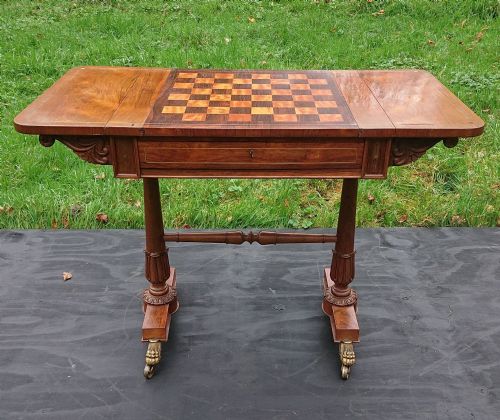
A games table is a piece of multi-functional furniture featuring a dedicated playing surface on top or hidden beneath a swivel leaf. They served domestic leisure in nineteenth-century parlours.
Many examples convert from an occasional table or desk into a chess, backgammon, or card table. Their dual functionality made them practical additions to reception rooms.
How should I care for timber chess boards?
Maintenance requires keeping wooden boards away from direct sunlight and extreme humidity changes. Stable indoor conditions prevent the timber and delicate inlays from warping or cracking.
Occasional dusting with a soft, dry cloth preserves the polished surface. Avoid abrasive cleaners or excess moisture on antique wood and inlaid squares.