


Victorian Wooden Chessboard
A victorian wooden chessboard brings the serious play and quiet craft of the nineteenth-century parlour straight to the table.
Victorian Wooden Chessboard
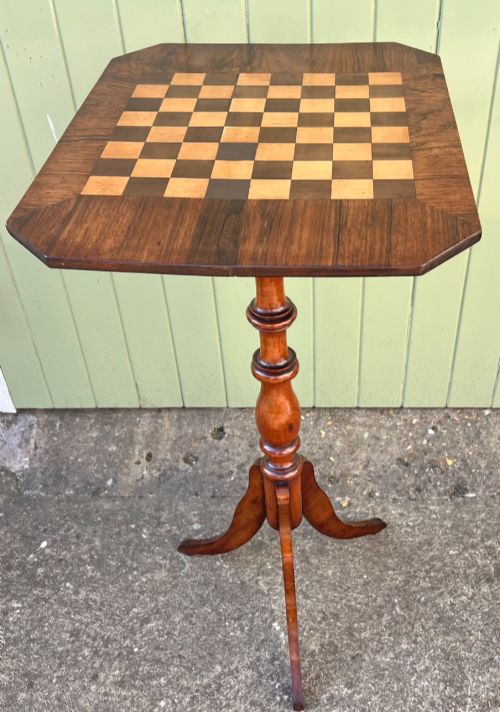
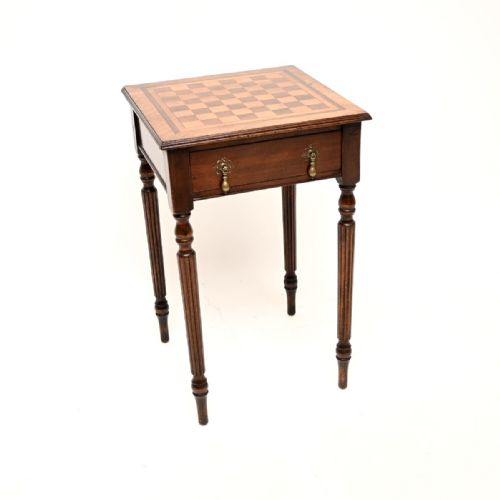
A victorian wooden chessboard appears in several distinct forms across these pages, ranging from folding travel boxes and tabletop boards to grand pedestal games tables with integrated storage for pieces. The examples here include standalone inlaid boards alongside multi-use compendiums and sewing tables that double as playing surfaces.
Most pieces date from the nineteenth century, taking the form of rectangular boards or larger furniture designed specifically for social play. Walnut, rosewood and mahogany dominate the offerings, often enhanced by intricate marquetry or contrasting light and dark squares.
How they were made
Cabinetmakers built these pieces using dense hardwoods like mahogany, walnut and rosewood for the primary structures and borders. Boxwood, ebony and sycamore provided the sharp tonal contrast required for the individual playing squares.
Wood inlay and marquetry formed the decorative surface patterns, while more elaborate items incorporated turned wooden pedestals, carved oak details and mother-of-pearl accents. Brass fittings appeared on boxes and compendiums to secure folding lids and interior storage compartments.
The listings span the nineteenth century, featuring walnut, rosewood, mahogany, boxwood and ebony across various games tables and boards.
What varies in quality
The standard of timber selection and the precision of the wood inlay define the upper tier of these pieces. Fine grain matching and stable joints separate a bespoke parlour table from a simpler utilitarian board.
Richer surfaces feature thoughtful combinations of contrasting timbers such as rosewood, walnut and boxwood, alongside secondary games interiors like backgammon boards. Finer construction also shows in the retention of original brass hardware and well-fitted storage boxes.
A British Chess Company
The Victorian Wooden Chessboard Glossary
- Marquetry
- Decorative veneer work applied to wood furniture to form geometric patterns or pictures. Craftsmen cut thin pieces of contrasting timber and fitted them together precisely.
- Boxwood
- A dense, pale yellow hardwood frequently employed for the lighter squares on chessboards and for turned chess pieces. It holds fine detail exceptionally well.
- Compendium
- A fitted box or case containing multiple games, often including chess, backgammon and draughts alongside cards or dice. These portable sets were popular for travel and home entertainment.
- Backgammon
- An ancient board game played with counters and dice, frequently accommodated on the reverse side of a chessboard or inside a folding games box.
Victorian Wooden Chessboard: Frequently Asked Questions
What games do these boards include?
Many of these pieces serve dual or multiple purposes, combining chess with backgammon on an interior board or within a folding games box.
Larger games tables and compendiums often house the equipment for several pastimes beneath the main playing surface.
How do I care for a wooden chessboard?
Keep the wood away from direct sunlight and sudden temperature shifts to prevent the natural timber from drying out or warping.
An occasional light application of appropriate furniture wax helps maintain the sheen on walnut, rosewood and mahogany surfaces.
Were these boards made for travel?
Certain examples take the form of folding games boxes and compendiums designed specifically for use on journeys.
Larger pedestal tables and standalone boards remained stationary as permanent fixtures in nineteenth-century drawing rooms.
How do I identify a Victorian piece?
Look to the construction methods, timber choices and typical nineteenth-century forms such as inlaid walnut tables and rosewood boards.
Details like brass hinges, hand-cut marquetry and secondary interiors for backgammon point directly to the period.