




Rosewood Inlaid Chess Board
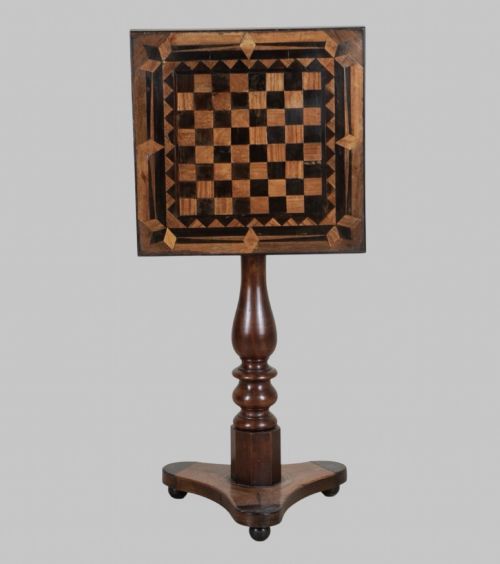
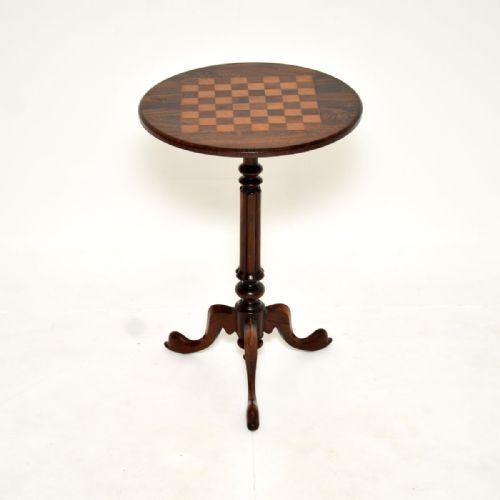
A rosewood inlaid chess board brings rich grain and contrasting squares together into a functional centrepiece for the room.
Rosewood Inlaid Chess Board
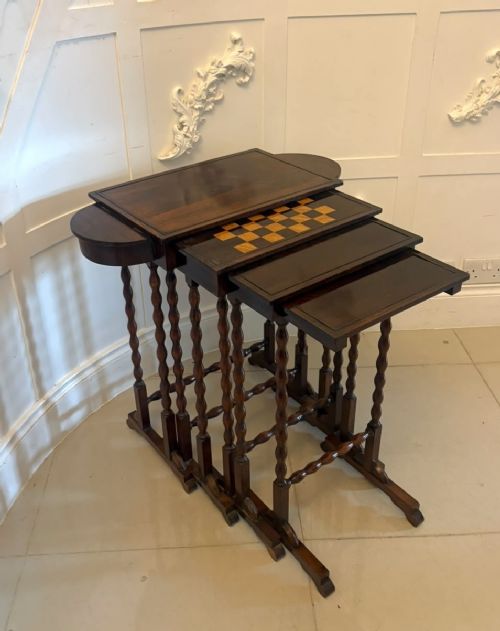
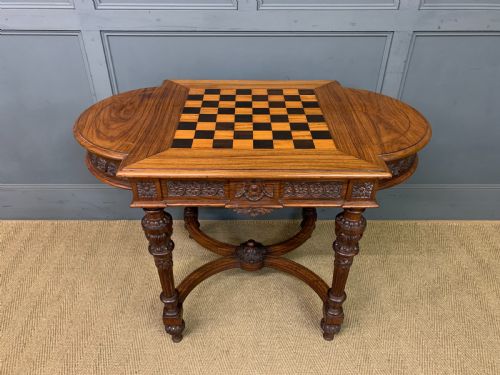
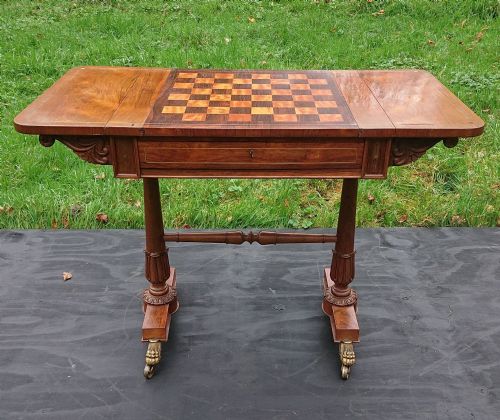
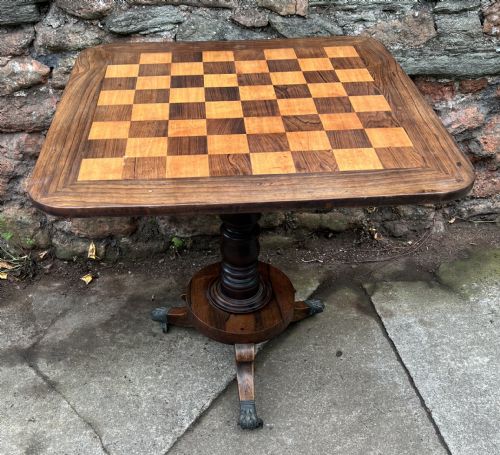
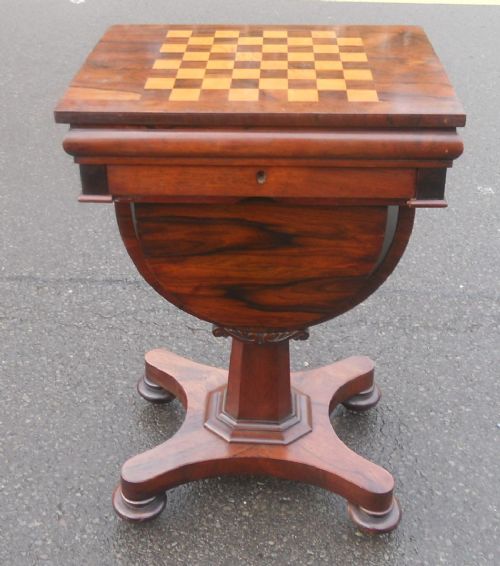
When you search for a rosewood inlaid chess board, you find pieces ranging from folding games boxes and tabletop boards to complete games tables supported by pedestals or nests. The most common versions on this page are sturdy occasional tables and folding boxes originating from the Georgian, Regency, and Victorian periods.
Makers often integrated the chequer board directly into the surface of a work table or occasional table, occasionally pairing chess with backgammon. Materials span across rosewood, boxwood, ebony, and satinwood, frequently reflecting Regency, Victorian, Georgian, or Anglo-Indian influences.
How they were made
Craftsmen utilised dark rosewood for the primary structure and background of the board, contrasting it with lighter woods such as boxwood and satinwood for the individual squares. Precision in cutting and fitting these geometric veneers determined whether the playing surface remained flat and stable over decades of use.
Secondary framing elements incorporated brass mounts, mahogany, or walnut, whilst specialised pieces relied on mother of pearl inlay to delineate specific points or borders. Cabinetmakers balanced structural rigidity with delicate surface decoration, ensuring the tables could handle regular play without warping.
Listings on this site feature rosewood paired with boxwood, satinwood, and brass across Georgian, Regency, and Victorian periods.
What varies in quality
The distinction between standard items and superior examples lies in the crispness of the wood selection and the precision of the contrasting inlay. Finer boards display tightly matched grains with uniform colouration across every individual light and dark square.
Structural complexity also dictates grade, separating simple portable boards from multi-functional pieces like quartetto nests or tables featuring integrated backgammon wells and brass mounts. Better pieces maintain structural integrity in their pedestals and joinery while preserving clean, sharp lines in the chequer pattern.
Gillows
The Rosewood Inlaid Chess Board Glossary
- Chequer board
- A square playing surface divided into sixty-four alternating dark and light squares used for games like chess and draughts. In these antiques, the pattern is formed through wood inlay rather than paint.
- Quartetto nest
- A set of four graduating tables that fit beneath one another, occasionally incorporating an integrated chess board on the primary top. This form appears during the Regency period.
- Veneer
- A thin slice of decorative wood applied to a secondary timber base to create patterned surfaces. Rosewood and satinwood are frequently utilised in this manner.
- Work table
- A small occasional table fitted with a drawer or bag for sewing and needlework, often dual-purposed with a removable or reversible games top.
Rosewood Inlaid Chess Board: Frequently Asked Questions
What periods do these boards come from?
Most examples date from the Georgian, Regency, and Victorian eras, spanning the late eighteenth century through to the late nineteenth century. These periods saw a high demand for multi-functional furniture and dedicated games equipment.
Craftsmen during these times utilised dense tropical hardwoods and precise geometric veneering techniques that define the surviving pieces on this page.
How were these boards used?
They served as dedicated surfaces for social gaming, particularly chess and backgammon, which formed a regular part of nineteenth-century parlour entertainment. Many designs doubled as standard occasional tables or work tables when not in active use.
Portable boxes allowed players to pack away pieces and fold the board for travel or easy storage between matches.
How do I tell Regency pieces apart from Victorian ones?
Regency pieces often display restrained classical proportions, brass mounts, and tripod bases with rosewood and satinwood veneers. Victorian examples tend to introduce heavier proportions or incorporate combined backgammon boards and games boxes.
Examining the underlying secondary timbers and the style of the turnings helps clarify the specific manufacturing decade.
Can I play standard chess on an antique board?
Yes, standard chess sets function well on these boards, provided the square dimensions match the base diameter of your chess pieces. Most boards feature the standard sixty-four square layout required for traditional play.
Care should be taken with antique surfaces by using pieces with felted bases to prevent scratching the historic veneer.