



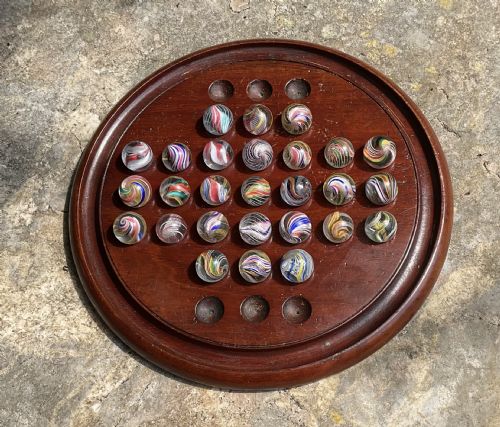


Traditional Wooden Games Board
A traditional wooden games board brings tactile parlour entertainment into the home, offering centuries of craftsmanship in mahogany, rosewood, and boxwood.
Traditional Wooden Games Board
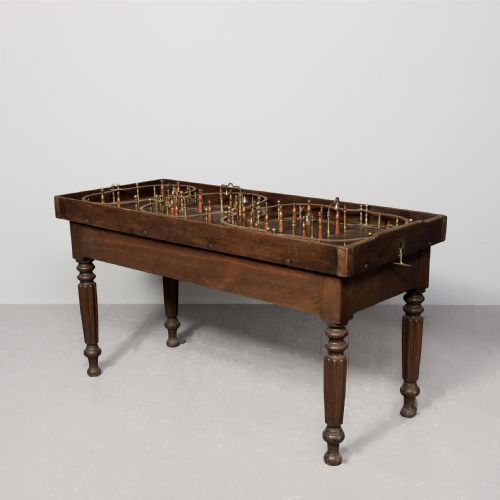
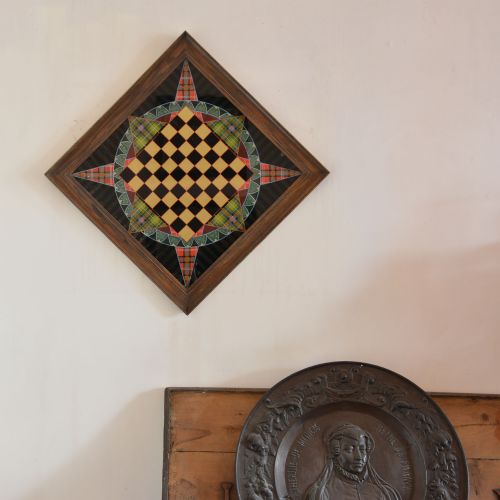
A traditional wooden games board serves as the foundational surface for historic pastimes, spanning chess, backgammon, cribbage, and solitaire.
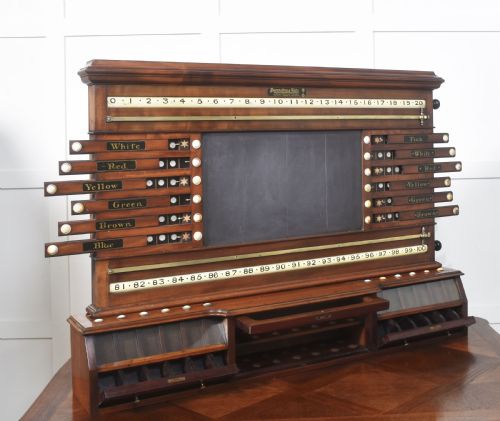
You will most commonly encounter folding boards and solid timber panels dating from the Victorian and Georgian periods, alongside specialised scoreboards.
These items originate primarily from British workshops, though examples reflecting Ottoman Revival and Chinese Republic period styles also appear.
How traditional wooden games boards were made
Cabinetmakers constructed these boards using dense timbers such as mahogany, rosewood, and oak, frequently contrasting light boxwood and sycamore for the playing squares.
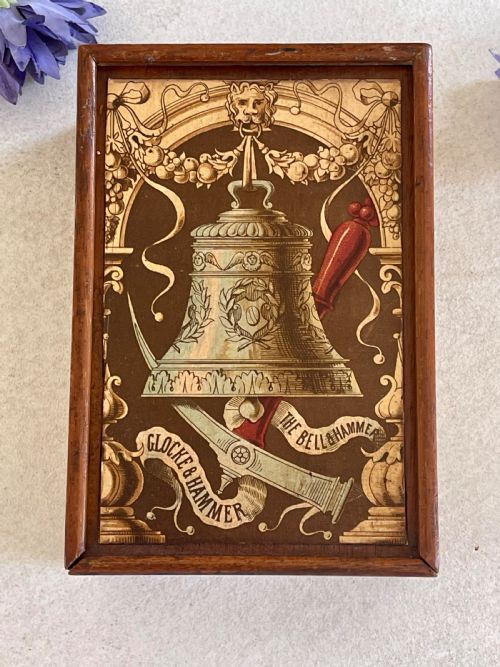
Inlaid wood marquetry and Tunbridge Ware decoration demonstrate precise geometric skill, while specialised items incorporate brass hinges and glass components.
Complete with instructions and marbles, these antique solitaire boards invite immediate play upon the parlour table.
What varies in quality
The distinction between standard utility items and finer pieces lies in the selection of timber veneers and the crispness of the inlaid square boundaries.
Subtleties in grain alignment, the presence of original brass hardware, and the integration of fitted compendium storage elevate certain examples above everyday tavern or parlour equipment.
Orme And Sons Manchester·A British Chess Company·Thurston And Co Ltd
The Traditional Wooden Games Board Glossary
- Tunbridge Ware
- Small woodworking items decorated with intricate mosaic patterns made from tiny wood prisms. This technique creates detailed pictorial or geometric designs on boxes and boards.
- Cribbage board
- A scoring board featuring tracks of small drilled holes for pegs. It records points scored during card games.
- Marquetry
- The art of applying thin pieces of wood veneer to a structure to form decorative patterns. Craftsmen use contrasting timbers to achieve visual depth.
- Compendium
- A multi-game box containing equipment for several pastimes in one fitted case. These portable sets often include chess, backgammon, and draughts.
Traditional Wooden Games Board: Frequently Asked Questions
What games do these boards typically support?
These boards facilitate traditional pastimes including chess, backgammon, cribbage, and solitaire.
Many folding examples and compendiums combine multiple games within a single folding case or fitted box.
How are nineteenth century boards constructed?
Cabinetmakers built them using solid timbers and veneers like mahogany, rosewood, and oak.
Lighter squares utilise boxwood or sycamore, often assembled through precise inlay and marquetry techniques.
Were these boards used for travel?
Travelling sets feature folding designs and secure compartments to hold pieces safely during transit.
Compact dimensions allowed Victorian and Georgian players to carry entertainment easily on journeys.
How do I care for antique timber boards?
Keep wooden boards away from direct sunlight and fluctuating humidity to prevent timber splitting.
Apply occasional appropriate wax polish to maintain the finish of the mahogany and rosewood surfaces.