


Antique English Games Board
These antique English games board examples combine utility and craftsmanship, offering enduring appeal for collectors of traditional pursuits.
Antique English Games Board
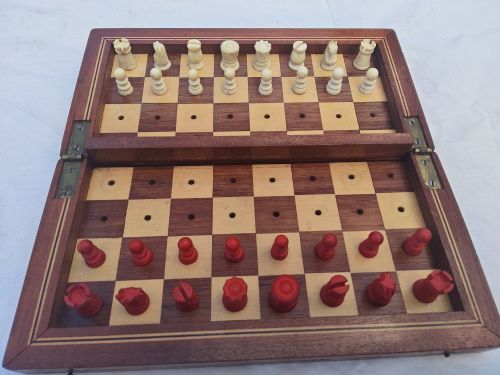
An antique English games board serves as both a functional surface for traditional pastimes and a decorative household object. You will frequently encounter folding boards, chess boards, and complete games tables dating across the nineteenth and early twentieth centuries.
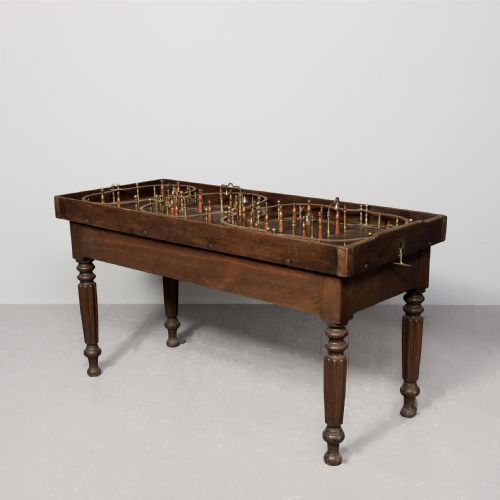
The selection ranges from portable travel sets to substantial freestanding furniture pieces like bagatelle tables and score cabinets. Woods such as mahogany, rosewood, and oak dominate the forms, often paired with sycamore and boxwood inlay.
Victorian and Edwardian iterations appear regularly alongside earlier Regency examples. These pieces reflect the central role of parlour games in historical domestic life.
What varies in quality
The precision of the woodwork and the crispness of the inlay separate standard items from finer works. Superior examples display seamless mitre joints and carefully selected timber veneers that have aged gracefully.
The integration of mechanical elements, such as folding hinges or score counters, demonstrates the maker's skill. Finer pieces maintain structural integrity alongside well-preserved decorative finishes.
The listings demonstrate a strong presence of nineteenth-century rosewood and mahogany, alongside Edwardian oak score cabinets.
The Antique English Games Board Glossary
- Tunbridge Ware
- A form of decorative woodworking originating in Kent, characterised by intricate mosaic patterns made from tiny segments of native and exotic woods.
- Penwork
- A surface decoration technique using India ink applied with a pen to create fine linear designs on wood before varnishing.
- Bagatelle
- A nineteenth-century table game akin to billiards, where players cue balls into numbered wooden cups.
- Cribbage Box
- A small container specifically designed to house playing cards and pegs used for scoring the traditional card game cribbage.
- Regency
- An English design period spanning the early nineteenth century, known for classical restraint and elegant proportions.
Antique English Games Board: Frequently Asked Questions
How do I date a games board?
Dating relies on identifying the underlying timber, construction methods, and prevailing decorative styles. Regency pieces often exhibit classical influences, whereas Edwardian items display distinct industrial and domestic trends.
Examining secondary woods and hardware fixings provides further chronological context.
Were these boards used for multiple games?
Many folding boards and tables were constructed to accommodate chess, draughts, and backgammon simultaneously. Reversible surfaces and compartments for pieces maximised utility in nineteenth-century drawing rooms.
Multifunctional cabinets also housed equipment for billiards and card games.
How should I clean antique wood?
Gentle dusting with a dry, soft cloth remains the safest method for routine maintenance. Avoid modern chemical polishes that can degrade historic wax and oil finishes over time.
Professional conservation wax can be applied sparingly to nourish dry timber.
Can I still play games on these boards?
Most antique wooden boards remain structurally robust enough for regular use. Owners should handle folding mechanisms and delicate inlays with care to preserve their condition.
Leather folding boards require particular attention to prevent creasing at the hinges.