





Antique Parlour Games Board
These antique parlour games board selections bring traditional Victorian entertainment home, offering tangible links to nineteenth-century social pastimes.
Antique Parlour Games Board
An antique parlour games board encompasses various traditional pastimes designed for domestic amusement during the nineteenth century. Buyers searching for an antique parlour games board will encounter diverse forms including solitaire boards, chess boards, bagatelle tables, and comprehensive games compendiums.
Most pieces combine utility with decorative cabinet-making, serving as both functional equipment for play and handsome furnishings. From folding rosewood chess boards to solid oak skittles and fitted rosewood compendiums, each survivor represents a distinct branch of period domestic entertainment.
Materials and construction
Cabinet makers utilised dense hardwoods such as mahogany, rosewood, and oak to construct durable frames, boxes, and tables that could withstand regular evening use. These timbers often received polished finishes to highlight natural grain patterns, whilst specialised playing areas incorporated contrasting light and dark woods.
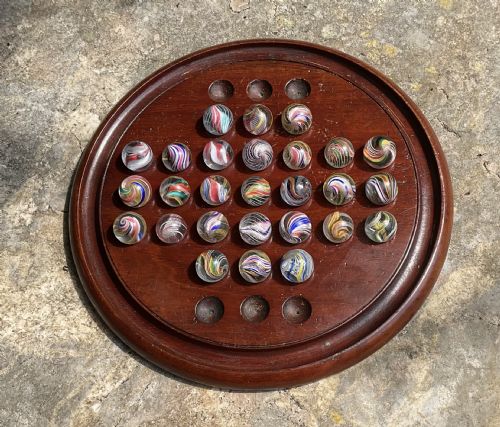
Playing surfaces frequently integrated baize lining, inlaid wood squares, or glazed elements alongside brass fittings and paper instructions. Solitaire boards utilised turned wooden indentation patterns paired with glass marbles, whilst compendiums required intricate internal compartmentalisation to house multiple gaming requirements.
Distinctions in quality
Quality in these pieces rests upon the precision of the cabinet work, the selection of timber veneers, and the completeness of internal components. Superior items demonstrate seamless joinery, robust hinges, and well-fitted compartments designed to secure small gaming pieces over generations of use.
The presence of original elements, such as matched glass marbles in solitaire sets, complete cribbage pegs, or retained paper instructions, elevates a piece beyond merely decorative survival. Finer examples display meticulous attention to detail in board inlay and turnery, whereas simpler items rely on straightforward utility.
The Antique Parlour Games Board Glossary
- Solitaire board
- A circular or rectangular wooden board featuring indented depressions designed for a single player to jump marbles or pegs. These typically require a specific arrangement of glass marbles to complete the puzzle.
- Cribbage set
- A scoring apparatus utilising pegged boards to track points during traditional card games. Mid-Victorian examples often accommodate multiple players with dedicated track layouts.
- Games compendium
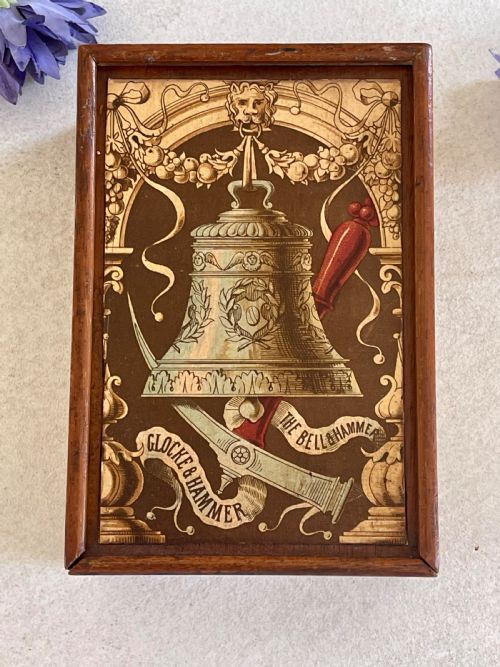
- A fitted box containing the equipment and boards necessary for multiple different pastimes. These rosewood or mahogany containers organise diverse gaming components within a single portable cabinet.
- Baize
- A coarse woolen fabric resembling felt, traditionally utilised to line gaming surfaces and card tables. This material reduces the noise of moving pieces and provides a smooth texture for play.
- Bagatelle
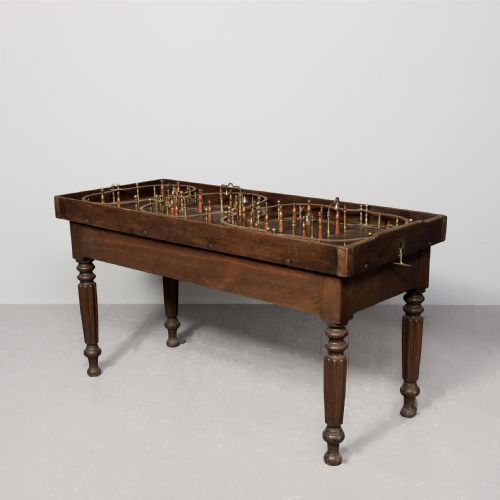
- A precursor to modern billiards involving cues, balls, and wooden pins set into a sloping table surface. Surviving tables range from compact folding boards to larger freestanding nineteenth-century furniture.
Antique Parlour Games Board: Frequently Asked Questions
What is an antique games compendium?
A games compendium is a fitted wooden box that houses equipment for multiple different pastimes in one container. These versatile units typically include folding boards, dice, counters, and specialised pieces.
Interior compartments organise each game securely, making these sets practical for household storage and travel during the nineteenth century.
How do you play solitaire on these boards?
Solitaire is a single-player puzzle where marbles or pegs are jumped over one another to remove them from the board one by one. The objective is to leave a single marble remaining in the central indentation.
Antique boards feature specific patterns of hollows carved into dense hardwoods like mahogany or rosewood to hold the pieces during play.
What wood was used for Victorian chess boards?
Victorian chess boards frequently utilised rosewood and mahogany to create contrasting dark and light squares for play. Cabinet makers selected these dense timbers for their durability and rich natural grain patterns.
Finer boards often incorporated precise inlay work rather than painted surfaces, ensuring the pattern remained distinct through decades of use.
How are nineteenth century gaming tables structured?
Nineteenth-century gaming tables range from compact folding boards to freestanding furniture pieces designed specifically for pastimes like bagatelle or card games. These items integrate storage spaces for accessories directly into their frames.
Sturdy construction using oak or mahogany allowed these tables to function as standard parlour furniture when not actively in use for games.