



19th Century Cheese Cover
These 19th century cheese cover pieces are practical Victorian serveware designed to protect fine Stilton and other cheeses at the table.
19th Century Cheese Cover
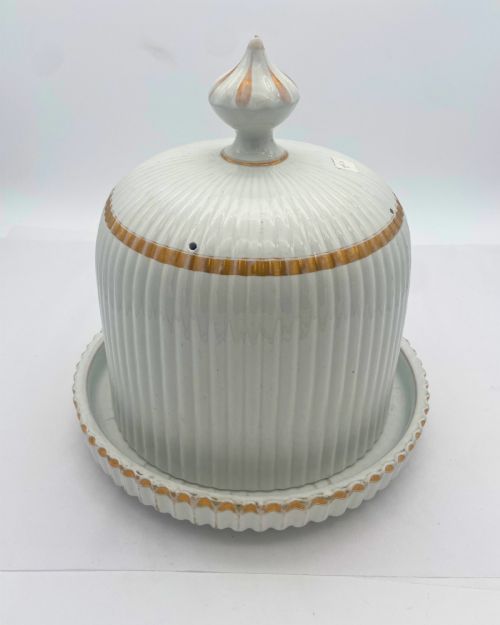
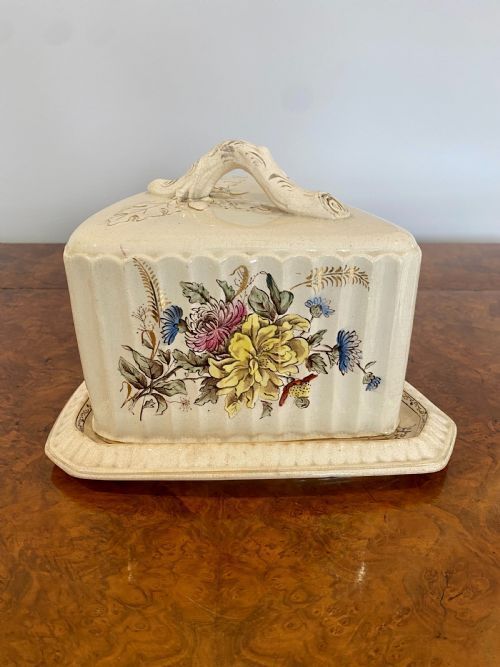
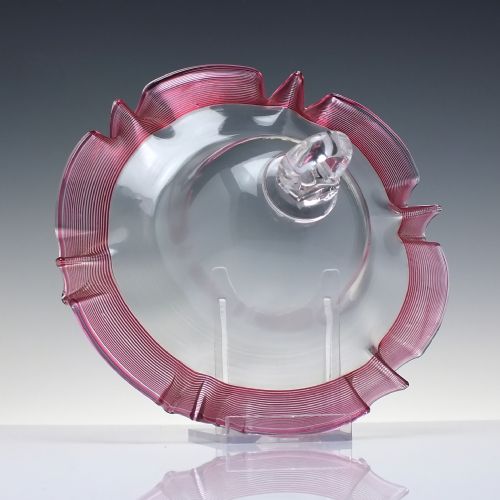
When searching for a 19th century cheese cover, you are looking at substantial ceramic domes and matching stands designed to keep large cheeses fresh during Victorian dining. These pieces appear in forms such as cheese domes, cheese keepers, cheese bells, and complete cheese dishes with stands.
The versions you are most likely to meet on this page date from the nineteenth century, including specific pieces from around 1860 and 1880, as well as the broader Victorian period. They originate from English potteries and take shapes ranging from simple white ironstone to elaborate moulded designs.
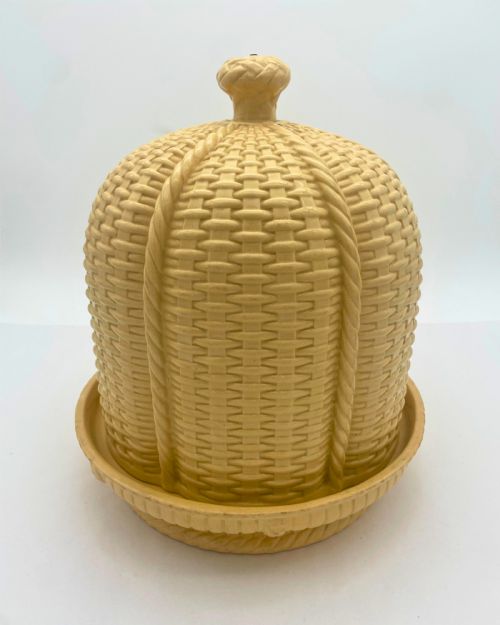
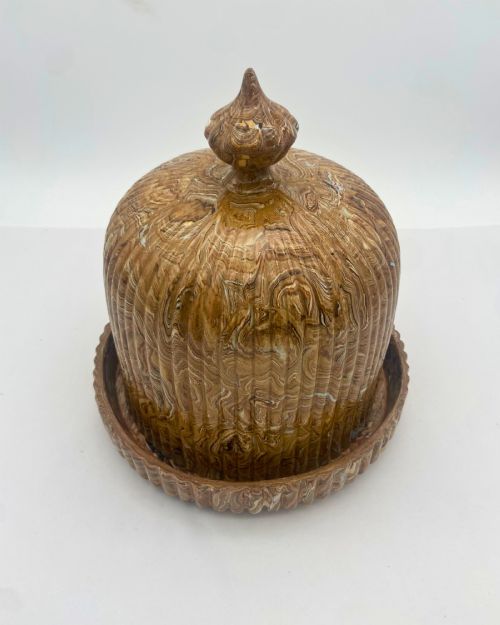
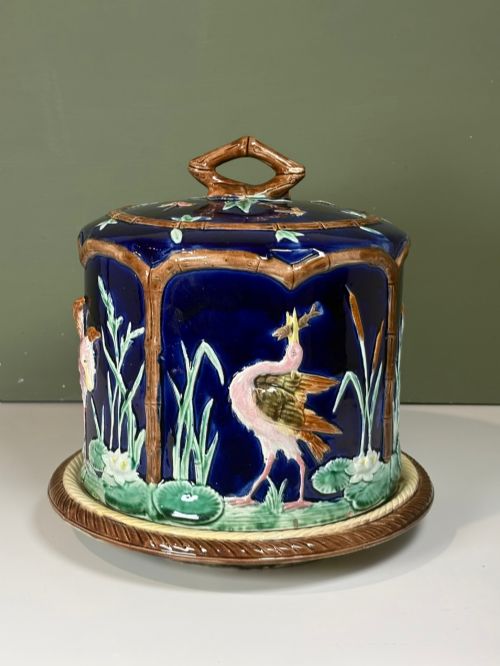
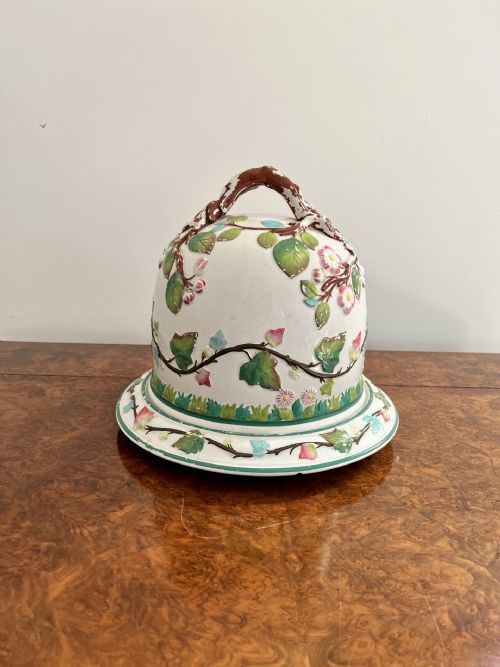
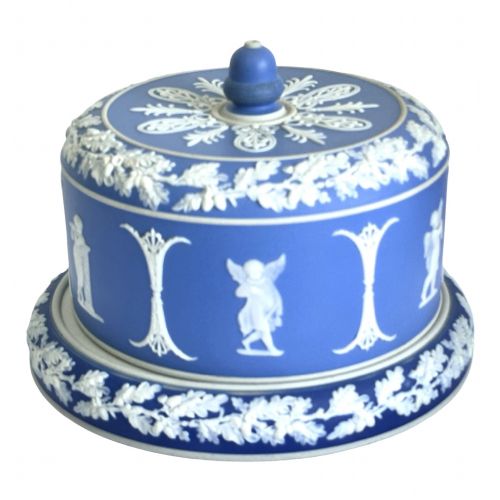
Makers and potteries applied various decorative treatments to these domes, including basket weave textures, drabware, agate effects, jasperware, and colourful majolica glazes. Many items serve as grand centrepieces intended for display on the dining table or sideboard.
How they were made
Potters constructed these heavy ceramic covers using earthenware, ironstone, and stoneware bodies, shaping them on potter's wheels or pressing them into moulds to achieve the characteristic domed profile. Many examples incorporated a matching ceramic stand or dish to hold the base of the cheese.
Surface decoration involved specialised glazing techniques, such as rich Victorian majolica colours, applied jasperware reliefs, and agate pottery slips. Some pieces received delicate gilt accents to highlight the moulded details and handle tops.
19th Century Cheese Cover Retail Price Guide 2026
Typical asking prices for 19th century cheese cover among the pieces listed under this phrase on Sellingantiques today, from the lower quarter to the upper quarter. They describe what is for sale here now, not the wider market.
Current listings demonstrate that nineteenth-century cheese covers rely heavily on earthenware, ironstone, and majolica glazes across domestic English pottery forms.
What varies in quality
The distinction between standard utility items and finer pieces lies in the crispness of the moulding and the depth of the ceramic body, particularly visible in detailed basket weave patterns and applied reliefs. Finer examples exhibit superior control over majolica glaze application, where rich colours pool evenly across the textured surfaces without obscuring the underlying design.
Proportion and scale also separate ordinary domestic wares from grander examples, with larger pieces requiring greater technical skill in the kiln to prevent warping during firing. The presence of a matching original stand or dish substantially elevates the integrity of the piece.
Copeland·Wedgwood·Staffordshire
The 19th Century Cheese Cover Glossary
- Ironstone
- A heavy, durable type of earthenware patented in the nineteenth century that mimics porcelain in strength. It formed the robust body for many white dairy and cheese domes.
- Majolica
- A colourful, lead-glazed earthenware style popular during the Victorian era that produced vibrant, relief-moulded tableware. It provides the glossy, multicoloured surface seen on many cheese bells.
- Jasperware
- A fine-grained, unglazed stoneware developed with contrasting coloured clay reliefs against a solid background. Wedgwood famously utilised this technique for large decorative cheese domes.
- Drabware
- A style of utilitarian pottery featuring unglazed or slip-coated bodies in muted grey-brown or olive tones. These pieces relied on texture, such as basket weave, rather than bright colours for visual interest.
- Agateware
- Pottery made by blending different coloured clays together before shaping to create marbled, stone-like patterns through the body of the ceramic. Early Staffordshire makers applied this technique to cheese covers.
19th Century Cheese Cover: Frequently Asked Questions
What is a 19th century cheese cover used for?
These ceramic domes were designed to sit over large blocks of cheese, particularly Stilton, on the Victorian dining table. They trapped moisture and protected the cheese from dust and insects between meals.
At the end of a meal, the dome and stand kept the cheese contained and presentable for the next service on the sideboard.
How can I tell a majolica cheese dome from ironstone?
Majolica cheese domes feature colourful, glossy lead glazes that run over heavily moulded surface reliefs like leaves, wicker, or animals. They prioritize rich visual decoration.
Ironstone cheese domes, by contrast, typically present a heavy, plain white ceramic body designed for robust daily service with minimal surface colour.
Did all cheese domes come with a matching stand?
Many nineteenth-century cheese sets included a fitted ceramic base or dish designed to catch crumbs and support the weight of the large dome. Some covers were produced as standalone pieces to sit on existing tableware.
Matching stands share the exact clay body, glaze, and decorative motifs of the dome above them, creating a unified presentation.