


19th Century Carved Lion
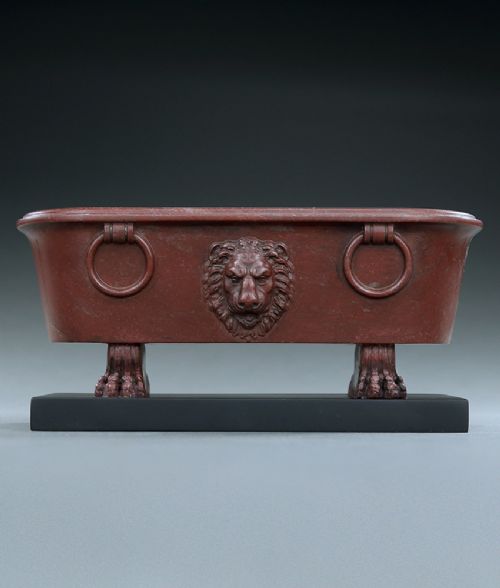
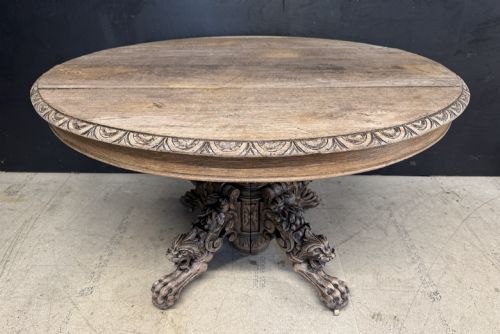
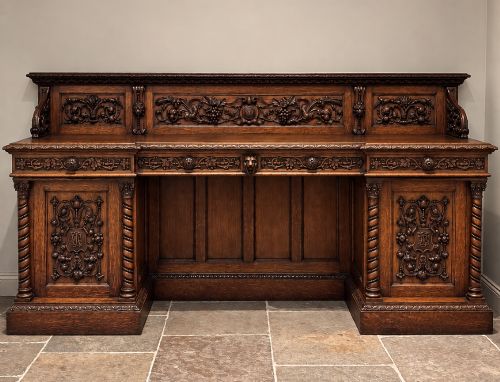
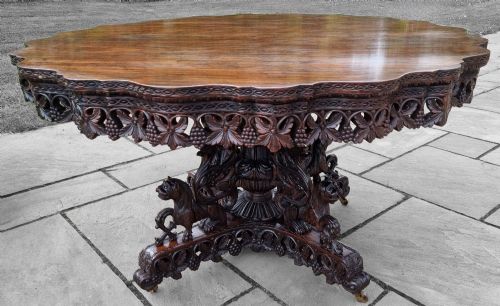
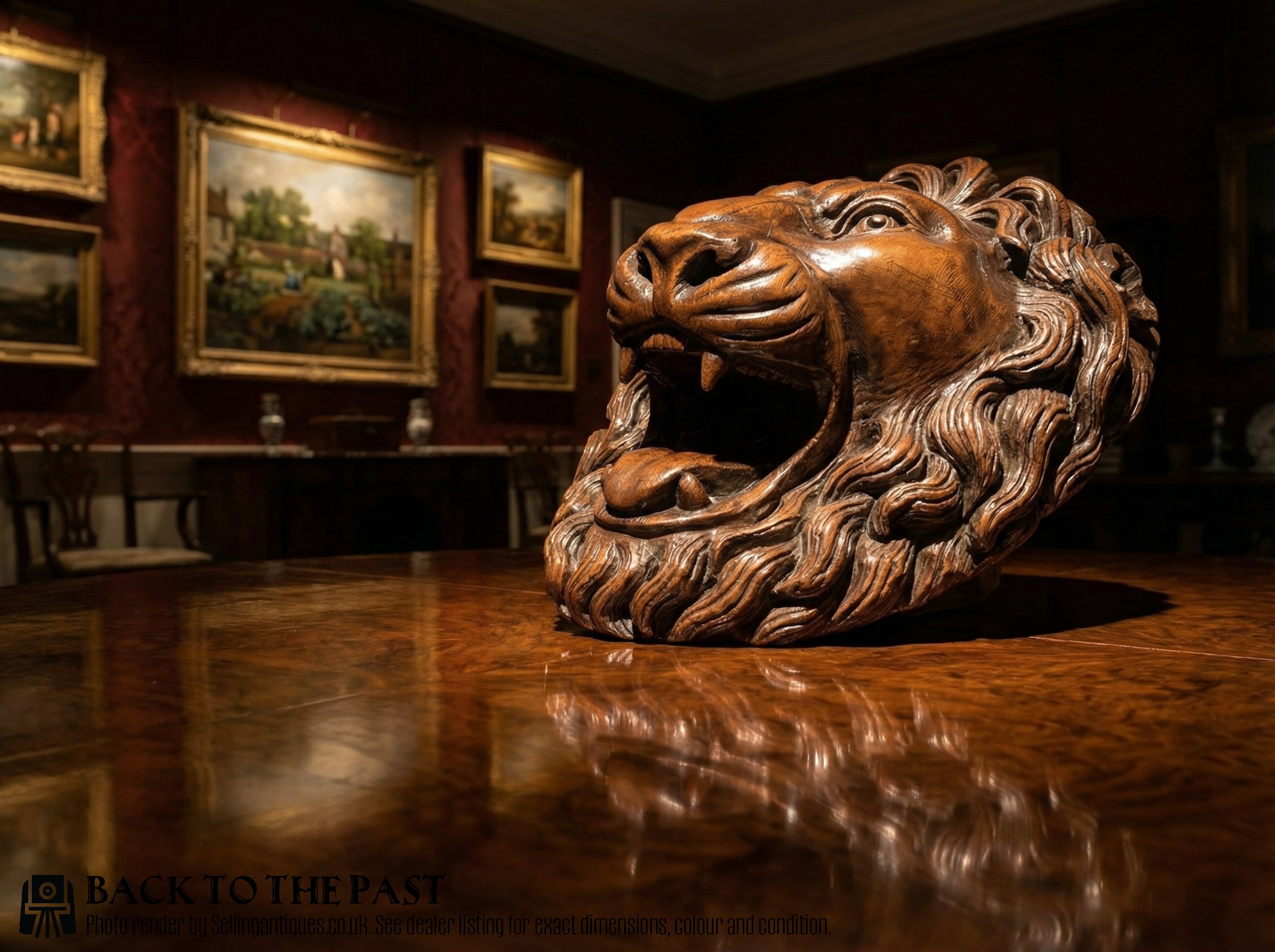
A 19th century carved lion brings ferocious presence and classical dignity to a room, appearing across oak furnishings, marble figures, and stately furniture feet.
19th Century Carved Lion
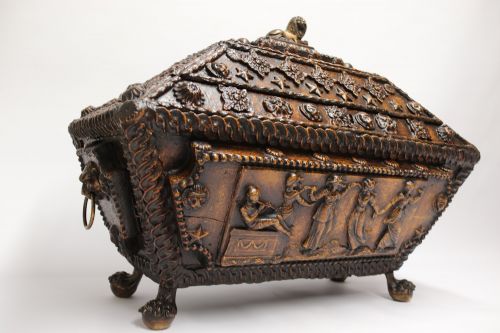
When searching for a 19th century carved lion, buyers encounter a diverse selection of decorative and functional objects ranging from monumental garden sculptures and grand tour marbles to heraldic furniture supports.
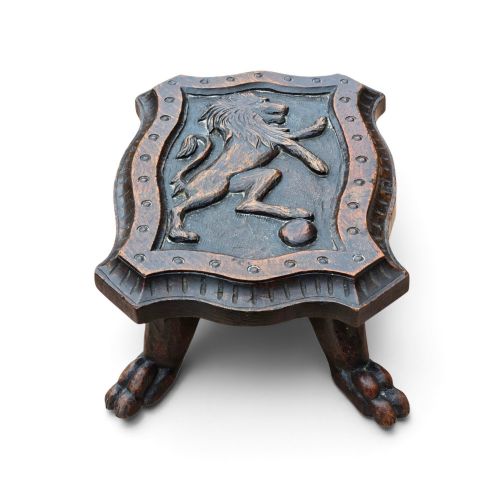
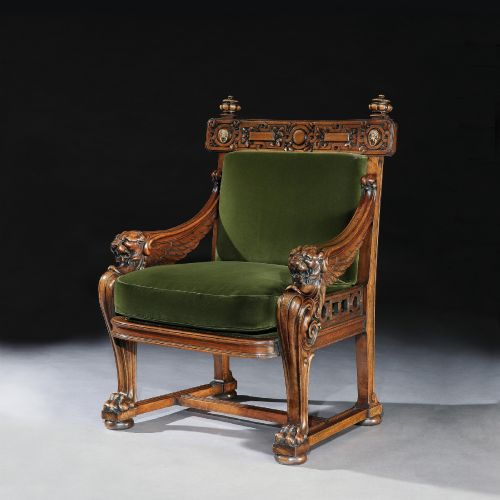
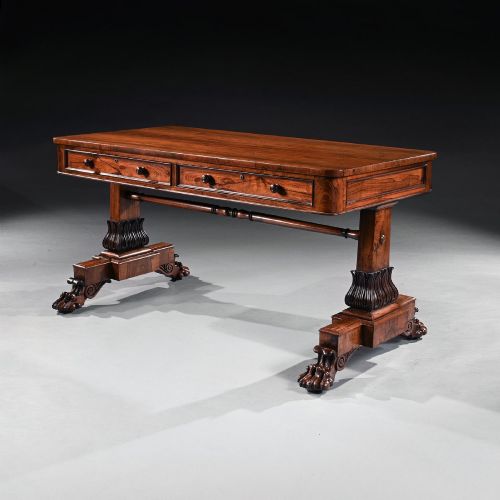
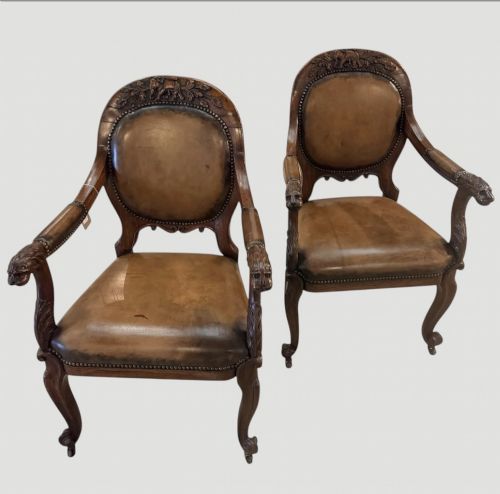
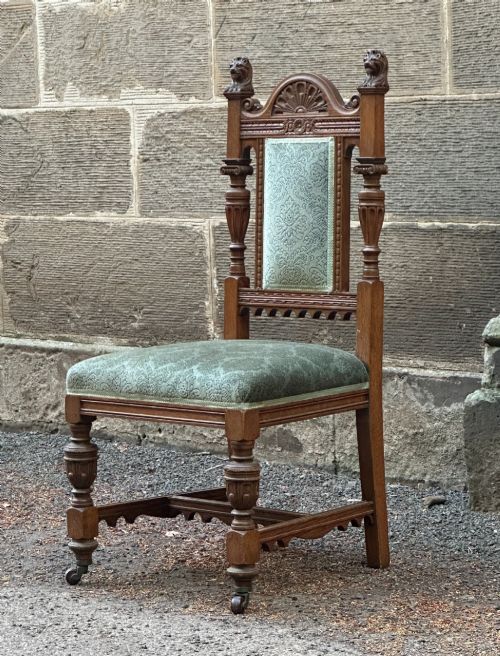
The most common forms on this page include heavy oak seating with leonine armrests, architectural corbels, wall masks, and library tables featuring distinct claw-and-paw feet.
Originating across Britain, continental Europe, and colonial workshops, these pieces bridge domestic utility with sculptural symbolism.
How they were made
Carvers predominantly worked in dense timbers like oak, walnut, and mahogany, utilising deep relief chiselling to articulate flowing manes and muscular forms.
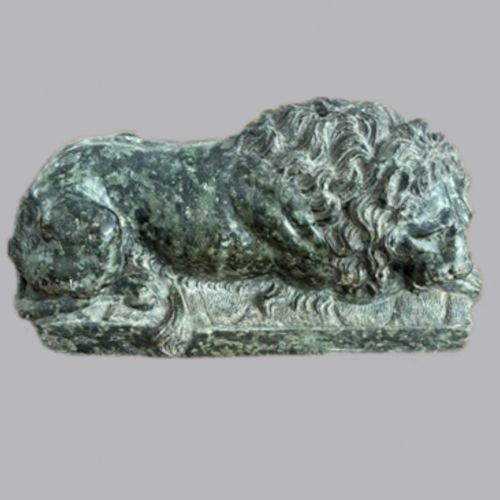
Stonemasons shaped white Carrara and serpentine marble into recumbent beasts and classical figures, while cabinetmakers integrated cast or carved wooden paw motifs directly into structural frames.
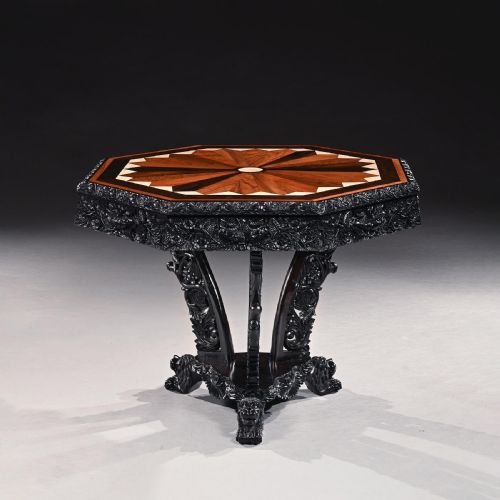
The listings demonstrate a heavy reliance on durable British oak for structural furniture, contrasting with exotic padauk and ebony found in colonial tables.
What varies in quality
The distinction between standard production and masterwork execution rests entirely in the anatomical conviction of the carving and the depth of the relief work.
Superior items demonstrate spirited musculature, expressive facial detailing, and seamless integration into the host furniture or architectural element rather than applied decoration.
Bruce Talbert·Thomas Hope·Mack Williams And Gibton
The 19th Century Carved Lion Glossary
- Monopodia
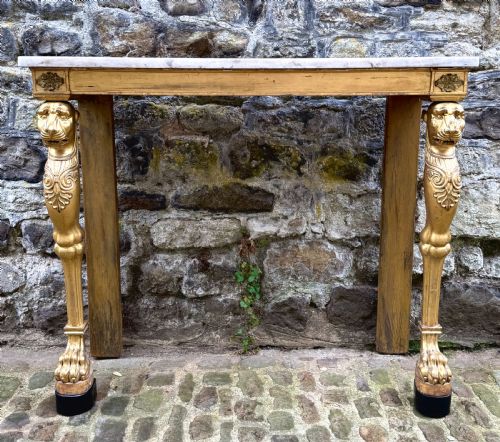
- A furniture support consisting of a single carved animal leg terminating in a paw. This classical form appears frequently on regency console tables and armchairs.
- Corbel
- A structural piece of stone or wood projecting from a wall to carry a weight. In this selection, they frequently take the form of ferocious lion masks.
- Newel Post
- The principal post at the foot of a staircase. Elaborate examples often feature carved lions or heraldic beasts acting as finials.
- Grand Tour
- A cultural journey of Europe undertaken by upper-class young men. Souvenirs from these trips included small marble lions inspired by classical antiquity.
- Caryatid
- A sculpted female figure serving as an architectural support, though related furniture pieces often substitute male figures or mythical beasts like winged lions.
19th Century Carved Lion: Frequently Asked Questions
Where were these carved lions displayed originally?
Many of these pieces served utilitarian yet grand roles in country house libraries, entrance halls, and formal dining rooms as seating supports, tables, and architectural woodwork.
Larger marble and stone figures stood in gardens, courtyards, or grand staircases to project authority and classical taste.
How do I distinguish oak pieces from walnut?
Oak exhibits a coarse, open grain with visible medullary rays, lending itself to the deep, robust relief carvings seen on English and Flemish furniture.
Walnut offers a smoother, darker surface capable of finer, more intricate detail work, which explains its frequent use for delicate facial masks and smaller decorative panels.
What is the significance of the claw-and-ball foot?
The claw-and-ball motif represents a stylized animal or bird claw grasping a sphere, adopted from eastern design into European furniture during the eighteenth and nineteenth centuries.
On these tables and seating frames, it provides a grounded, muscular terminus that reinforces the leonine theme of the woodwork.
Are marble lions usually Italian?
A significant portion of the carved marble and serpentine figures originates from Italy, reflecting both classical Roman precedents and the thriving nineteenth-century tourist trade.
Sculptors in workshops across cities like Florence and Venice reproduced famous antique models for foreign buyers undertaking the Grand Tour.