



Victorian Wooden Lion Head
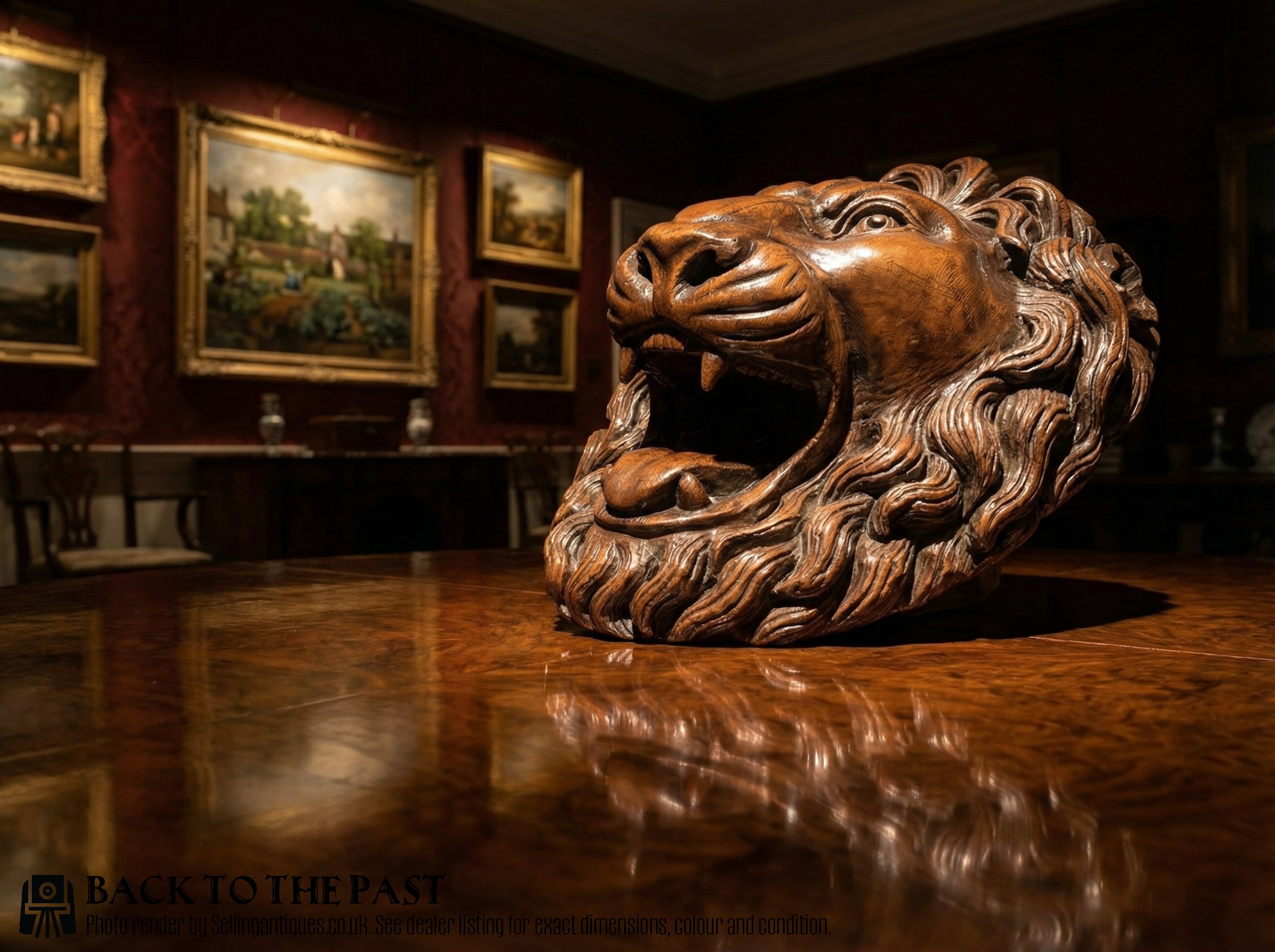
These Victorian wooden lion head carvings bring fierce presence and skilled nineteenth-century craftsmanship into a room.
Victorian Wooden Lion Head
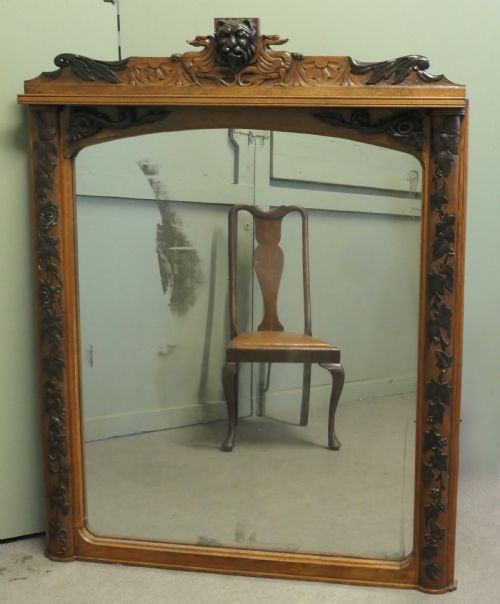
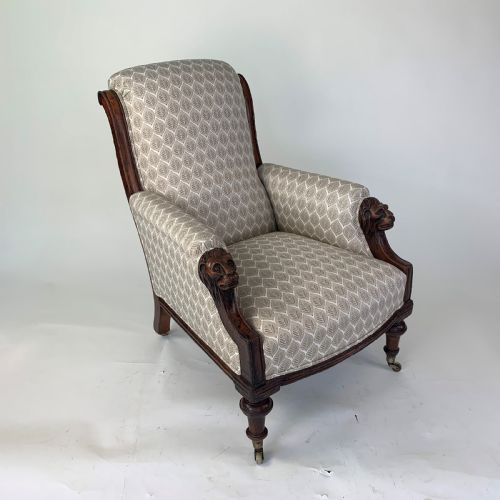
A victorian wooden lion head appears most frequently on this page as a large carved wall mask or as a decorative element upon furniture such as armchairs and desks. These pieces originate from the nineteenth century, spanning various revivals including Gothic, Tudor, and Black Forest styles.
Makers shaped these majestic forms from solid timbers, applying deep relief work to capture expressive manes and roaring jaws. They function as striking focal points in a study, hallway, or living space, carrying the dramatic weight of nineteenth-century decorative arts.
How they were made
Some examples incorporate wood inlay or brass details to enhance the decorative scheme, while others rely purely on the rich grain and deep tones of the polished wood to create contrast and depth.
The selection includes wall masks, armchairs, and desks reflecting Gothic, Tudor, and Black Forest styles.
What varies in quality
Quality rests upon the depth and vigour of the carving, distinguishing a piece with lifelike muscular tension and expressive depth from a stiff, mechanical production. Master carvers brought individual character to the eyes and mane, whereas lesser work remains flat and formulaic.
The choice of timber and the preservation of the original surface finish also dictate the tier of the piece. Oak and walnut examples with crisp, untouched relief and rich patination sit firmly at the upper end of the scale.
The Victorian Wooden Lion Head Glossary
- Relief carving
- A sculptural technique where the figures project from a flat background. This method defines the three-dimensional presence of the lion mask against its mounting board.
- Black Forest
- A nineteenth-century style known for highly naturalistic animal carvings originating from the mountain region. Pieces in this tradition display deep, dark wood tones and anatomical precision.
- Patina
- The surface sheen and mellowing developed by wood over decades of handling and exposure. It indicates genuine age and proper care.
- Revival
- A design movement that revives historical aesthetics such as Gothic or Tudor forms. Victorian makers frequently reinterpreted these older architectural styles.
Victorian Wooden Lion Head: Frequently Asked Questions
How do I hang a heavy wooden lion mask?
These substantial carved pieces require secure wall fixings directly into masonry or heavy wall studs to support their weight safely.
Use robust brass brackets or reinforced hanging wire rated for heavy timber sculptures to ensure the piece stays firm against the wall.
Where should I place a lion head carving?
A large wall mask commands attention when hung at eye level in a hallway, above a mantelpiece, or in a traditional study.
Keep the piece away from direct heat sources and strong sunlight to prevent the timber from drying out and splitting over time.
How do I clean and maintain the wood?
Dust the carving gently with a soft, dry brush to remove particles from the deep recesses of the mane without scratching the surface.
Apply occasional traditional beeswax polish with a clean cloth to nourish the timber and maintain its natural depth of shine.
How can I tell the period of the carving?
Examine the tool marks, timber choice, and style to ascertain nineteenth-century origins, often linked to Victorian Gothic or Black Forest revivals.
Genuine pieces show hand-chiseled surfaces and natural ageing in the grain rather than uniform modern machining.