
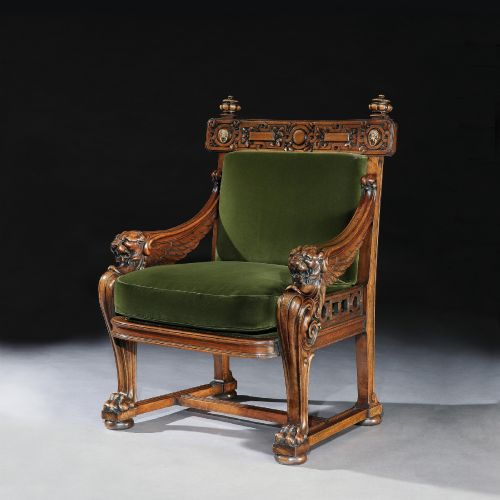


Carved Walnut Lion Head
These carved walnut lion head pieces are commanding timber sculptures and furnishings, sought after for their robust presence and sculptural authority.
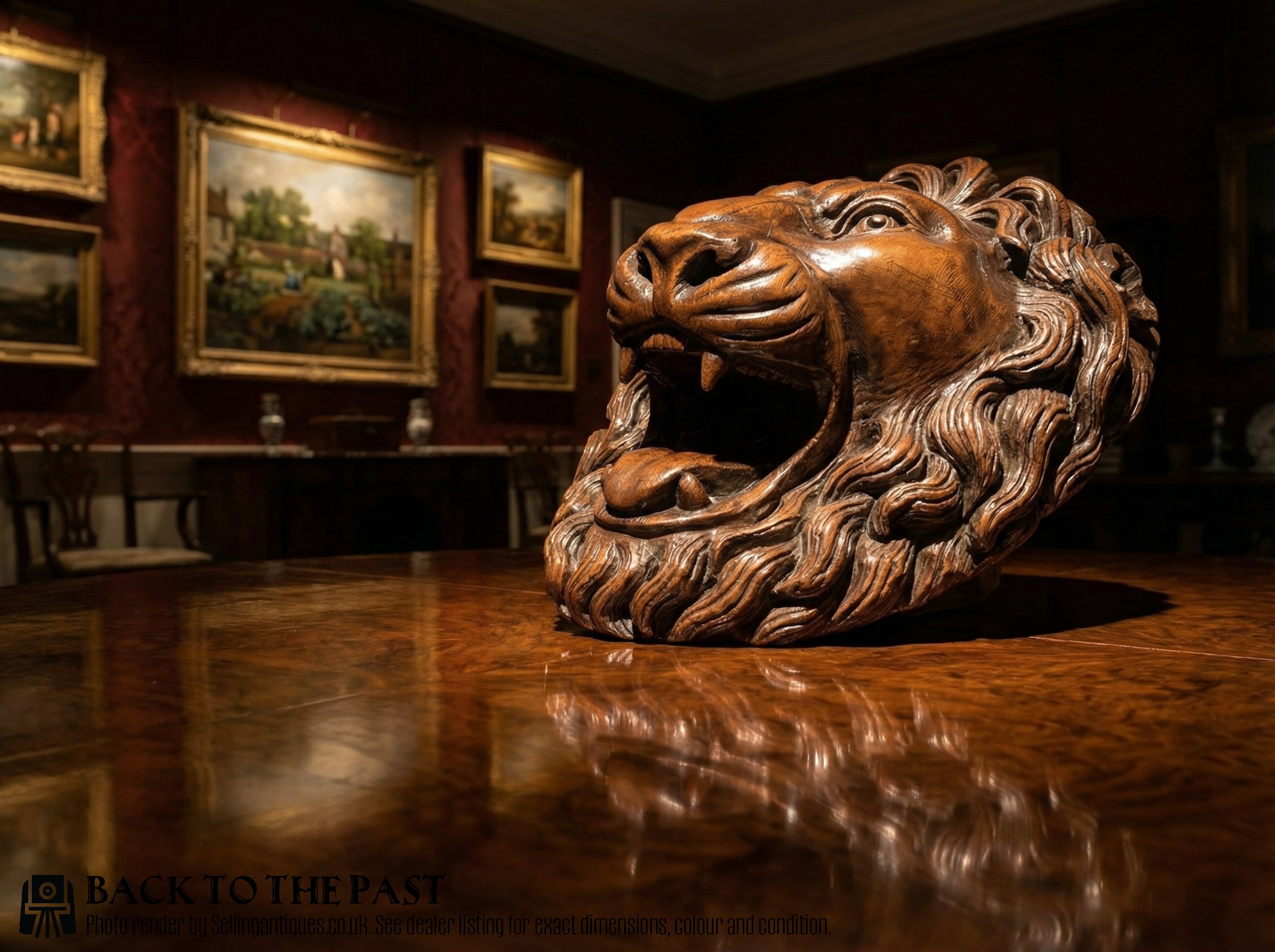
Carved Walnut Lion Head
When you search for carved walnut lion head, you encounter architectural salvage, wall masks, panels, and heavy seating ornamented with powerful feline motifs. These pieces bridge decorative arts and structural woodwork, drawing on Renaissance Revival, Black Forest, and Georgian aesthetic traditions.
The versions most frequently met on this page include nineteenth-century wall carvings and Black Forest panels, alongside eighteenth-century elements and armchairs featuring monopodia or X-frames. Walnut timber provides the dense, dark ground that allows these deep carvings to retain their crisp muscular definition over centuries.
Makers and carvers worked across various regional idioms, from British and French seating to continental alpine workshops. The resulting objects function equally as focal wall art or as functional library and salon furnishings imbued with classical symbolism.
Materials and construction methods
Carvers selected seasoned walnut for its fine grain and stability under deep chisel work, allowing intricate rendering of manes, jowls, and teeth without splintering the timber. Secondary materials like brass, leather, and velvet often support these wooden elements in armchairs and stools.
Some fierce wooden cats stare down intruders with glass eyes inset by nineteenth-century carvers.
Assessing quality in carved walnut
The distinction between ordinary and exceptional carving rests on the confidence of the hand behind the chisel and the anatomical understanding of the beast. Superior examples display energetic depth, realistic tension in the facial muscles, and crisp separation in the locks of the mane.
The quality of the walnut timber itself dictates longevity, with dense grain and rich, unblemished surfaces commanding greater regard. Furthermore, the integration of the carving into the host object - whether a wall mask, panel, or armchair frame - reveals whether the ornament was conceived as an integral part of the design or merely applied afterwards.
The Carved Walnut Lion Head Glossary
- Monopodia
- A furniture support shaped as a single lion leg and paw, frequently used in Regency and revival seating. This classical form originates from ancient Roman stone and bronze tables.
- Black Forest
- A nineteenth-century Swiss and German style of wood carving known for naturalistic animal subjects. Carvers in this tradition rendered wildlife with dramatic realism and deep relief.
- Renaissance Revival
- A nineteenth-century architectural and decorative style drawing on sixteenth-century forms. Pieces in this manner feature bold architectural mouldings and heavy classical ornament.
- X-Framed
- A form of stool or chair supported by intersecting diagonal legs resembling the letter X. This structural arrangement provides stability while offering a dramatic silhouette.
Carved Walnut Lion Head: Frequently Asked Questions
How were carved lion heads used?
Historic interiors utilised carved lion heads as architectural wall masks, furniture terminals, and decorative panels to project authority and classical taste. They appeared on library armchairs, sideboards, and architectural woodwork.
In domestic settings, large wall masks and panels served as standalone focal points, while smaller carved heads decorated the arm terminals or legs of seating furniture.
What is Black Forest carving?
Black Forest carving refers to nineteenth-century Swiss and German woodwork celebrated for its highly naturalistic representation of animals and forest life. These pieces utilise dark woods like walnut to depict creatures with vigorous texture.
Objects from this tradition range from decorative wall plaques to functional furniture elements, all defined by deep, expressive carving and careful attention to anatomical detail.
How do I date walnut carvings?
Dating walnut carvings involves examining tool marks, timber patination, and stylistic conventions associated with periods such as the eighteenth century or the nineteenth-century revivals. Hand-chiseled surfaces exhibit distinct tool signatures absent in later machine-tooled work.
Additionally, the construction methods of the backing panel or furniture frame offer clues, as does the wear patterns on the walnut surface accumulated over generations.
Where should I place a wall mask?
Wall masks require a stable wall surface capable of supporting heavy hardwood sculpture, ideally positioned at eye level to appreciate the depth of the carving. They suit studies, libraries, or hallway spaces with traditional architectural detailing.
Ensure the mounting hardware engages securely with the timber backing, and avoid locations subject to direct sunlight or dramatic humidity shifts that could affect the walnut.