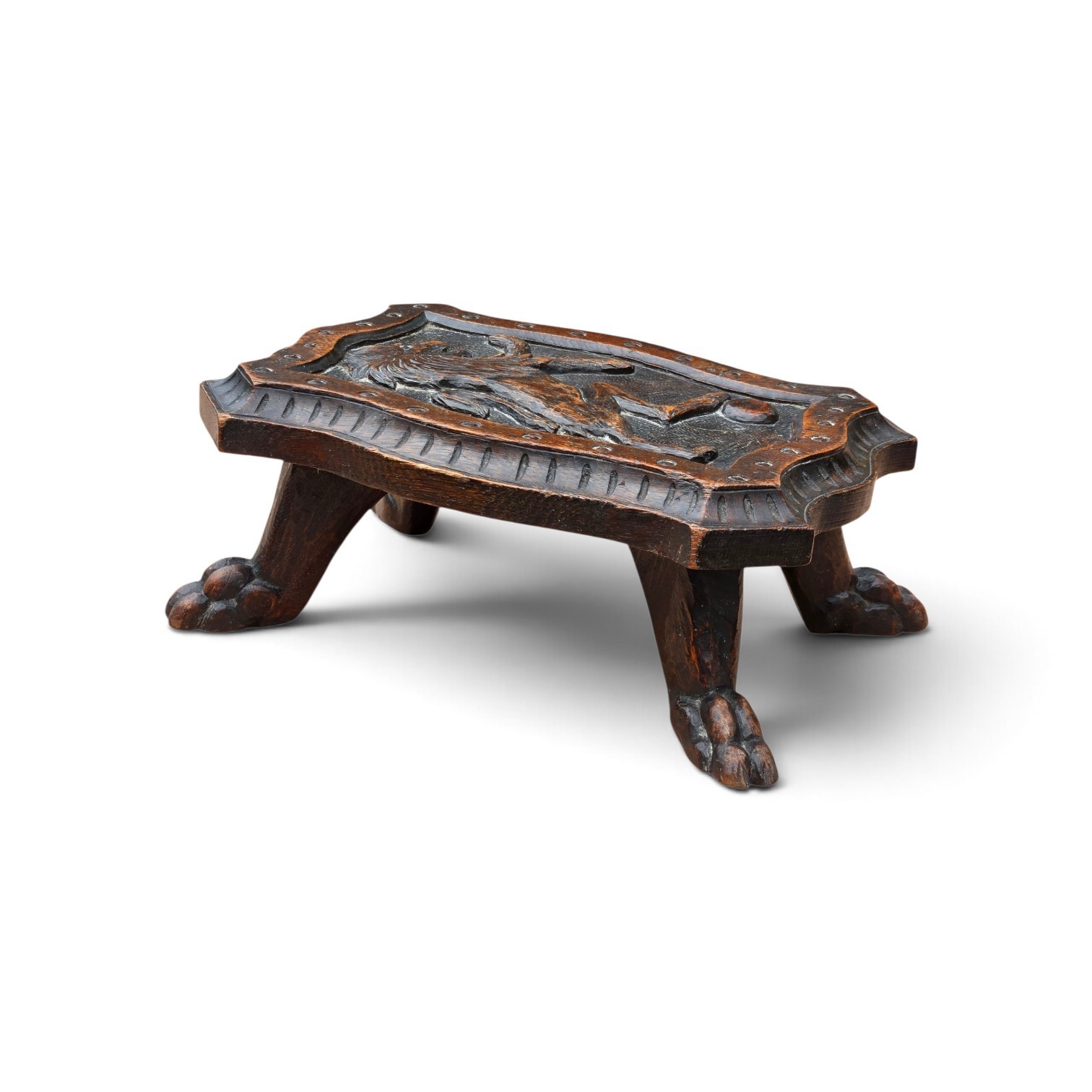
Sandbanks Antiques has dated this piece to the 19th Century.
Height: 13 cm (approx. 5 inches)
Width: 22 cm (approx. 8.5 inches)
Length: 35 cm (approx. 13.5 inches)
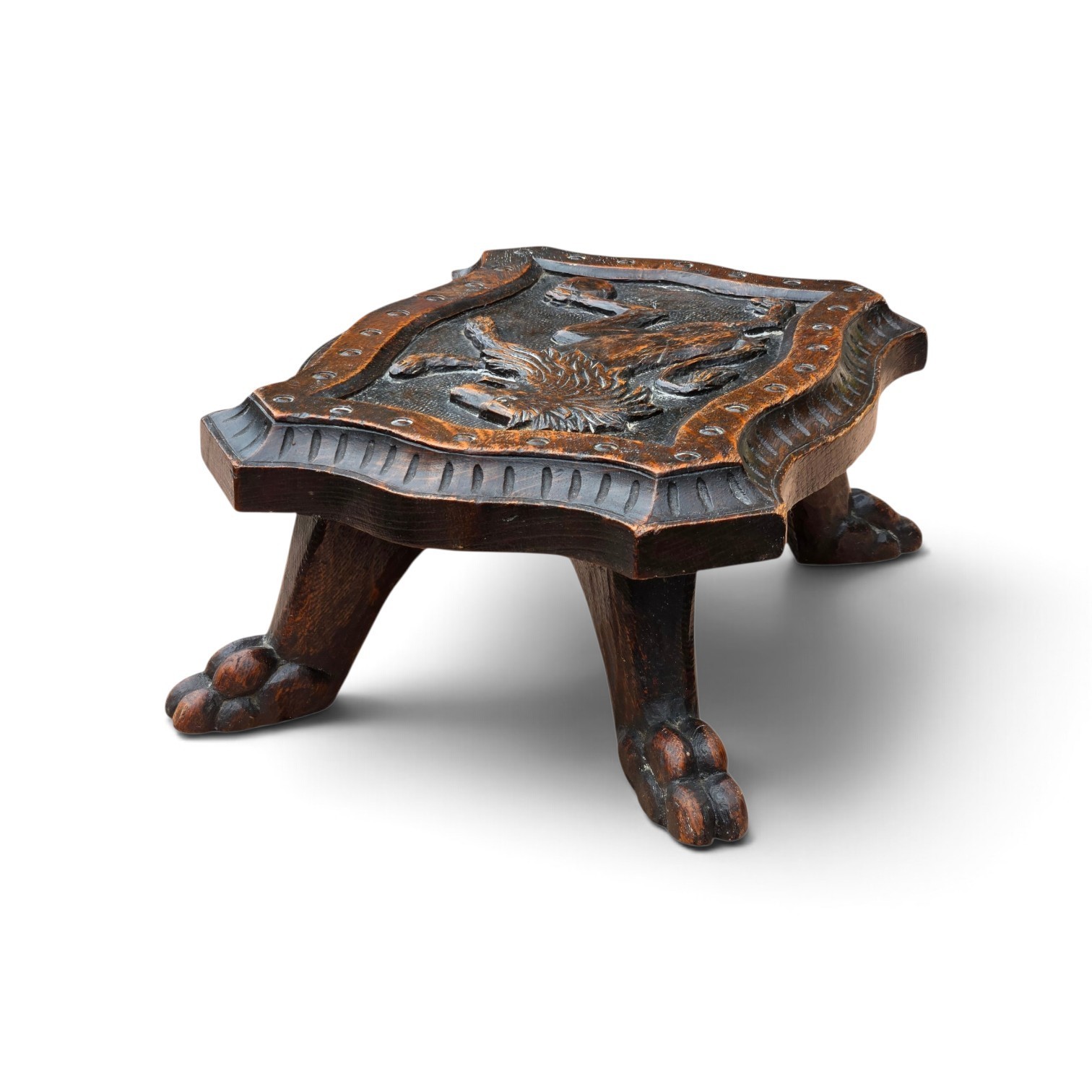
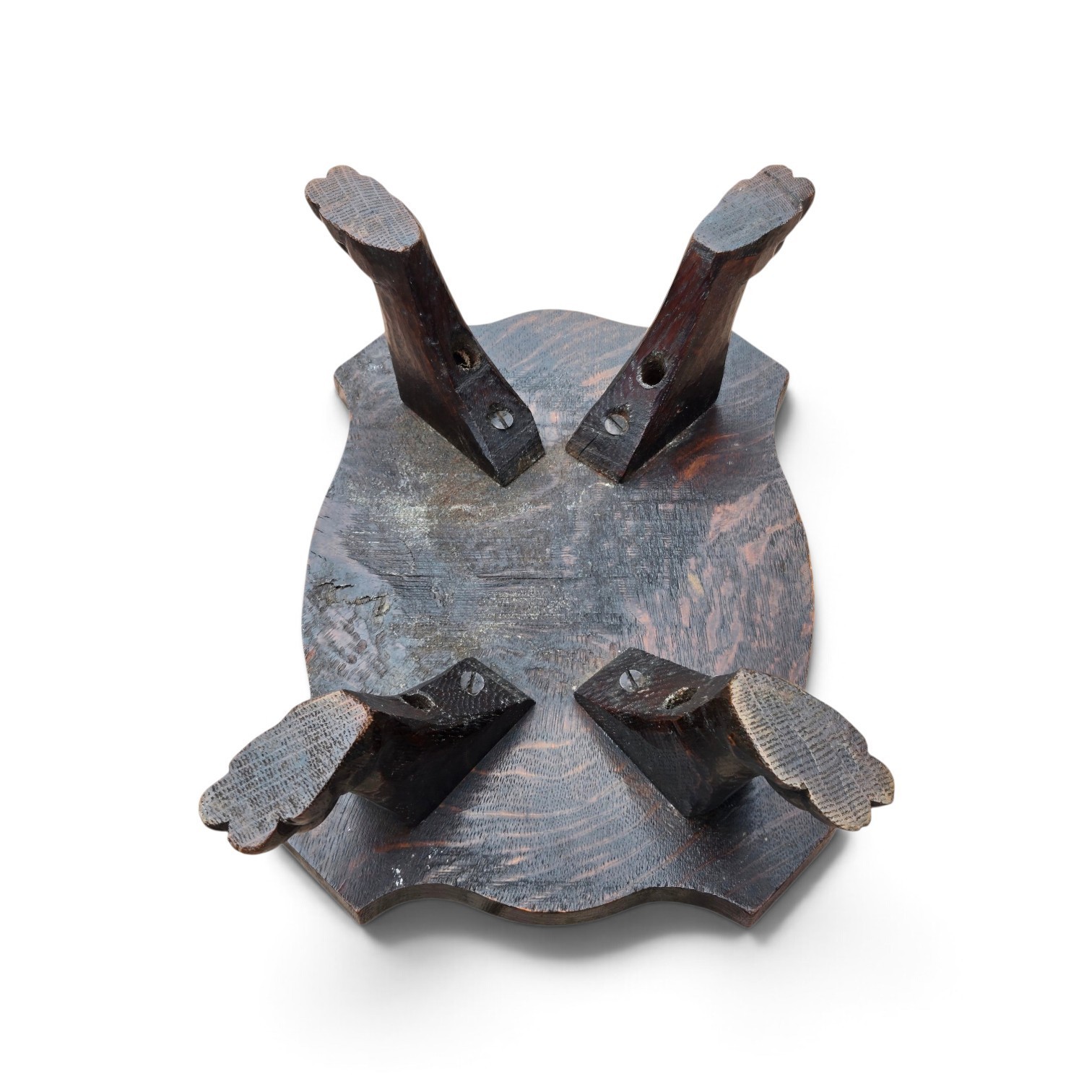
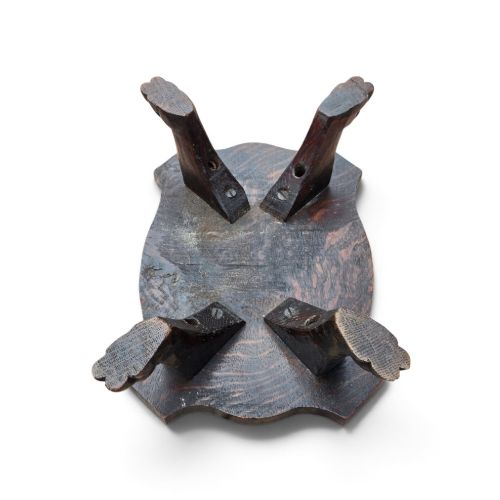
The piece features four detachable cabriole-form legs securely fastened via countersunk, period-appropriate machine-slotted metal screws into the base.
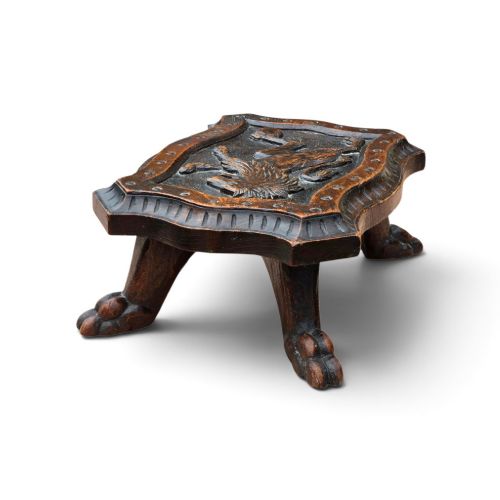
Detailed Carving & Ornamentation:
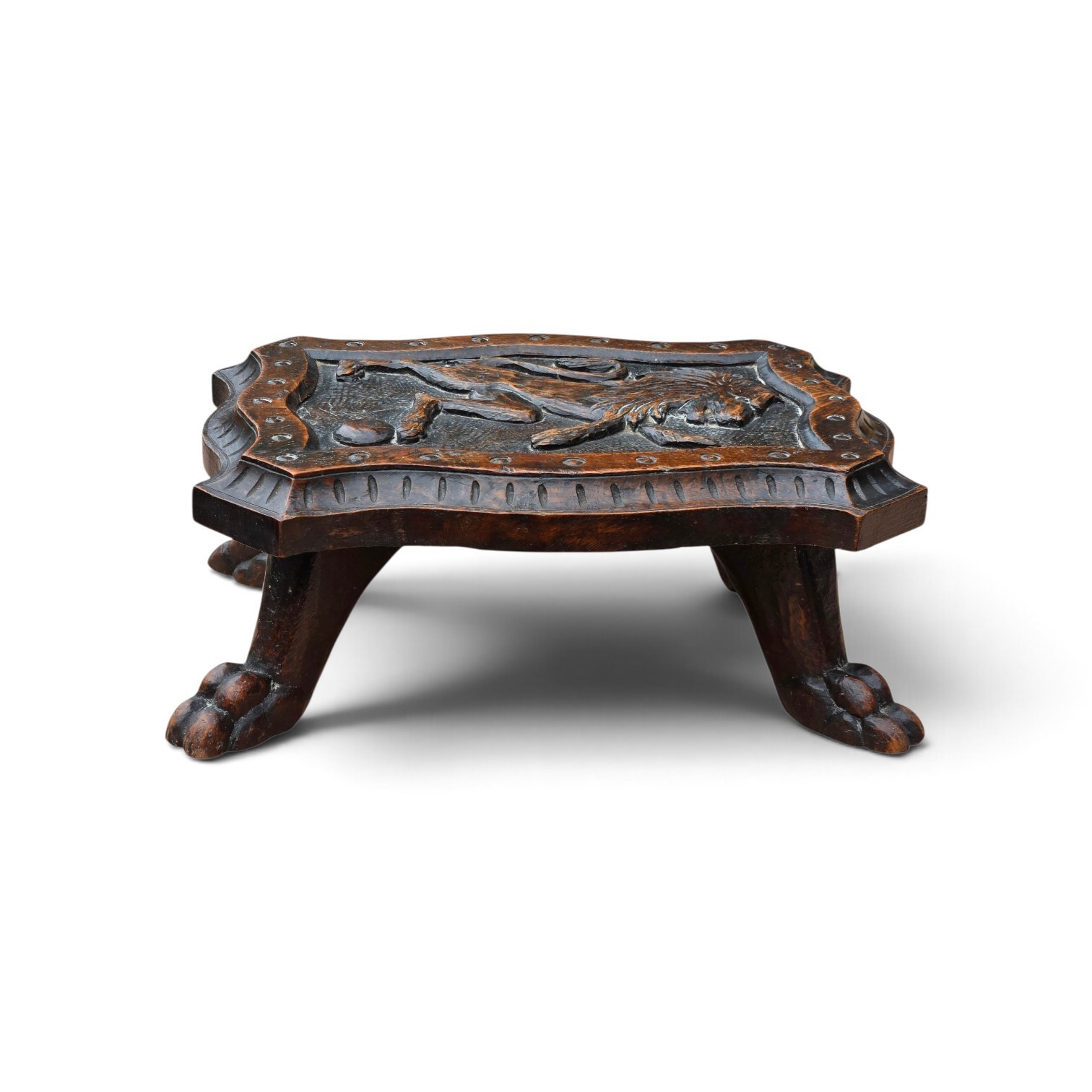
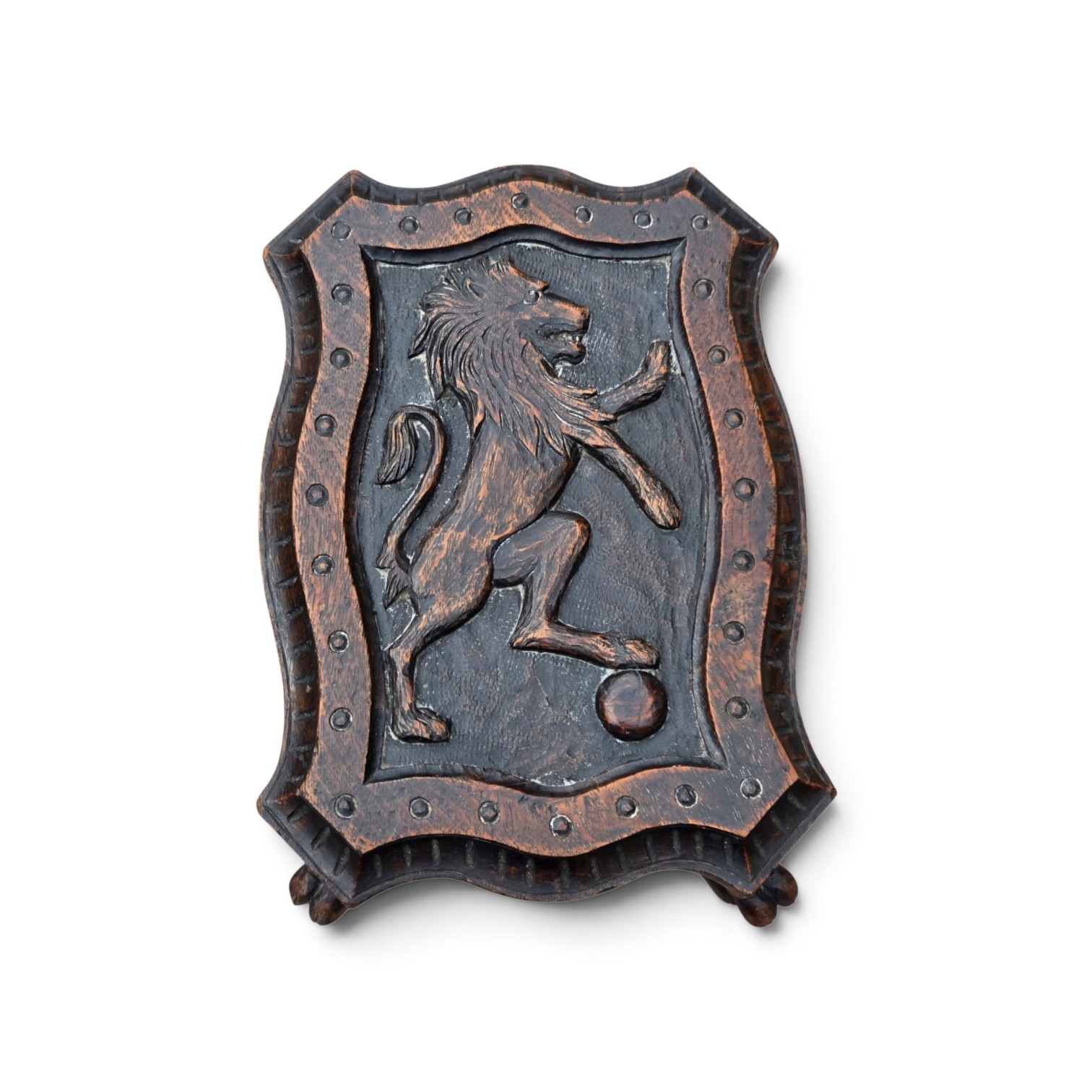
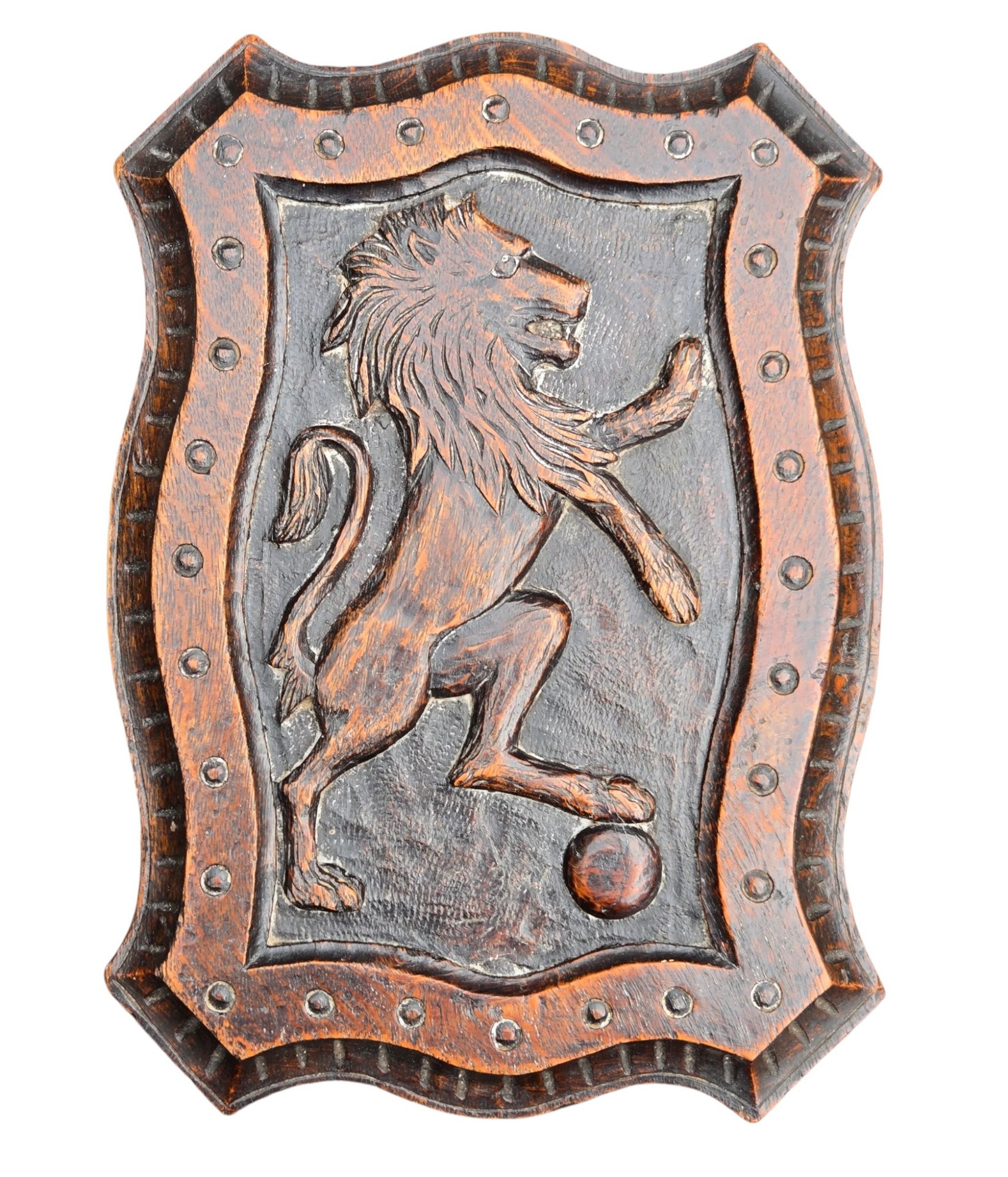
Central Lion Rampant Motif: The rectangular top features a deeply recessed central panel showcasing a high-relief carved heraldic lion rampant. The lion is dynamically rendered with a flowing, textured mane, muscular hindquarters, and an upright stance, poised with one paw resting atop a spherical orb. The background field is meticulously cross-hatched and hand-textured to create striking visual depth.
Borders & Framing: The outer frame is masterfully styled to emulate a medieval shield or studded leather strapwork border. It is lined with precise, punched dot detailing that mimics decorative riveting, bordered by gadrooned edge moulding along the outer perimeter.
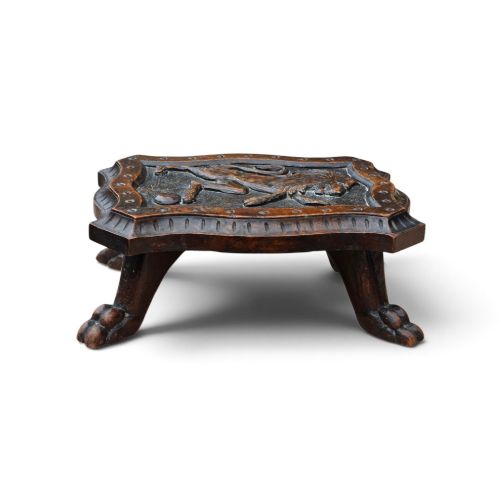
Legs & Claw-and-Feet: Supported by four robust, hand-carved cabriole legs. Each leg transitions seamlessly into finely defined fur texturing, terminating in intricate, muscular claw-and-ball feet that provide a stable and decorative stance.
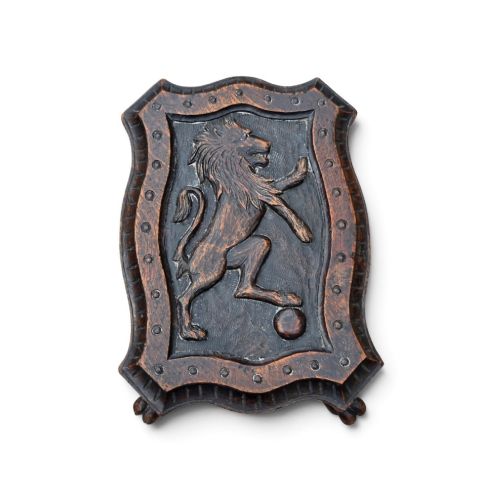
Victorian Era & Cultural Context Dating from the late Victorian era (circa 1880–1900), this piece reflects the period's intense transatlantic fascination with British and Scottish heritage, Gothic Revival design, and romantic heraldic symbolism. During the late 19th century, workshops in the British Isles frequently produced these heavily carved, characterful folk art and tourist-market pieces to cater to affluent travelers and collectors who prized medievalism and national emblems like the Scottish Lion Rampant. It serves as a quintessential parlor or fireside accent piece from the height of the Victorian decorative arts movement.
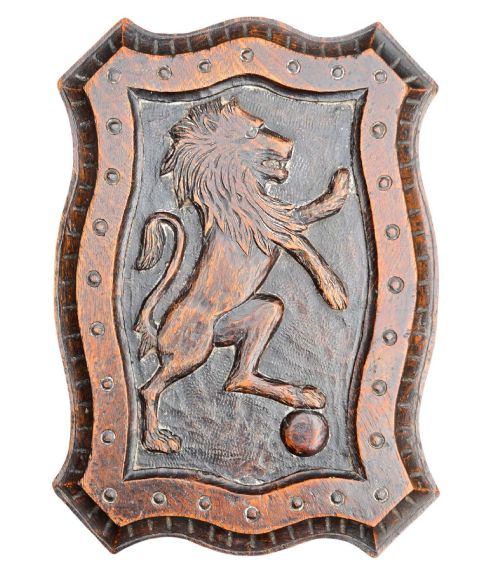
Good antique condition consistent with age and decorative use. The solid oak structure remains stable and sound. The deep-relief carving is exceptionally crisp with well-preserved details. The dark surface stain displays natural patination, minor high-point rubbing, and light edge wear consistent with handling, alongside minor age-related dry checking and shrinkage to the heavy oak base.
Provenance: Private Collection, Scotland
Sandbanks Antiques has dated this piece to the 19th Century.
Specialising in antique silver, gold boxes, gold coins and objects de vertu. Rare fine-quality imperial chinese porcelain, jades, cloisonné
You can view the stock and full dealer information on the Sandbanks Antiques Profile Page
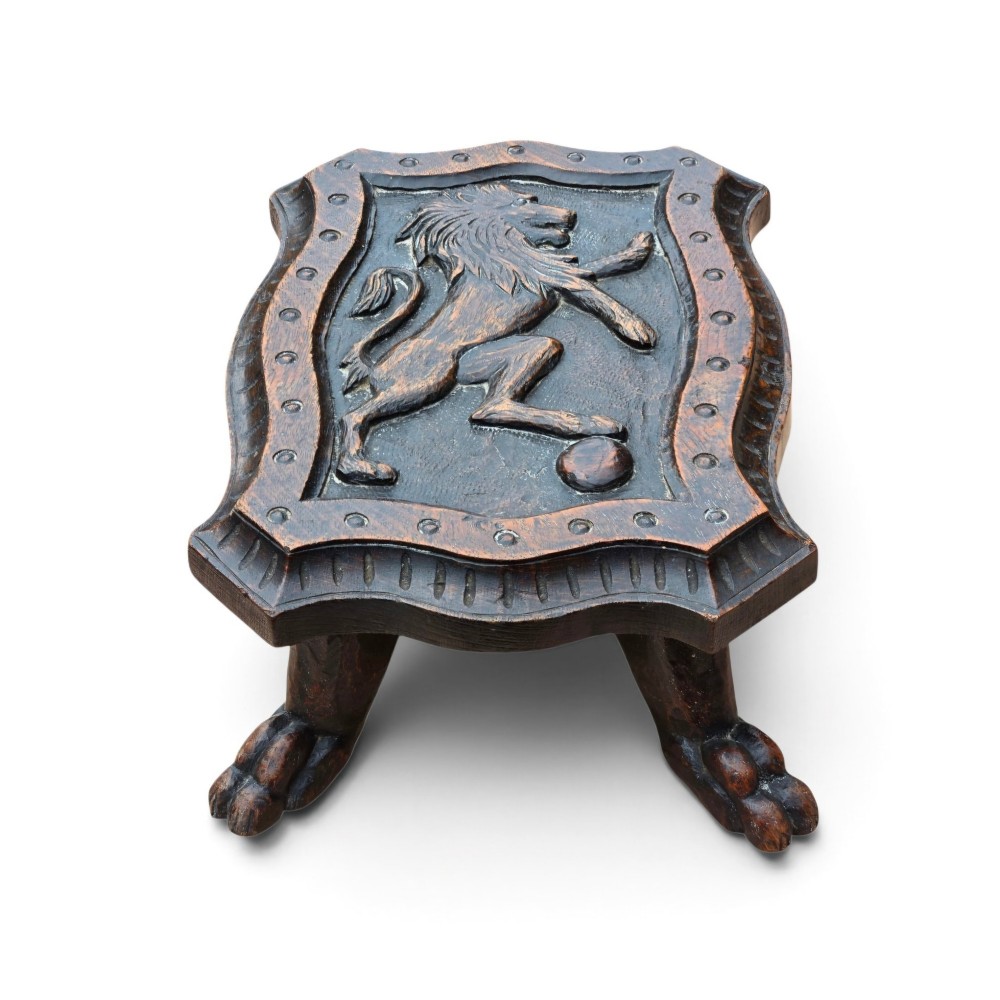
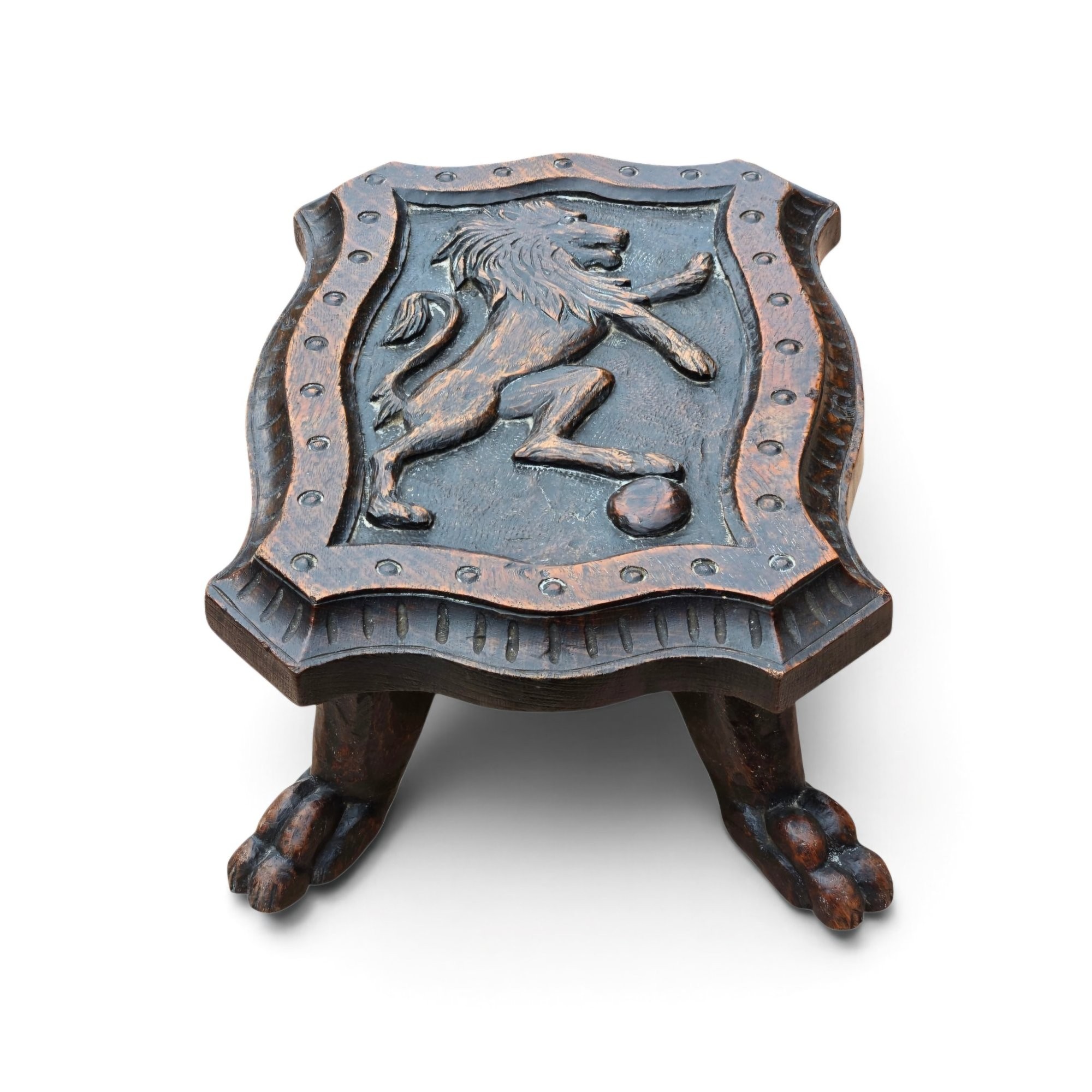
Late 19th-century Scottish Victorian Carved Oak Occasional Footstool with Heraldic Lion Rampant Motif and Claw-and-ball Feet