

19th Century Candle Stands
These 19th century candle stands bring together solid woods and cast metals to hold light and support small objects with elegance.
19th Century Candle Stands
When you search for 19th century candle stands, you encounter a diverse group of objects spanning candlesticks, candelabra, torcheres, and small occasional or wine tables that served similar lighting and display purposes. These pieces emerge from periods including the Regency, William IV, and Victorian eras, reflecting shifting domestic tastes across the century.
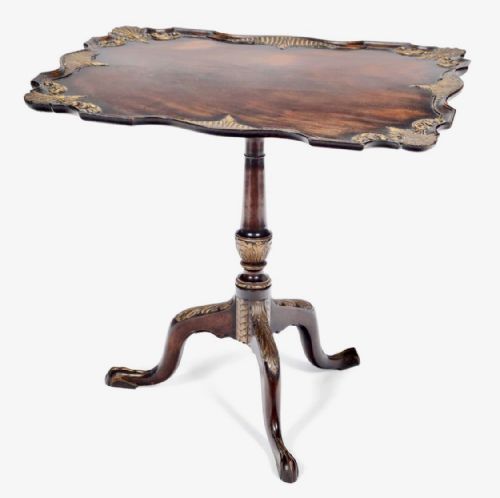
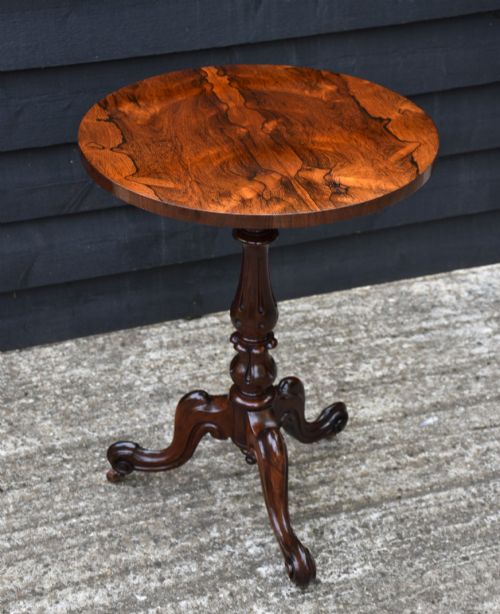
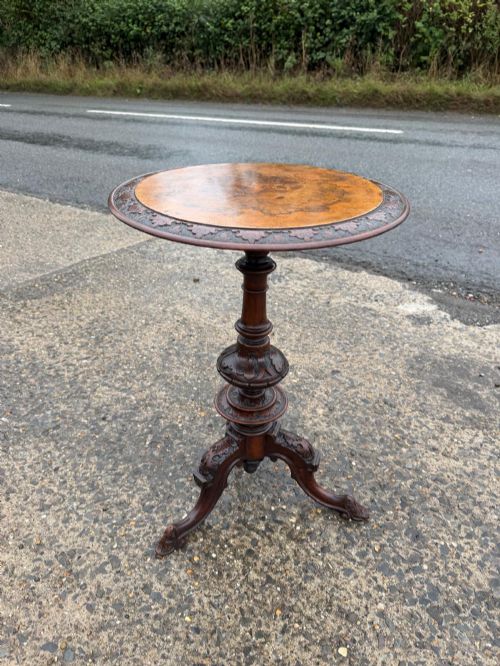
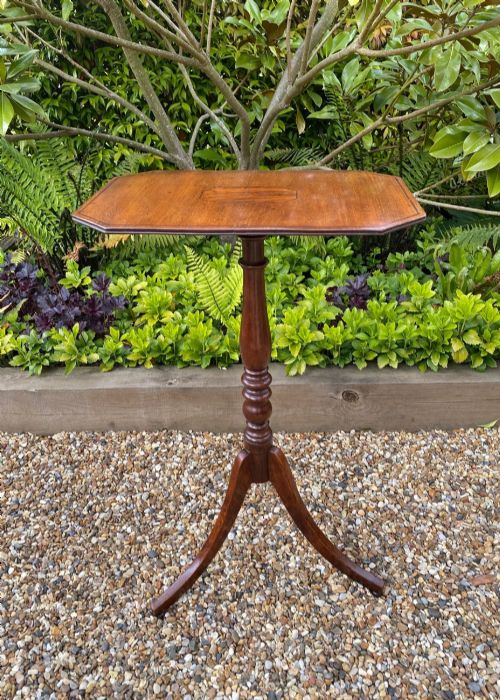
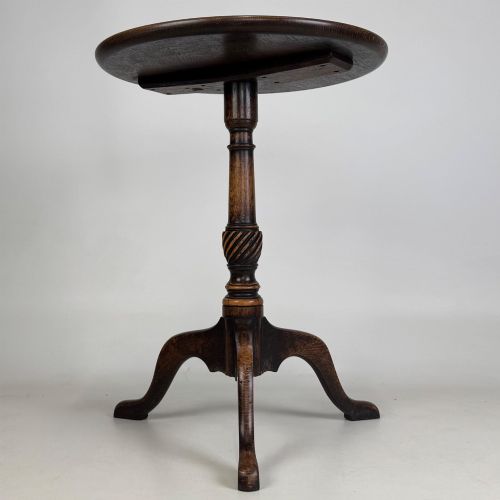
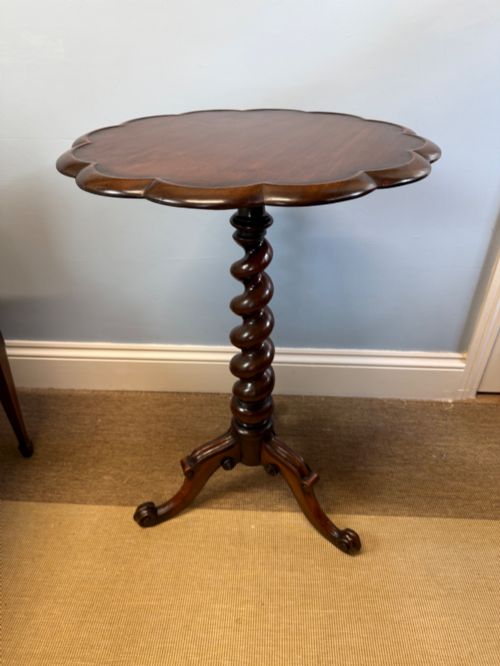
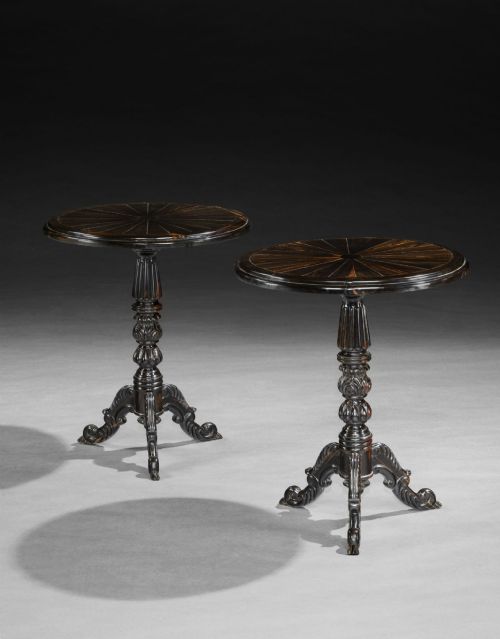
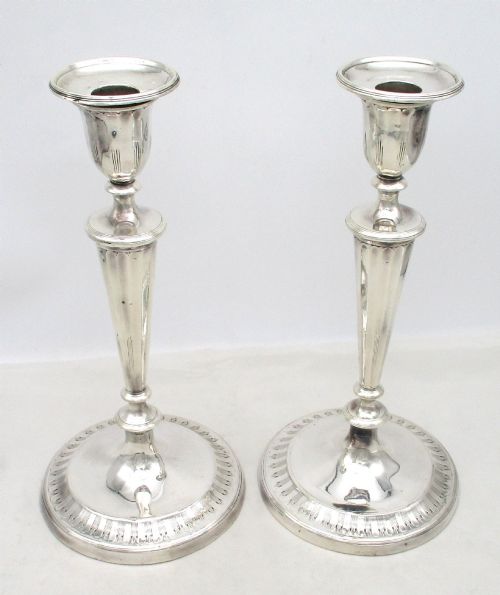
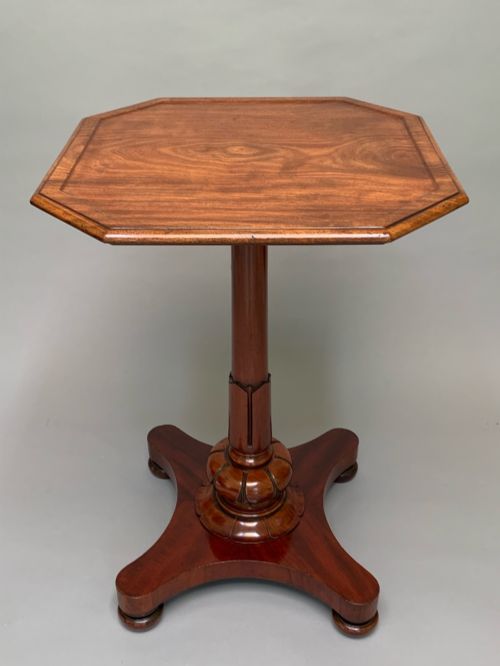
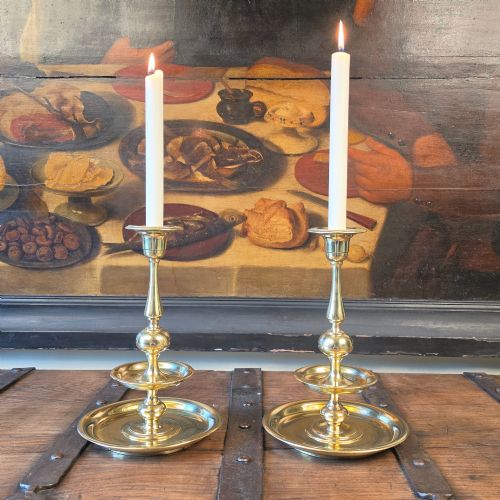
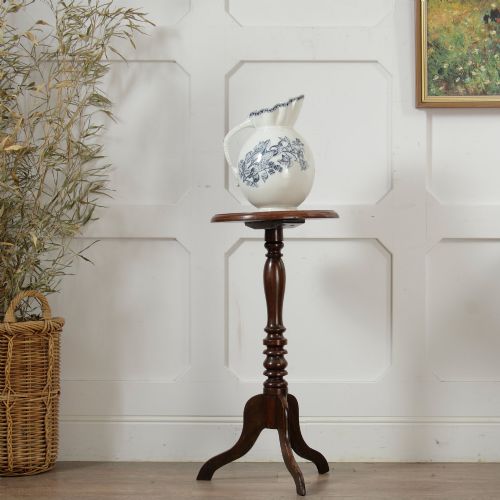
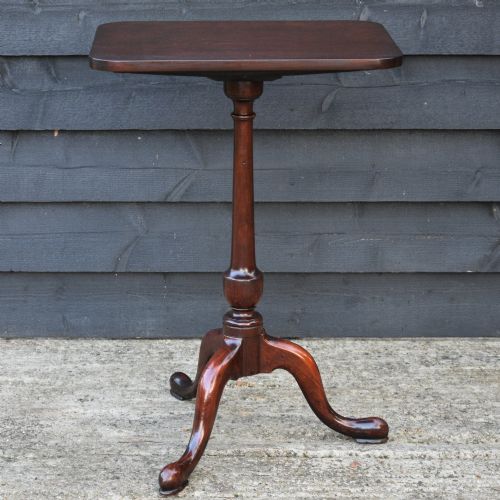
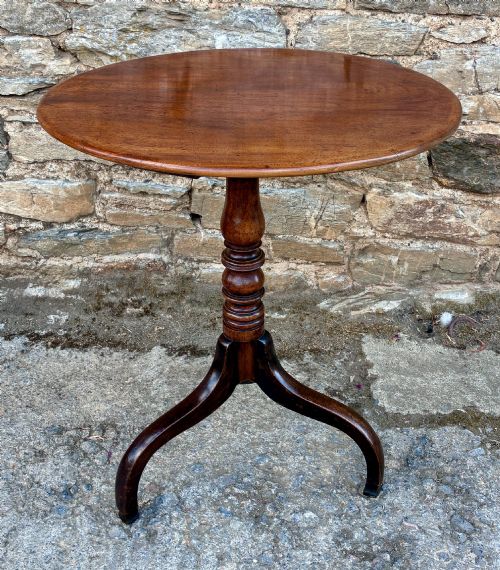
The form splits broadly between vertical stands designed strictly to elevate a light source and small tables that held candles alongside other evening items. You will frequently meet mahogany and rosewood wine tables with tilt-top actions, alongside bronze, brass, and silver-plated candlesticks and multi-armed candelabra.
Origin and stylistic influence vary widely, taking in British cabinetmaking traditions, French Empire designs, and regional variations in fruitwood and oak. Surviving examples demonstrate how lighting furniture evolved from simple functional holders into decorative focal points for the nineteenth-century interior.
Materials and construction
Cabinetmakers utilised dense timbers such as mahogany, rosewood, walnut, and fruitwood for the tables and torcheres, often employing tripod bases and tilt-top mechanisms for stability and convenience. Turning, carving, and occasional parcel gilding or burr wood veneers added decorative enrichment to the structural grain.
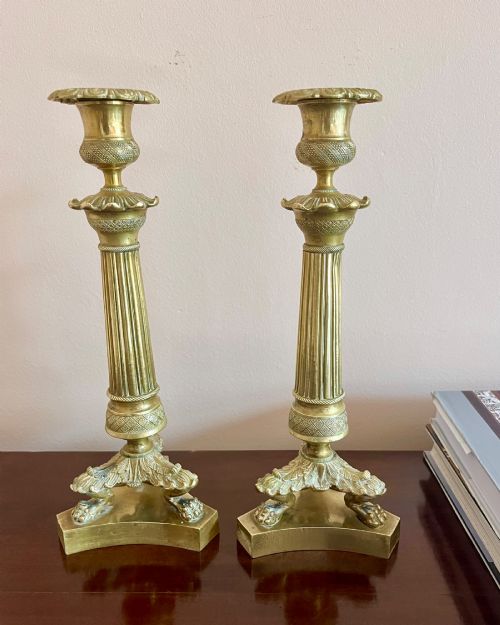
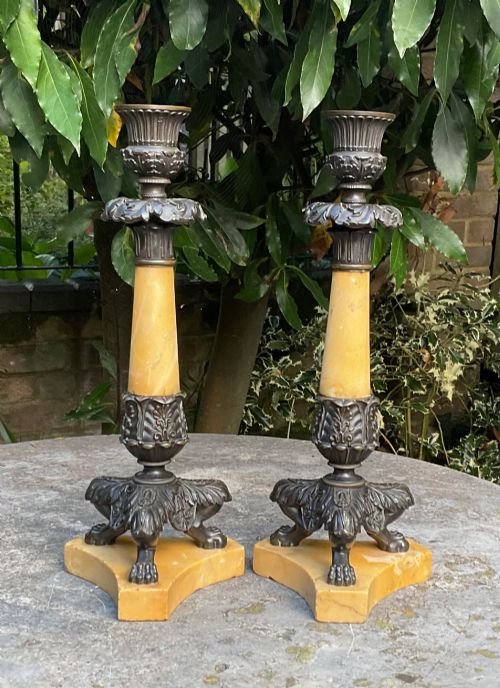
Metal stands relied on bronze, brass, or ormolu, shaped through casting and chasing to produce sculptural figures, campana sconces, and intricate foliage. Silver plating and champleve enamel techniques further decorated the metal surfaces, combining durability with polished visual appeal.
Periods represented span from Regency and William IV through to Victorian designs.
Judging quality and execution
Quality rests in the crispness of the casting for metals and the precision of the joinery and turning for woods. A superior piece displays finely detailed carving on tripod legs and secure, well-fitted tilt-top mechanisms rather than loose joints or hasty assembly.
The choice of materials also dictates standing, with solid rosewood, figured mahogany, and heavy gilt bronze or ormolu marking out higher-tier commissions compared to simpler fruitwood or standard brass production.
Pierre Philippe Thomire·Ridgway
The 19th Century Candle Stands Glossary
- Torchere
- A tall ornamental stand designed to support a candelabrum or light source. These vertical pieces often feature slender columns and tripod bases.
- Tilt-top
- A tabletop hinged to its pedestal so it can be folded down vertically when not in use. This mechanism allowed tables to be stored flat against walls.
- Ormolu
- Gilt bronze applied to furniture mounts and decorative objects. The technique involves coating bronze with a finely ground gold-mercury amalgam.
- Campana
- A vase-shaped candle sconce resembling an inverted bell. This classical form frequently appears on Regency and Empire metal candlesticks.
- Tripod
- A three-legged support base common to nineteenth-century tables and stands. The three points ensure stability on uneven floorboards.
19th Century Candle Stands: Frequently Asked Questions
What is the difference between a torchere and a wine table?
A torchere is a tall, slender stand traditionally built to elevate a single light source or plant, focusing on vertical display rather than surface utility.
By contrast, a wine table provides a low, portable surface with a small top, often featuring a tilt mechanism to hold glasses and bottles beside a chair.
How were these candle stands used in a nineteenth-century home?
These pieces provided portable illumination in drawing rooms and parlours before the widespread adoption of gas and electric lighting. Servants moved them around rooms to cast light where needed for reading or needlework.
Side tables and wine stands doubled as convenient surfaces for evening refreshments, while torcheres held heavier candelabra in entrance halls and corners.
How can I tell a Regency candle stand from a Victorian one?
Regency pieces often display clean classical lines, inspired by ancient Greek and Roman forms, utilising gilt bronze, ormolu, and rosewood with restrained elegance.
Victorian stands tend to be heavier and more ornate, featuring robust carved mahogany, burr wood veneers, and elaborate figural or floral brass casting.
How do I care for wooden and metal candle stands?
Wooden tables and torcheres benefit from occasional application of quality beeswax to nourish the grain, keeping them away from direct sunlight and strong heat sources to prevent timber splitting.
Metal candlesticks and candelabra require dusting with a soft cloth, avoiding harsh chemical polishes that can strip original patination or damage silver plating.