




19th Century Camphor Box
A 19th century camphor box offers sturdy portable storage with a distinct aromatic timber, making it a practical choice for travellers and collectors alike.
19th Century Camphor Box
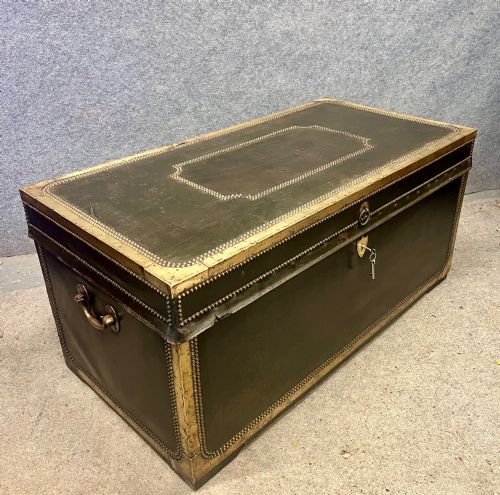
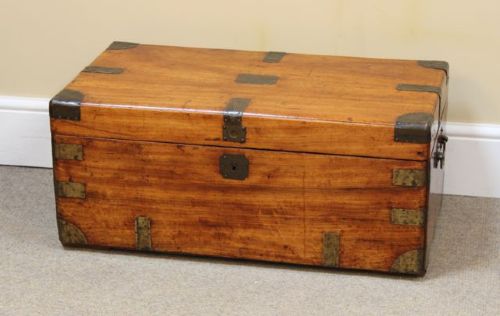
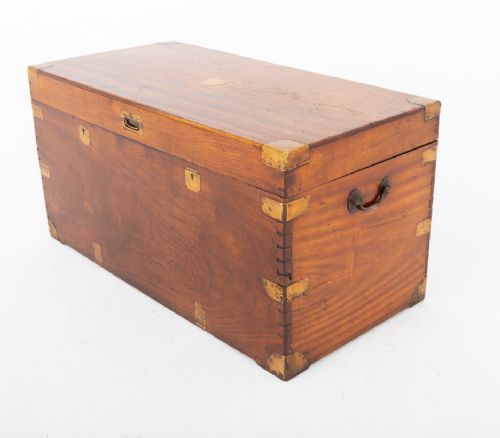
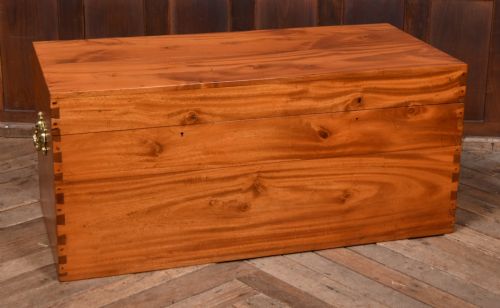
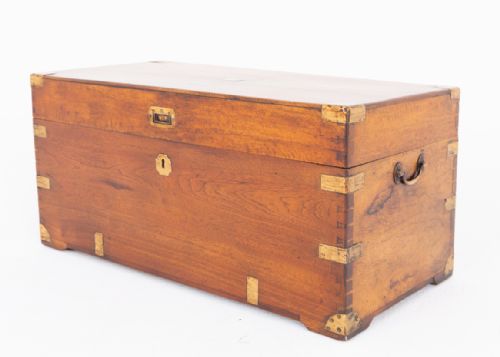
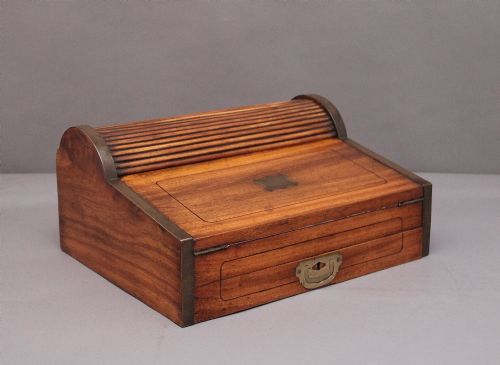
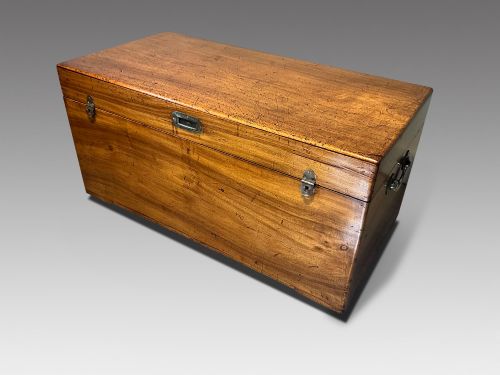
A 19th century camphor box encompasses a variety of portable containers designed for travel and trade across the British empire and beyond. Buyers encounter large military campaign trunks, smaller blanket boxes, ships boxes, and compact writing slopes.
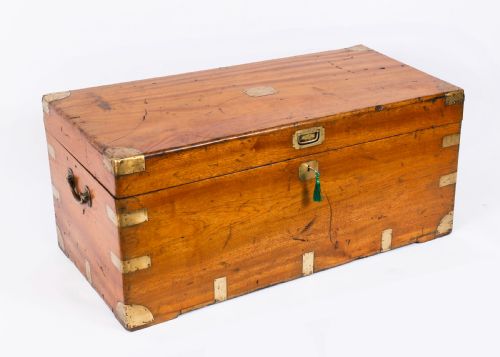
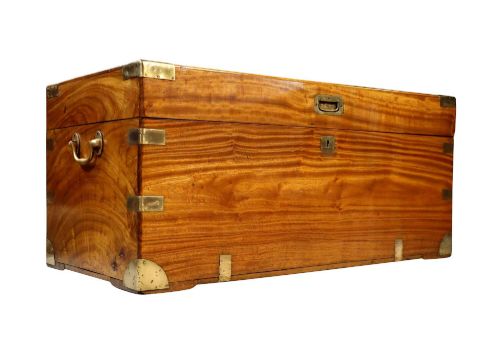
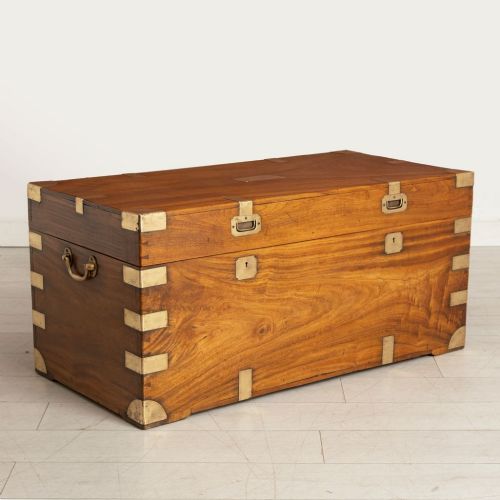
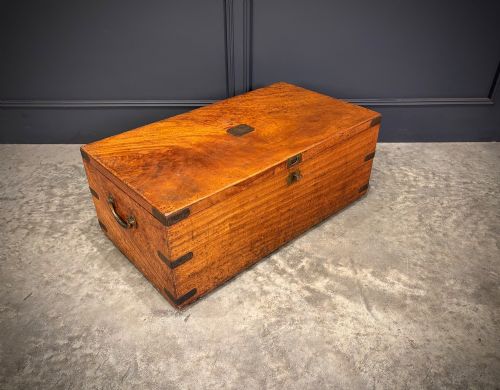
The objects originate from trade centres such as China and Ceylon, or emerge within Regency and Victorian military contexts. The version most commonly met on this page is the brass-bound campaign trunk designed for dismantling or carrying.
Storage chests and trunks dominate the selection, though writing slopes with fitted interiors appear regularly. Pieces range from plain utilitarian boxes to larger carved items associated with China Trade production.
Assessing Quality
Quality rests upon the integrity of the timber, the weight and fastening of the brass mounts, and the preservation of original fitted interiors. Superior examples maintain tight joints and unwarped lids despite exposure to tropical climates.
Finer pieces display substantial brass binding that protects vulnerable corners and edges during military transport. The presence of secondary timbers like ebony and well-executed carving elevates the standing of an export box.
The condition of leather coverings, interior writing slopes, and original hardware distinguishes standard utility trunks from exceptional campaign items. Retaining the distinctive aroma of the camphor wood adds further merit.
Listings feature items spanning the 19th century, including Regency, Victorian, and specific dates such as 1850, 1860, 1880, and 1890.
The 19th Century Camphor Box Glossary
- Campaign trunk
- A portable storage chest built for military officers on active service abroad, typically reinforced with metal brackets to withstand rough transport. These boxes often feature recessed carrying handles and sturdy locks.
- Camphor wood
- An aromatic timber native to Asia, prized in furniture making for its ability to deter moths and insects from stored textiles. The wood retains a distinct scent decades after manufacture.
- Writing slope
- A portable desk hinged to open at an angle, containing compartments for ink, pens, and paper. Campaign versions fold flat for transport.
- Brass bound
- Furniture strengthened along the edges and corners with brass strips and brackets. This technique protected pieces from heavy handling during travel.
- China Trade
- Goods manufactured in China during the nineteenth century specifically for export to Western markets. These items often combine traditional forms with European design requirements.
19th Century Camphor Box: Frequently Asked Questions
What is a campaign trunk?
A campaign trunk is a portable chest used by military personnel during the nineteenth century. These boxes were constructed to endure frequent transit across distant territories.
They typically feature protective metal corners and recessed handles to save space. The design allows officers to transport personal effects and documents securely.
How do I care for camphor wood?
Camphor wood requires minimal maintenance due to its natural oils and durable grain. Keep the box away from direct heat sources to prevent the timber from splitting.
Cleaning should involve only a soft, dry cloth to preserve the polished surface. Avoid harsh chemical polishes that might damage the wood.
Why does the box smell of camphor?
The distinct aroma comes from the natural resin contained within the timber itself. This scent acts as a natural deterrent against moths and other textile pests.
Even after many decades, the wood retains this characteristic fragrance. The aroma remains one of the primary identifiers of genuine camphor furniture.
Were these boxes used on ships?
Many nineteenth-century boxes served aboard merchant vessels and naval ships. Sailors and travellers utilised sturdy chests to protect clothing and valuables during long sea voyages.
Maritime examples often show robust brass bindings to withstand damp conditions. Ships boxes provided secure storage in cramped quarters.