



19th Century Burmese Table
A 19th century Burmese table brings intricate colonial craftsmanship and rich timber into a room, offering both history and utility.
19th Century Burmese Table
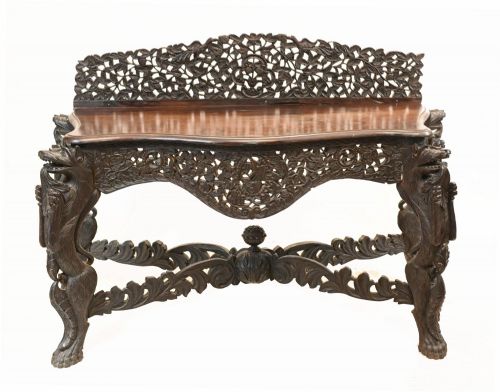
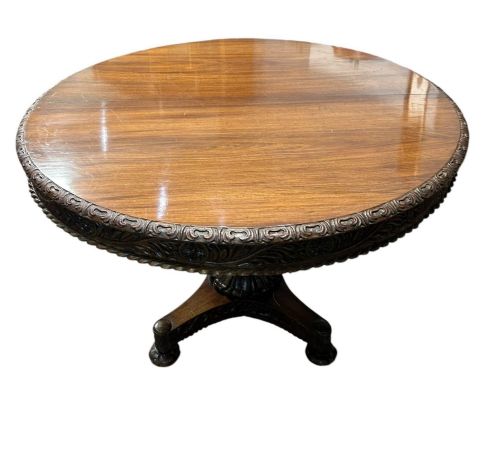
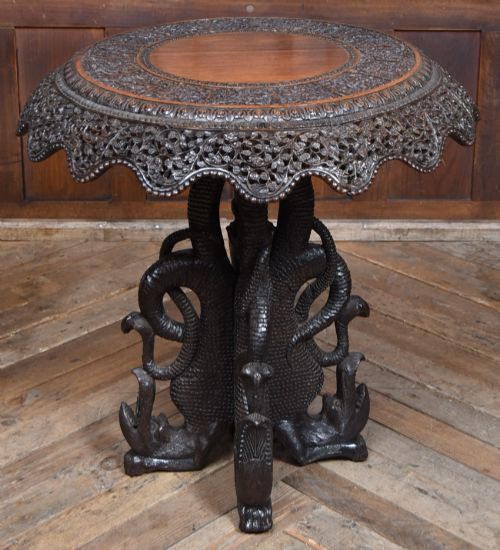
A 19th century Burmese table encompasses side tables, occasional tables, tilt top tables, and console tables originating from Burma and Myanmar. These pieces arrive from periods spanning the 19th century, with dates pointing to 1840, 1870, 1880, and 1900.
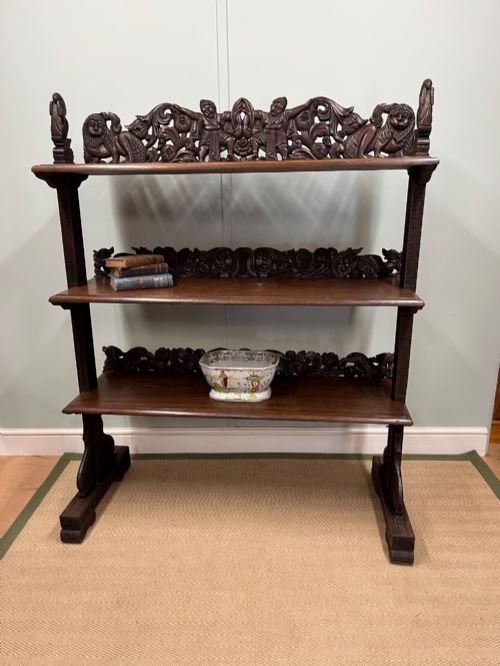
The most common form encountered on this page is the side table, frequently featuring carved decoration or a two tier structure. Tilt top tables and lamp hall side tables also appear within these listings.
Makers and artisans produced these items under Anglo-Burmese and Anglo-Burmese Colonial styles, reflecting the aesthetic exchanges of the era.
How They Were Made
Craftsmen built these tables using dense tropical timbers, specifically teak, hardwood, and padouk. These durable woods provided a stable foundation for deep and elaborate carving.
The construction relies on traditional joinery suited to heavy hardwoods, allowing artisans to carve intricate floral and figural motifs directly into the substance of the table.
19th Century Burmese Table Retail Price Guide 2026
Typical asking prices for 19th century burmese table among the pieces listed under this phrase on Sellingantiques today, from the lower quarter to the upper quarter. They describe what is for sale here now, not the wider market.
Materials recorded across the inventory include teak, padouk, and general hardwood.
What Varies in Quality
Quality in a 19th century Burmese table rests upon the depth, crispness, and complexity of the carved decoration across the timber. Superior pieces display fluid, deeply undercut motifs that retain their sharpness across the surface.
The choice of material and the structural integrity of the frame further distinguish the standard of the work. Tables utilising dense padouk or high-grade teak with well-preserved joints represent the upper tier of surviving examples.
The 19th Century Burmese Table Glossary
- Anglo-Burmese
- A style combining British furniture forms with traditional Burmese carving and decoration. This aesthetic emerged during the colonial period.
- Tilt top table
- A table with a hinged top that pivots to a vertical position when not in use. This mechanism saved space in nineteenth-century interiors.
- Padouk
- A heavy, durable hardwood with a reddish hue used in fine furniture construction. It provides an excellent surface for detailed carving.
- Two tier table
- A piece featuring a main surface complemented by a lower shelf supported by legs or stretchers. This design added display and storage space.
19th Century Burmese Table: Frequently Asked Questions
What is a Burmese table?
A 19th century Burmese table is a wooden furniture piece created in Burma, often featuring deep hand-carved ornamentation.
These items include side tables, tilt top tables, and two tier designs made from teak, hardwood, and padouk.
How were these tables used?
Historically, these pieces functioned as occasional tables, side tables, or lamp tables within domestic rooms.
Their varied forms allowed them to serve as practical surfaces for illumination, display, or general use.
How do I live with a carved table?
Integrating a carved wooden table into a room requires balancing its ornate surface with simpler surrounding furniture.
Regular dusting with a soft cloth preserves the intricate crevices of the carved teak and hardwood details.
How do I identify Anglo-Burmese style?
The Anglo-Burmese style fuses Western furniture proportions with traditional Southeast Asian woodcarving techniques.
Look for British-influenced forms like tilt tops or console tables covered in dense, narrative or floral Burmese carvings.