



19th Century Burmese Furniture
19th century burmese furniture brings dense, sculptural timber and colonial vernacular character into a room through deeply carved tables and seating.
19th Century Burmese Furniture
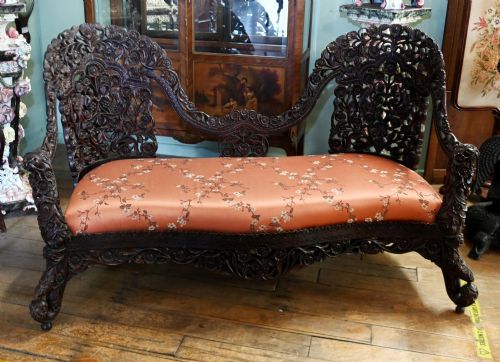
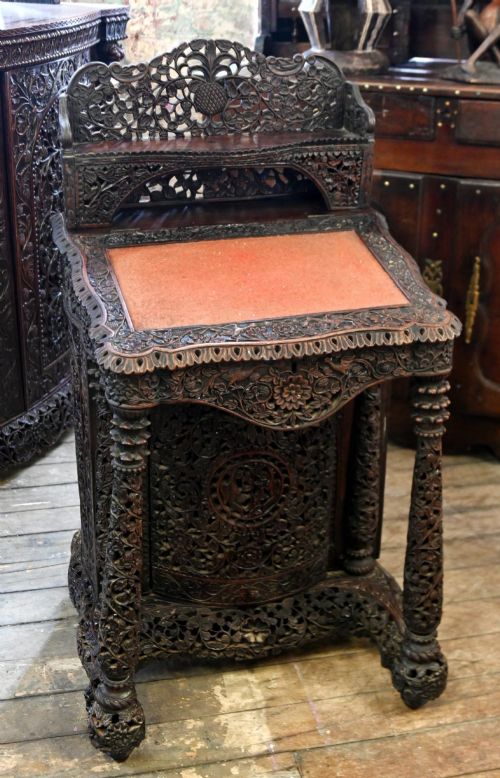
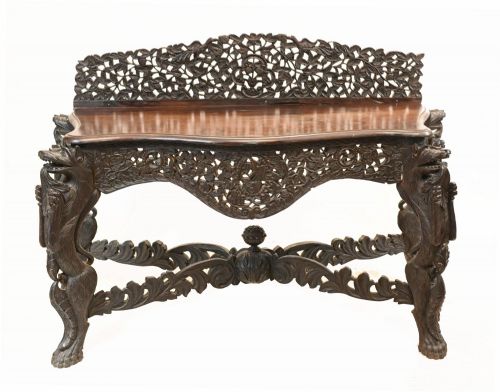
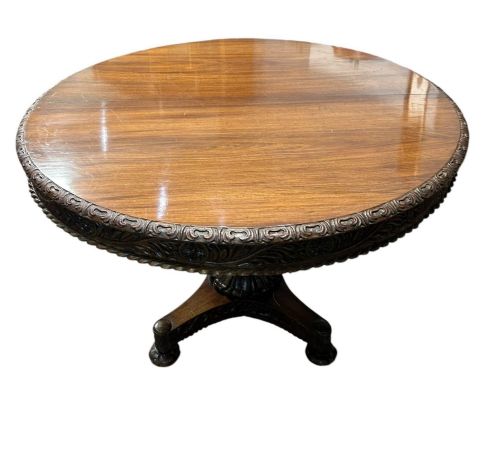
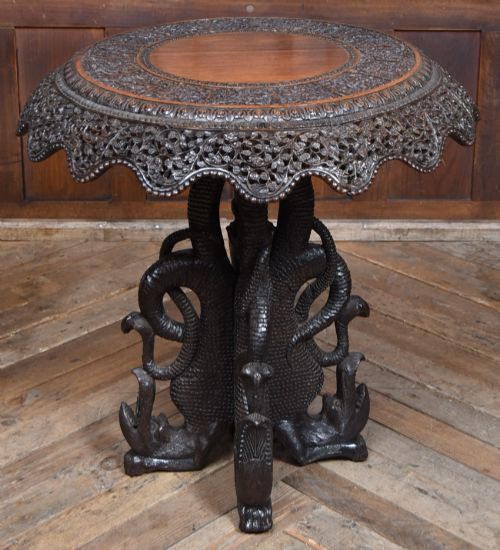
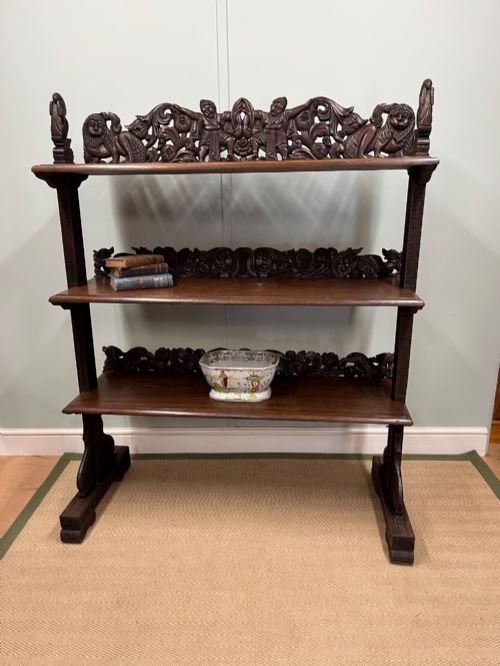
19th century burmese furniture consists primarily of tables, cabinets, and chairs originating from Myanmar during the nineteenth century, including specific years such as 1870, 1880, 1890, and 1900. Buyers encounter various forms on this page, dominated by side tables, occasional tables, tilt-top tables, and console tables alongside larger storage pieces like buffets and cabinets.
Seating forms also appear frequently, ranging from accent chairs and music chairs to temple chairs and peacock armchairs. The stylistic influences span traditional burmese vernacular work to Anglo-Burmese and Anglo-Burmese colonial designs, reflecting historical cross-cultural patronage.
The regional identity of these items is tied closely to local domestic and temple contexts, producing functional household items that double as intricate decorative objects. Pieces vary from simple village tables to elaborate architectural seating with figurative carving.
How they were made
Makers constructed 19th century burmese furniture predominantly from dense tropical hardwoods, utilising teak and padouk wood alongside general hardwood. These heavy timbers provided a stable substrate capable of sustaining deep, three-dimensional relief carving without splitting along the grain.
Decoration relied entirely on hand-carving techniques, often covering surfaces with dense floral, animal, and figurative motifs such as elephants and peacocks. Secondary elements occasionally integrated brass fittings, bone inlay, and velvet upholstery to complete the functional pieces.
19th Century Burmese Furniture Retail Price Guide 2026
Typical asking prices for 19th century burmese furniture among the pieces listed under this phrase on Sellingantiques today, from the lower quarter to the upper quarter. They describe what is for sale here now, not the wider market.
Listings feature 19th century dates spanning from 1840 to 1900, dominated by pieces attributed specifically to the year 1880.
What varies in quality
The distinction between standard and superior pieces rests on the depth and clarity of the hand-carved detail across the teak and padouk surfaces. Master carvers achieved crisp undercut relief work that maintained structural integrity in the dense timber, whereas lesser examples display shallow or hurried cutting.
Proportion and scale also separate simpler village items from grander temple or colonial pieces, with balanced forms commanding greater visual presence. The integration of secondary materials like brass hardware and bone accents further elevates the refinement of the construction.
The 19th Century Burmese Furniture Glossary
- Padouk
- A heavy, durable tropical hardwood favoured for fine cabinet-making and intricate carving in the region. Its dense reddish-brown grain takes a sharp edge from chisel work.
- Anglo-Burmese
- A design style combining traditional Burmese carving motifs with European furniture forms suited to colonial residences. These hybrid pieces often merge local timber with Western table and cabinet shapes.
- Tilt-top table
- A occasional table featuring a mechanism that allows the circular or shaped wooden top to pivot vertically when not in use. This clever space-saving form was popular in nineteenth-century domestic interiors.
- Temple chair
- An ornate seating form originating from sacred or ceremonial spaces, frequently decorated with deep figurative carvings. They often display higher sculptural ambition than standard domestic chairs.
- Buffet
- A low cabinet or sideboard designed for serving food and storing dining ware. In nineteenth-century forms, these feature tiered shelving and heavy panelled construction in teak.
19th Century Burmese Furniture: Frequently Asked Questions
Where were these pieces made?
These items originated in Myanmar during the nineteenth century, created by local artisans working in domestic workshops and regional centres.
The production reflects both indigenous aesthetic traditions and the tastes of the colonial period.
How do I care for teak and padouk?
Maintain these dense hardwoods by keeping them away from direct heat sources and sudden humidity changes that dry out the timber.
Apply occasional natural wax to nourish the grain and protect the hand-carved surfaces without sealing the wood.
What is an Anglo-Burmese piece?
This descriptor identifies furniture that merges traditional Burmese carving techniques with British colonial room forms and functional requirements.
These items bridge two design cultures while retaining local material choices like teak.
How are tilt-top tables used?
Tilt-top tables function as versatile occasional surfaces for living spaces, pivoting flat for use and vertical for storage against a wall.
The mechanism allows the carved top to act as a decorative wall panel when stowed.