



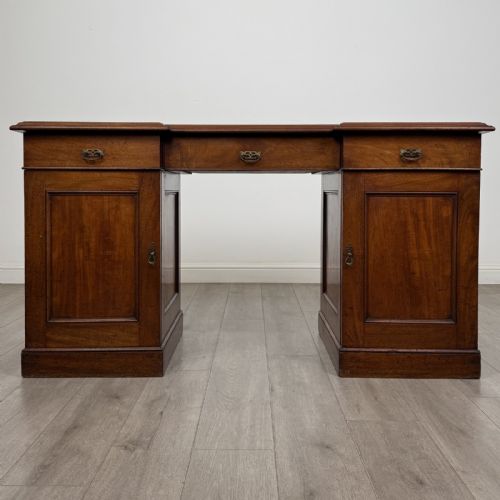
19th Century Breakfront
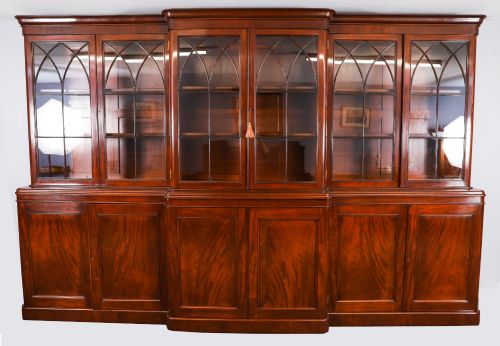
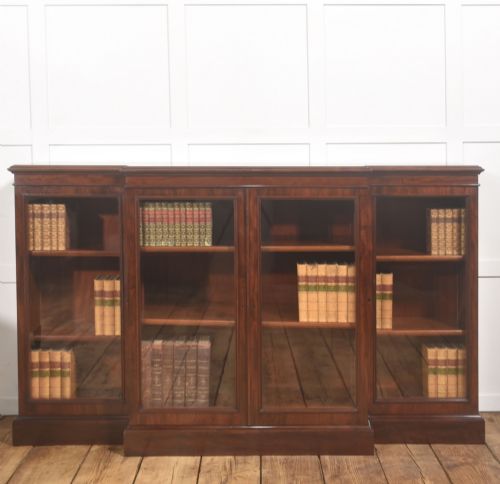
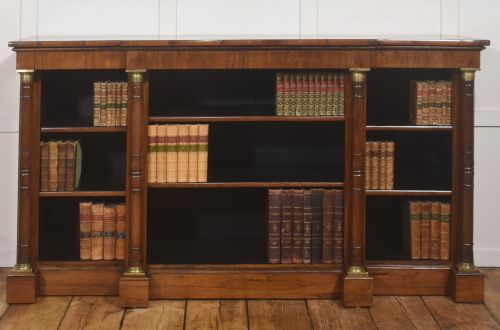
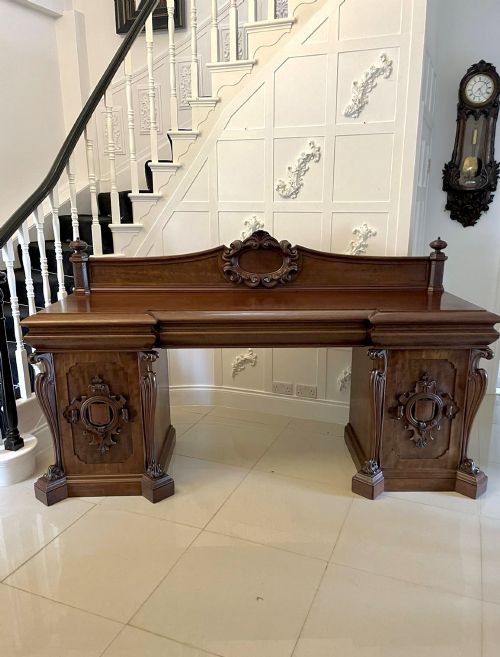
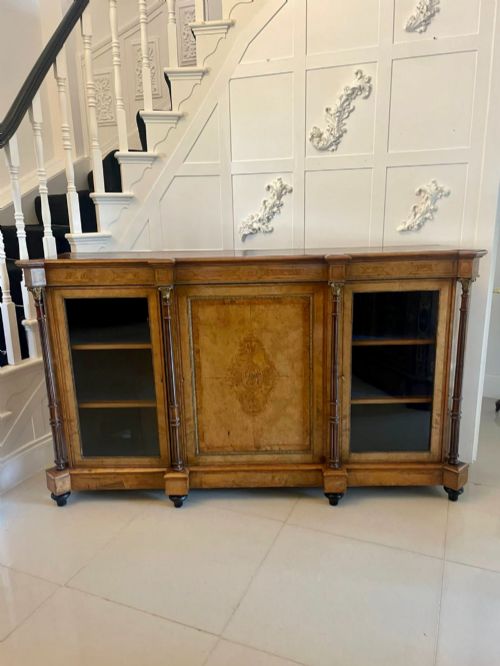
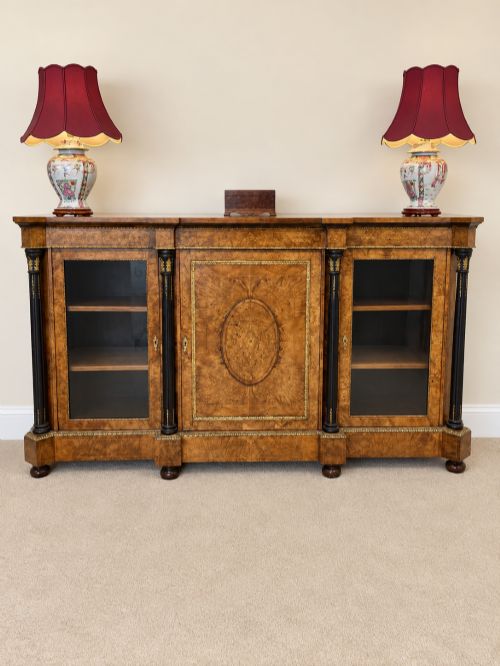
A 19th century breakfront commands attention through its characteristic recessed centre and projecting outer sections, offering both imposing scale and structured storage.
19th Century Breakfront
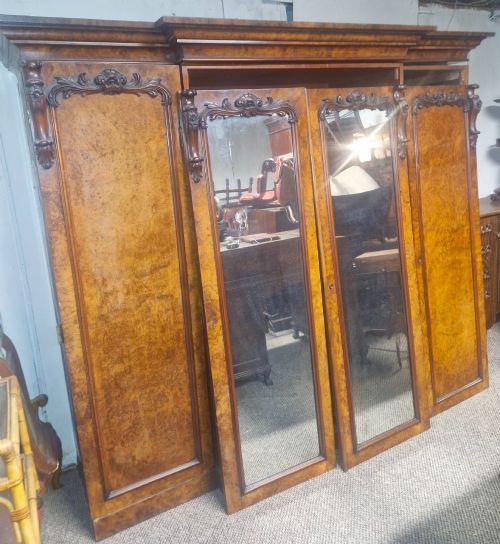
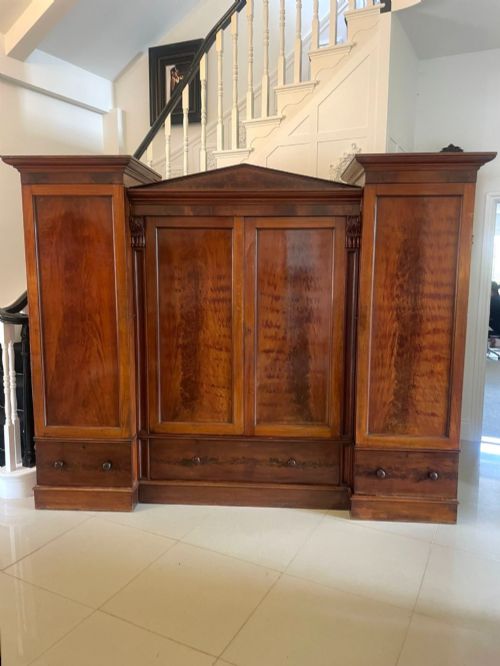
A 19th century breakfront encompasses large library bookcases, sideboards, credenzas, and wardrobes designed with a stepped forward central section that creates architectural depth. These pieces originate across the Victorian, Regency, and William IV periods, spanning from the early decades through the late 1800s.
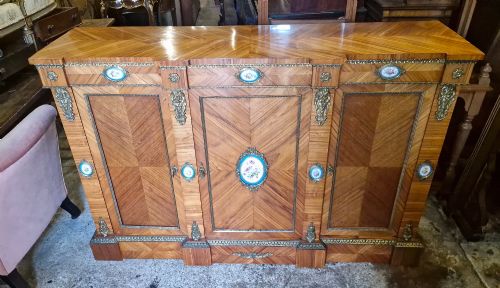
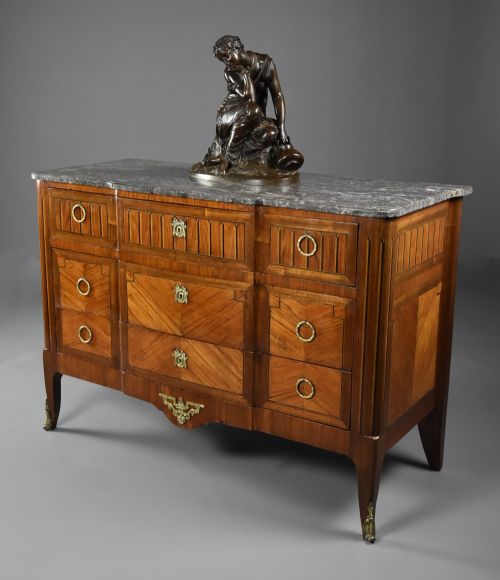
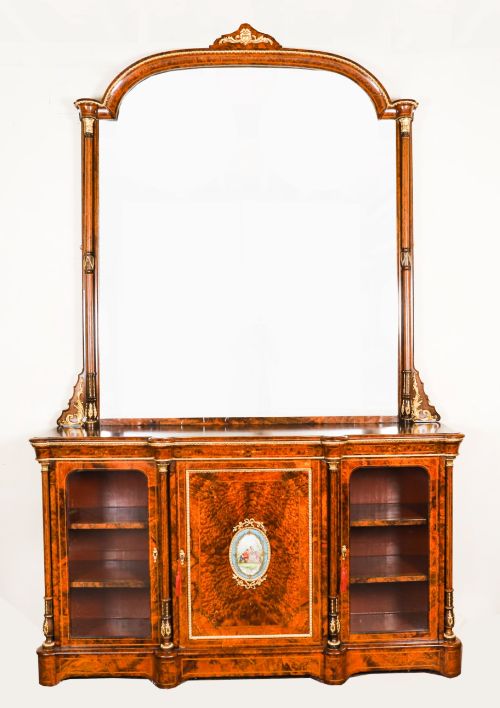
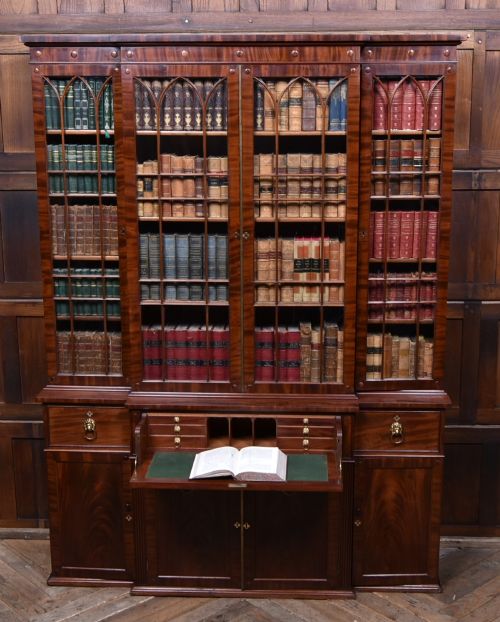
The most common formats met on this page are glazed library bookcases and credenzas, often constructed in figured mahogany or burr walnut. Alongside these, examples include side cabinets, commodes, and wardrobes reflecting French provincial, Louis XVI style, and Sheraton Revival influences.
Materials and Technique
Cabinet makers utilised dense timber foundations such as mahogany, oak, and rosewood, frequently applying decorative veneers like flame mahogany, burr walnut, and tulipwood to the primary surfaces. These woods were selected for their pronounced grain patterns and finished with meticulous polish.
Metal mounts in brass and ormolu, alongside hand-cut marquetry inlay, added decorative contrast to the timber frames. Glazed doors utilised individual glass panes set into wooden lattice frames, while marble tops appeared on select credenzas, commodes, and side tables.
19th Century Breakfront Retail Price Guide 2026
Typical asking prices for 19th century breakfront among the pieces listed under this phrase on Sellingantiques today, from the lower quarter to the upper quarter. They describe what is for sale here now, not the wider market.
Evaluating Construction
The distinction between standard pieces and the finest examples rests upon the selection of timber and the precision of the joinery within the breakfront carcase. Highly figured veneers, symmetrical grain matching, and integrated makers' stamps or signatures elevate the standing of a cabinet.
Refinement in secondary details, such as fire-gilt ormolu mounts, crisp carved mouldings, and original brass hardware, separates utilitarian storage from exceptional cabinet work. The inclusion of internal adjustable shelving and intact glazed panels further indicates superior workshop origin.
Hewetsons London·Johnstone and Jeanes·Gillows·Lamb of Manchester
The 19th Century Breakfront Glossary
- Breakfront
- A piece of furniture having a central section that projects forward from the flanking wings. This configuration breaks the linear monotony of long bookcases and sideboards.
- Burr Walnut
- Timber taken from the warted growths on walnut trees, yielding intricate, swirling grain patterns. It was sliced into thin veneers for high-status Victorian cabinetry.
- Ormolu
- Gilded bronze mounts applied to furniture for decorative effect. The technique involves treating bronze with an amalgam of gold.
- Credenza
- A low cabinet, often enclosed with doors or fitted with glass panels and mirror backs. These pieces were developed for display and storage in formal reception rooms.
- Marquetry
- The art of applying pieces of veneer to a structural structure to form decorative patterns. Craftsmen combined different woods to create floral or geometric designs.
19th Century Breakfront: Frequently Asked Questions
What is a breakfront bookcase?
A breakfront bookcase is a large storage unit designed with a central section that projects further forward than the flanking sides. This architectural layout creates visual depth and allows for distinct internal compartments behind glazed or solid doors.
Cabinet makers of the nineteenth century utilised this form primarily for extensive library bookcases and credenzas to display grand book collections and decorative porcelain.
How do I identify a Victorian piece?
Victorian pieces typically display heavier proportions, darker polished timber surfaces, and specific revival styles influenced by Gothic or Elizabethan design. Makers during this era frequently turned to dense mahogany and burr walnut.
Examining the construction methods, such as hand-cut dovetails in the drawer construction and original glass in the cabinet doors, helps confirm the nineteenth-century timeline.
Where were these cabinets used?
These large cabinets were designed for formal public rooms in substantial residences, including libraries, dining rooms, and drawing rooms. Bookcases housed scholarly volumes, while credenzas and sideboards served dining spaces.
In modern interiors, they function effectively as focal storage units in spacious living areas or studies, providing display space behind glass doors.
What timber was most popular?
Mahogany remained the dominant timber throughout the nineteenth century, valued for its strength and deep reddish-brown tone. Burr walnut gained immense popularity during the mid-Victorian era for its dramatic, swirling grain.
Cabinet makers also incorporated rosewood, oak, and exotic veneers like tulipwood and kingwood on specialised commodes and credenzas.