
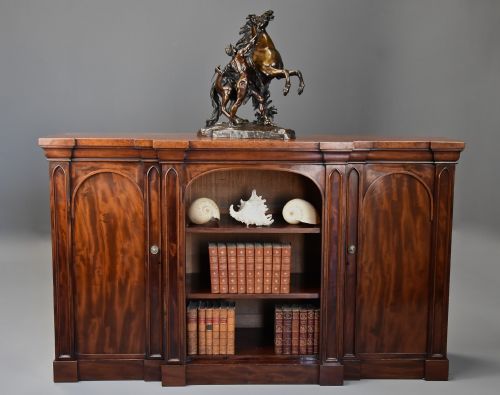


19th Century Breakfront Shelves
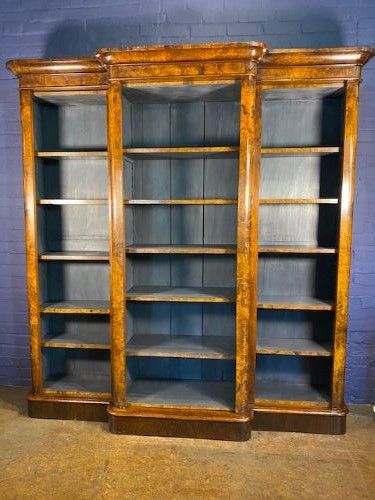
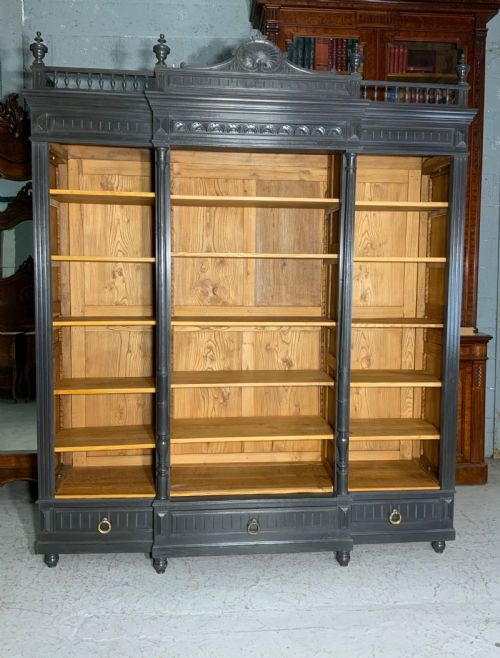
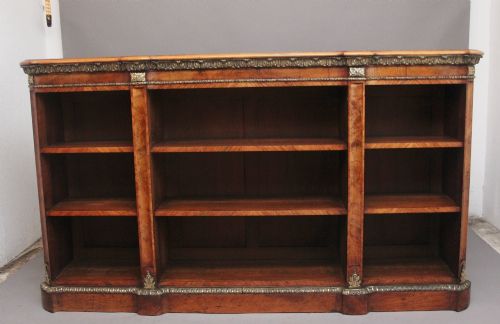
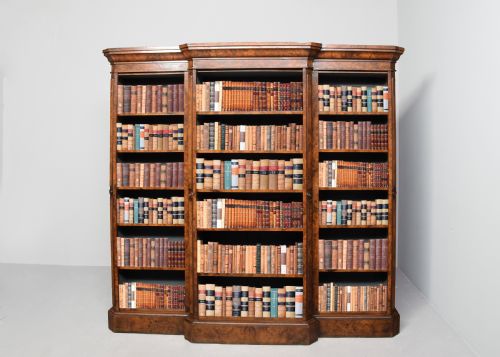
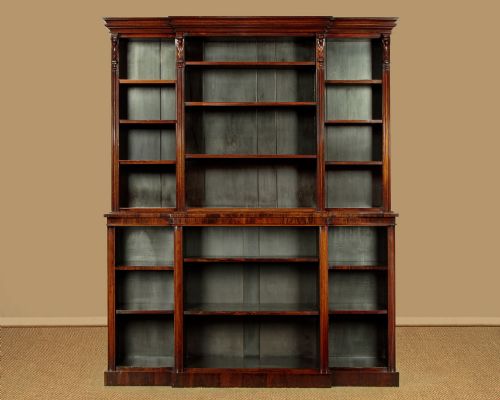
These 19th century breakfront shelves offer grand proportions and architectural presence, providing serious collectors with exceptional library storage.
19th Century Breakfront Shelves
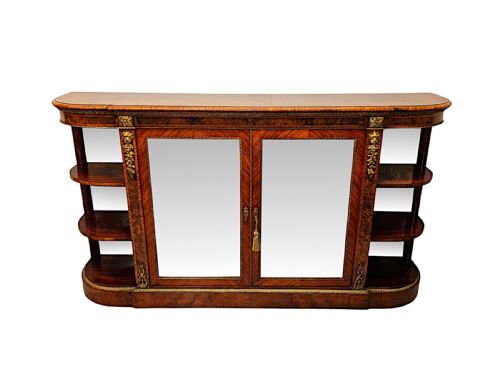
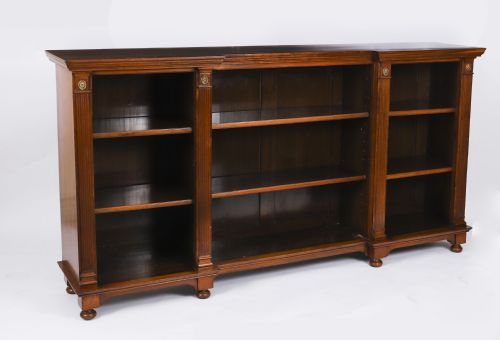
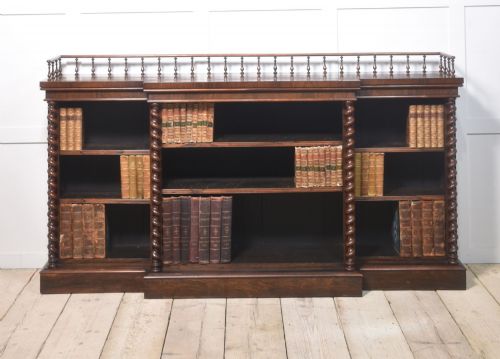
When you search for 19th century breakfront shelves, you encounter large library bookcases, open bookcases, and credenzas with projecting central sections. These pieces originate from the Victorian and Regency periods, spanning dates such as 1850, 1860, 1880, and the wider nineteenth century.
The format is dominated by open bookcases and low bookcases, alongside related forms like side cabinets and sideboards. Walnut, burr walnut, mahogany, and rosewood form the primary timber vocabulary for these large architectural pieces.
How they were made
Cabinet makers utilised dense hardwoods including mahogany, rosewood, and burr walnut, often applied as flame veneer to large expanses. Ormolu mounts and brass details punctuate the timber surfaces.
Construction techniques allowed for breakfront configurations with three sections and adjustable shelves. Glass elements and Gothic influence also appear across the nineteenth-century examples.
Burr walnut veneer relies on tree growths that look like wooden warts, turning botanical blemishes into grand library statements.
What varies in quality
The distinction between standard pieces and top-tier examples lies in the selection of figured timbers and the finesse of the ormolu mounts. Finer pieces demonstrate superior proportion across their multi-section breakfront forms.
Attribution to documented makers elevates a piece, as seen in items bearing stamps or connections to notable firms. The depth of the timber grain and the complexity of the architectural breakfront line dictate the overall standing of the cabinet.
JOHNSTONE AND JEANES·Gillows·Robert Strahan
The 19th Century Breakfront Shelves Glossary
- Breakfront
- A cabinet design where the central section projects forward from the flanking wings. This architectural arrangement creates depth and shadow on a wall.
- Ormolu
- Gilded bronze used for decorative mounts on furniture. It adds metallic contrast to dark woods like walnut and rosewood.
- Burr walnut
- Timber taken from the wart or burl of a walnut tree, yielding intricate swirling patterns. Cabinet makers prized this veneer for principal display surfaces.
- Credenza
- A low side cabinet, frequently mounted with ormolu and enclosed by doors. These pieces share stylistic traits with the open bookcases of the period.
19th Century Breakfront Shelves: Frequently Asked Questions
Which woods are most common?
Mahogany, rosewood, and walnut dominate the selection, with burr walnut frequently utilised for decorative veneer work. These dense hardwoods defined high-end nineteenth-century cabinet making.
Makers also incorporated brass and ormolu mounts to highlight the grain and tone of the timber.
How do I style a large library bookcase?
Position these substantial pieces against a primary wall in a study, library, or drawing room to anchor the space. Their proportions require adequate room to breathe.
Fill the adjustable shelves with leather-bound books or curated collections to match the domestic function these pieces served originally.
Are the shelves adjustable?
Many examples on this page feature adjustable shelves to accommodate books of varying heights. This practical interior system suited nineteenth-century libraries.
Buyers should check individual listings to confirm whether the original adjustable rack system remains intact.