
19th Century Book Cabinet
When you search for a 19th century book cabinet, you seek a functional piece of period furniture designed to house and display volumes.
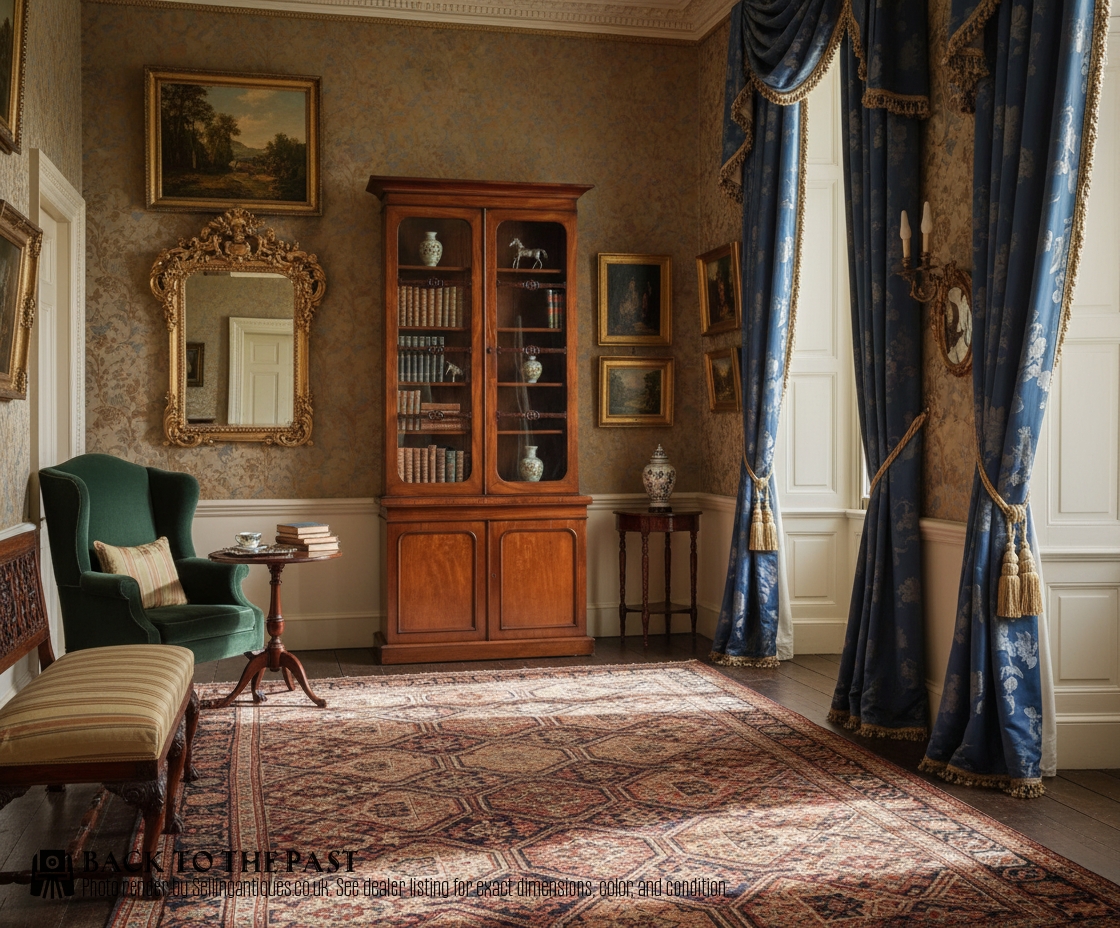
19th Century Book Cabinet
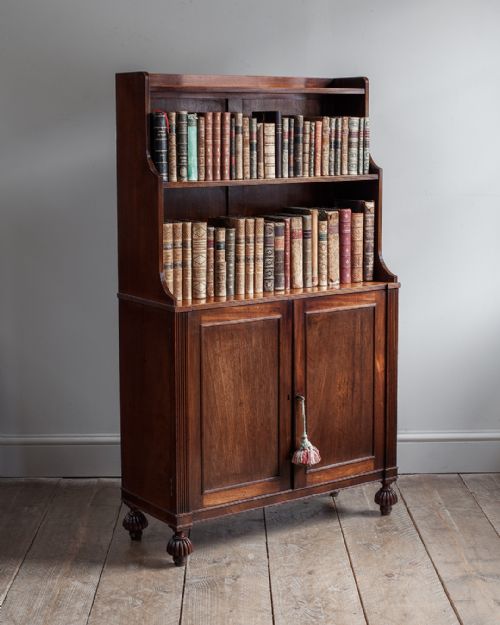
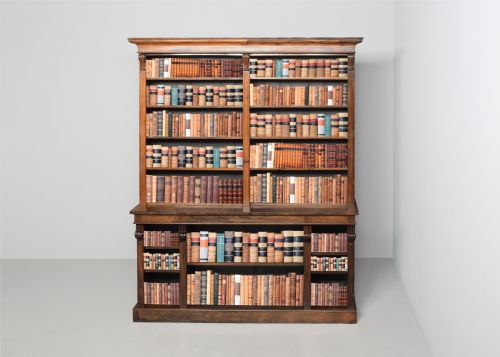
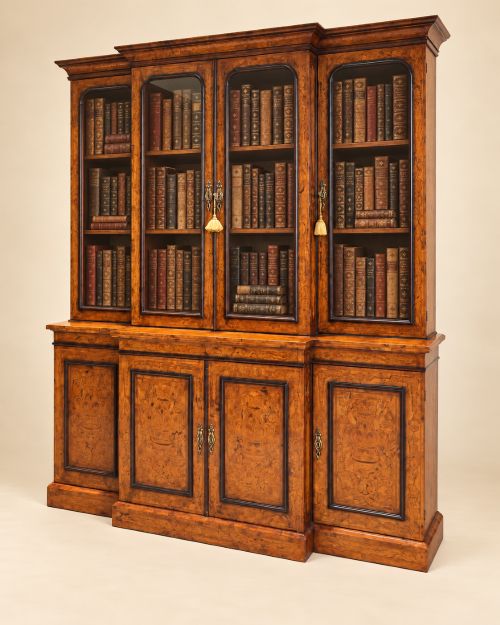
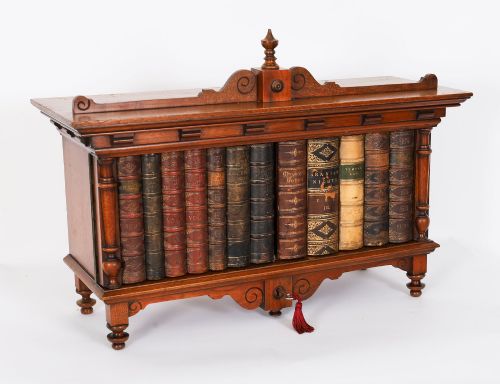
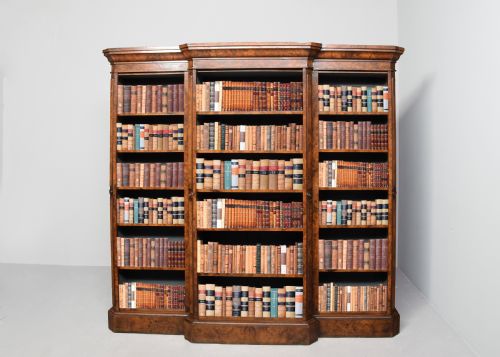
A 19th century book cabinet encompasses various forms designed for the storage and display of literature, ranging from expansive breakfront library units to compact open shelving and tabletop collectors pieces. The pieces available reflect the diverse aesthetic movements of the era, including Victorian, Regency, and Gothic Revival styles.
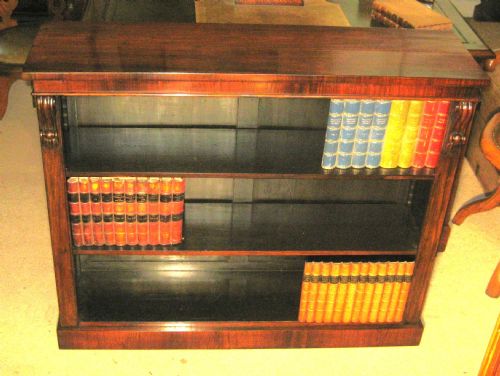
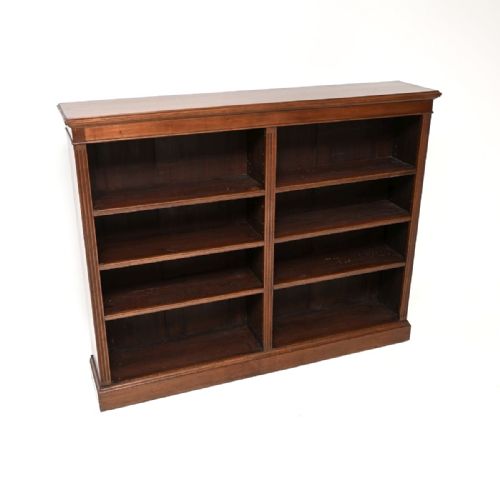
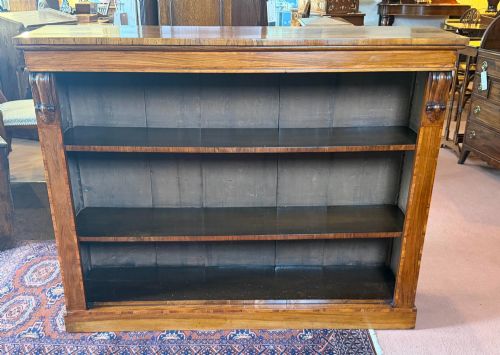
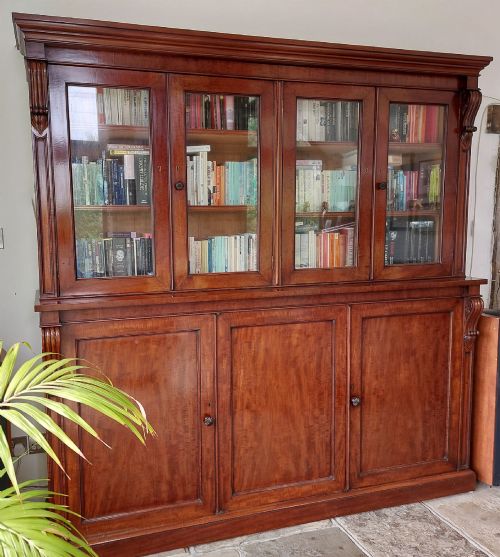
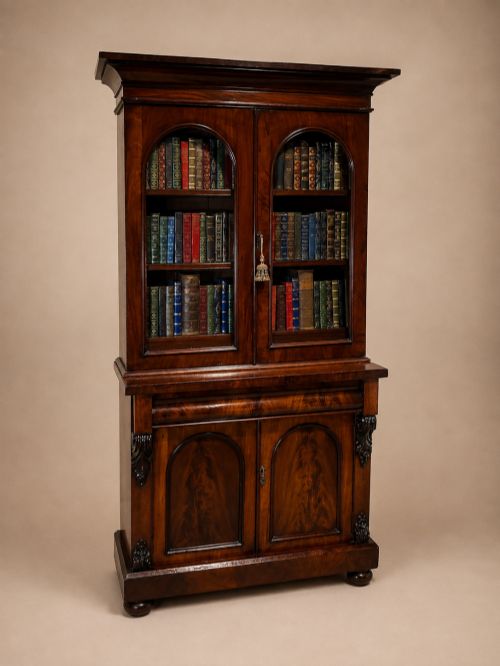
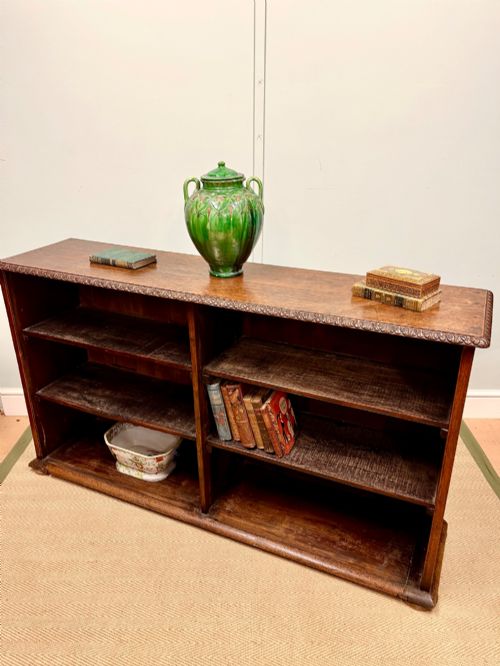
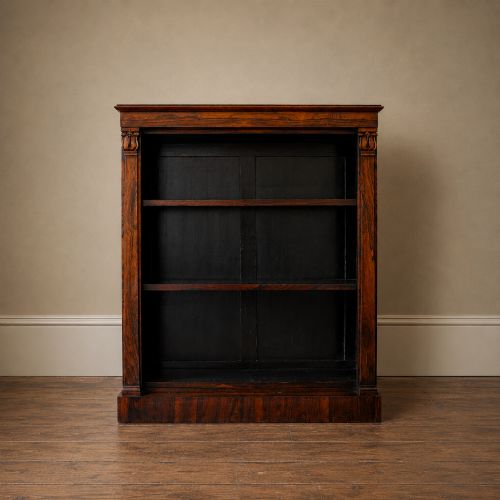
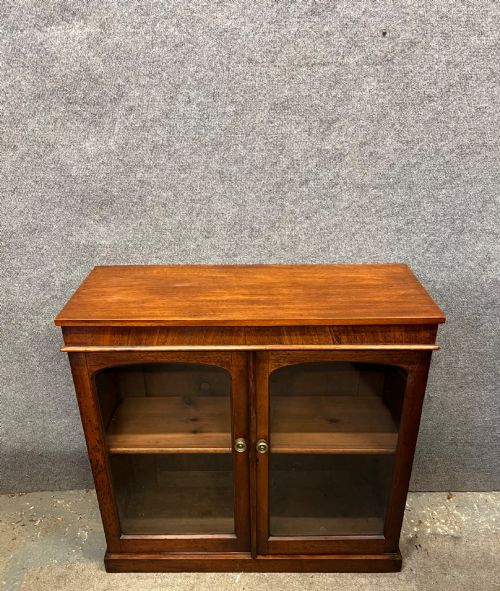
Open bookcases predominate the selection, often featuring adjustable shelving framed in rich timbers, while glazed door variants offer protection for more delicate volumes. Buyers frequently encounter low open configurations suitable for domestic interiors alongside grander multi-section cabinets originally built for substantial institutional or residential libraries.
Materials and construction
Cabinet makers of this period predominantly utilised dense hardwoods such as mahogany, walnut, and rosewood, frequently applying burr veneers to create striking grain patterns on prominent surfaces. Oak and pine appear regularly in both utilitarian pieces and heavily carved Gothic or Anglo-Indian interpretations.
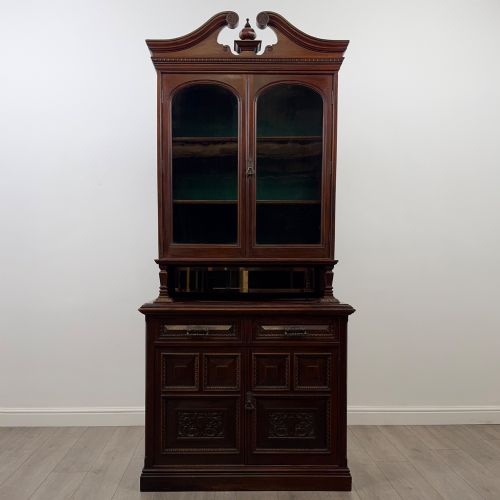
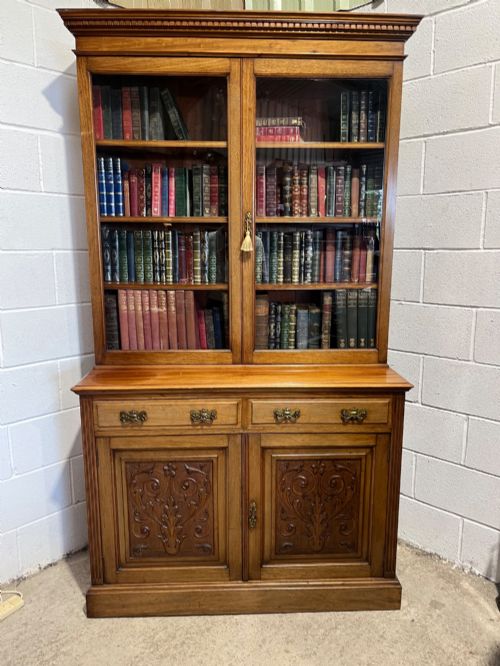
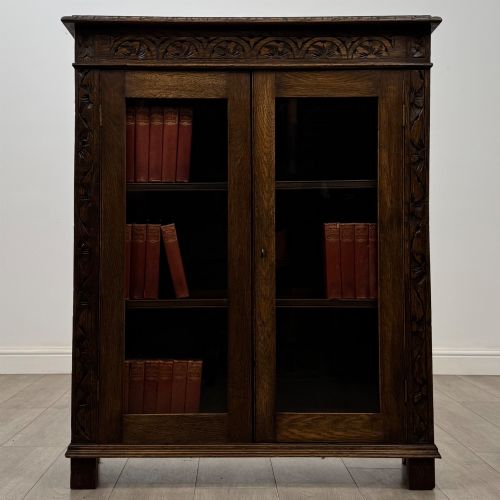
Glazing and brass hardware feature extensively in enclosed variants, securing the contents while providing visual contrast against the dark wood tones. Interior construction typically incorporates adjustable wooden shelving supported by peg systems or rackwork to accommodate varying book heights.
The listings show a prevalence of mahogany and walnut, alongside rarer rosewood, burr walnut, and oak examples spanning the Victorian and Regency eras.
The 19th Century Book Cabinet Glossary
- Breakfront
- A piece of furniture having a central section that projects forward from the flanking sides. This architectural arrangement creates depth and visual interest in large library cabinets.
- Waterfall bookcase
- A set of open shelves characterised by stepped sides that recede progressively from bottom to top. This form typically appears in smaller Regency and Victorian iterations.
- Vitrine
- A glass-fronted cabinet designed for displaying books or objects of curiosity. The French variations often incorporate painted or gilt decorative elements.
- Burr walnut
- A figured wood grain obtained from the wart-like growths on walnut trees. It provides a highly decorative surface veneer on prominent 19th century cabinet doors and panels.
- Glazed door
- A frame fitted with glass panes to enclose the shelving area. This feature protects volumes from dust while maintaining visibility of the library contents.
19th Century Book Cabinet: Frequently Asked Questions
What is a 19th century book cabinet used for?
These cabinets were originally manufactured to organise, protect, and display growing private and institutional library collections. In contemporary interiors, they serve the same fundamental function while anchoring a room with period character.
Enclosed variants with glass doors safeguard delicate or leather-bound volumes from environmental dust and light exposure. Open shelf formats allow for immediate access and the dual display of both literature and decorative objects.
How do I tell Regency from Victorian styles?
Regency pieces, produced in the early part of the century, frequently exhibit classical proportions, restrained classical ornamentation, and clean lines executed in rosewood or mahogany. They lean towards architectural simplicity and balanced symmetry.
Victorian pieces often display heavier proportions, more exuberant carving, and a wider variety of revived historical motifs such as Gothic arches or French influences. The timber selection also broadens during the Victorian era to include extensive use of walnut and oak.
Are the shelves adjustable?
Many examples from this era incorporate adjustable shelving mechanisms to accommodate books of varying heights. These typically utilise wooden racks, brass studs, or peg holes lining the interior walls.
Buyers should examine the specific construction details of each piece, as some smaller or simpler cabinets feature fixed permanent shelving. Adjustable systems highlight the functional adaptability built into higher-quality library furniture.
Where should I place a large library cabinet?
Large breakfront or multi-section library cabinets require substantial wall space and benefit from placement in principal reception rooms or dedicated home studies. Their architectural presence allows them to function as the primary focal point of a room.
Protection from direct sunlight and steady indoor humidity levels remain essential considerations for preserving antique timber veneers and antique paper bindings. Positioning these pieces away from direct heat sources ensures the wood and joinery remain stable over time.