

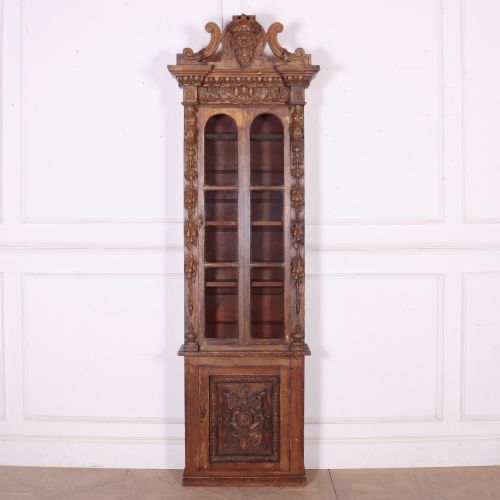


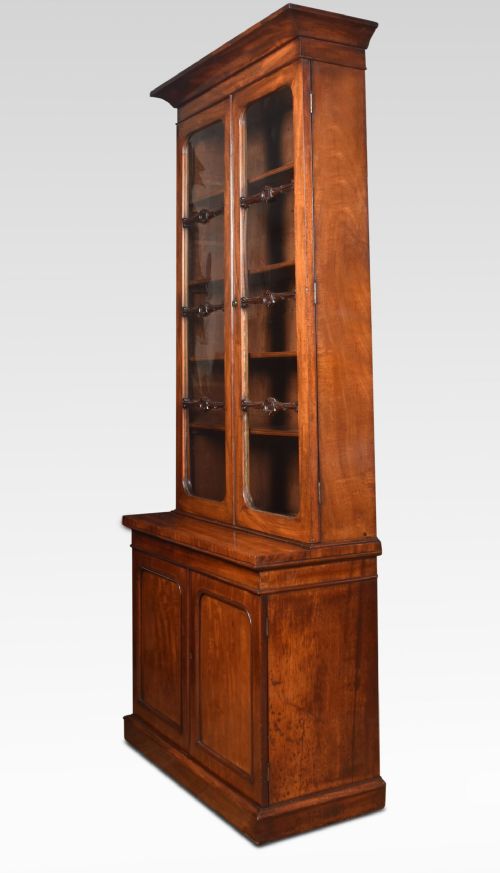


Tall Narrow Display Cupboard
A tall narrow display cupboard solves the perennial problem of showing off collections in rooms where floor space is strictly limited.
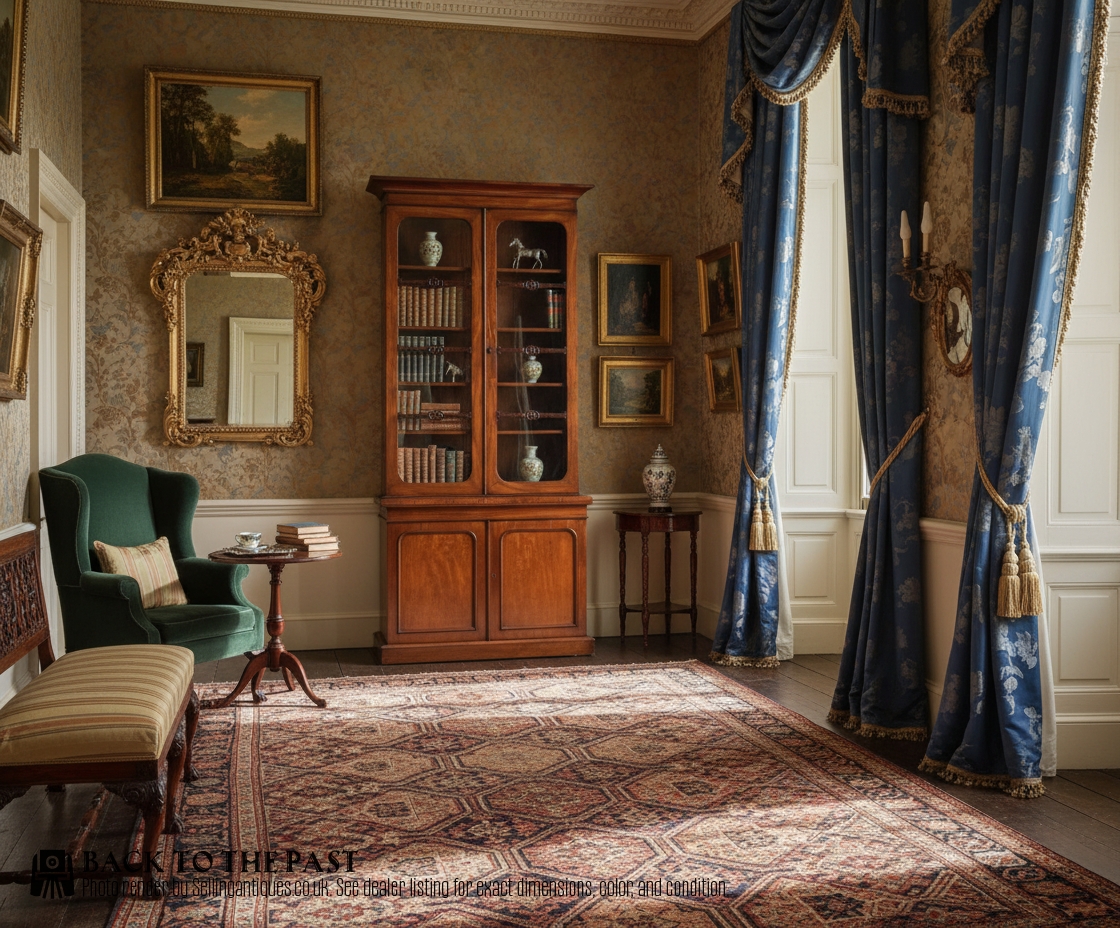
Tall Narrow Display Cupboard
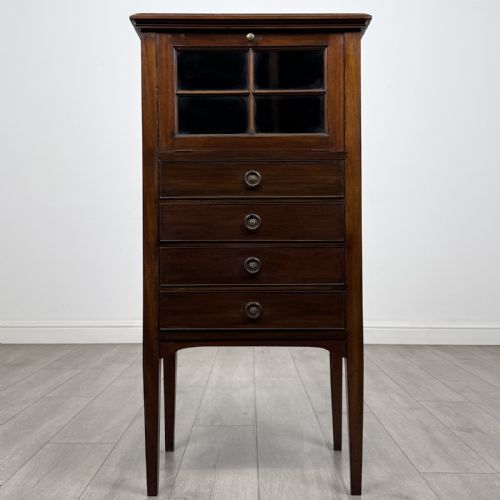
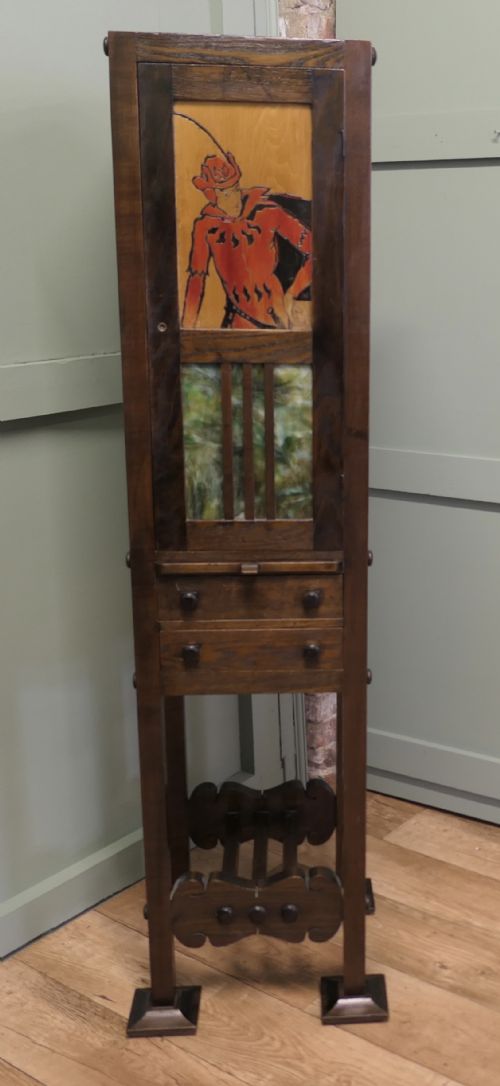
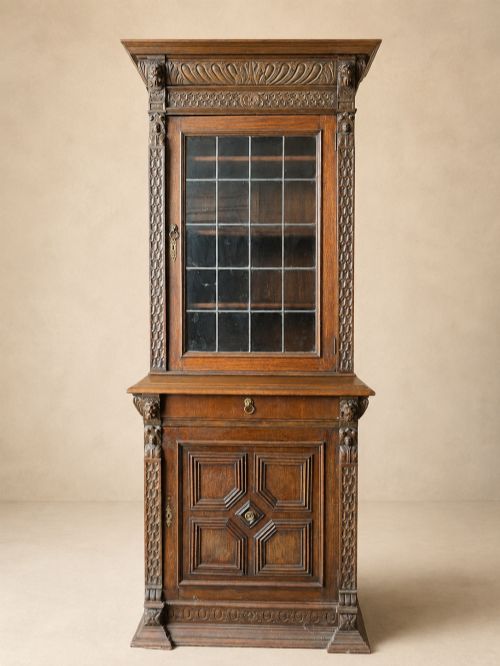
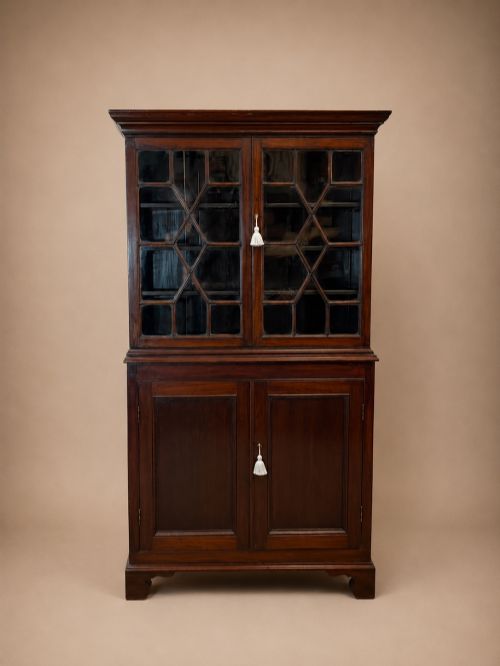
A tall narrow display cupboard stands upright with a slender footprint, primarily designed to house books, ceramics and precious objects behind glazed or open fronts. The examples found here span the nineteenth and twentieth centuries, taking the form of slim bookcases, pier cabinets, corner units and upright glazed cupboards.
Most pieces date from the Victorian and Edwardian eras, executed in timbers like mahogany, oak and walnut with glass panels fitted into the doors. Buyers will frequently encounter slender bookcases combined with lower storage cupboards or open shelving configurations suited to compact interiors.
Materials and construction methods
Cabinet makers utilised dense hardwoods such as mahogany, oak and walnut to ensure structural integrity across the elongated vertical proportions of these tall frames. Burr walnut and marquetry veneers appear on select examples to provide decorative surface pattern, whilst pine serves for utilitarian carcasses.
Glazing takes the form of fitted glass panes secured by timber glazing bars, occasionally arranged in astragal patterns. Brass hardware secures the doors, and carved details such as beaded edges or foliate motifs define the Victorian and Gothic Revival styles.
Tall Narrow Display Cupboard Retail Price Guide 2026
Typical asking prices for tall narrow display cupboard among the pieces listed under this phrase on Sellingantiques today, from the lower quarter to the upper quarter. They describe what is for sale here now, not the wider market.
Several slender cupboards include tiny working keys that still lock the glass doors securely after a century or more.
Distinguishing quality in vertical cabinetry
Superior execution shows in the crispness of timber carving, the precise mitring of astragal glazing bars and the careful selection of figured wood veneers like burr walnut. Finer items integrate balanced proportions where the slender height maintains structural stability without heavy bracing.
The choice of secondary timbers and the refinement of internal shelving adjustments further separate standard utility pieces from higher grade cabinet work. Hardware quality, from cast brass hinges to working locks with original keys, marks the distinction.
The Tall Narrow Display Cupboard Glossary
- Astragal glazed
- Glass panels divided into smaller panes by narrow wooden mouldings. These delicate frames define traditional cabinet doors.
- Pier cabinet
- A low or tall narrow cabinet designed to stand against the solid wall space between windows. Such pieces often feature glazed doors and marquetry inlay.
- Marquetry
- Decorative veneer patterns formed by fitting together small pieces of coloured wood. It creates pictorial or geometric designs on the surface.
- Corner cabinet
- A storage unit constructed with an angled back to fit snugly into the corner of a room. This form maximises space utilisation in smaller chambers.
Tall Narrow Display Cupboard: Frequently Asked Questions
How do I clean the glass safely?
Use a soft microfibre cloth and a mild glass cleaning solution applied directly to the cloth rather than the cabinet. This prevents moisture from seeping into old timber frames and damaging historical finishes.
Take care around antique glazing bars and leaded or astragal joints, as older putties and adhesives can dry out and weaken over time.
Can these cabinets support heavy books?
Slim bookcases generally feature adjustable or fixed wooden shelving designed for standard volumes, but the vertical format limits total weight capacity. Assess the thickness of the shelves and the strength of their supports before loading heavy collections.
Heavier items should sit on lower shelves to maintain stability in tall, narrow furniture structures.
Where should I place a narrow cupboard?
These pieces excel in alcoves, narrow hallways, or beside fireplaces where standard furniture proves too wide. Their vertical orientation draws the eye upward, making small rooms feel taller.
Anchor tall cabinets securely to the wall to prevent tipping, particularly in homes with uneven historic flooring.
How do I identify the wood type?
Examine the grain pattern, colouration and weight of the timber visible on the unpolished interior surfaces or backboards. Mahogany displays a reddish-brown hue with fine grain, whilst oak shows prominent medullary rays and burr walnut exhibits swirling figures.
Consulting the listed materials alongside visual inspection helps confirm whether a piece uses solid hardwood or decorative veneers over a secondary timber.