



19th Century Bokhara Carpet
A 19th century bokhara carpet brings rich tribal artistry into a room, offering deep geometric patterns woven by nomadic hands.
19th Century Bokhara Carpet
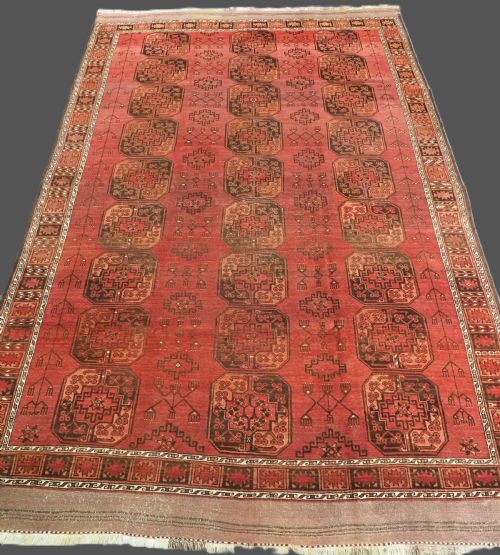
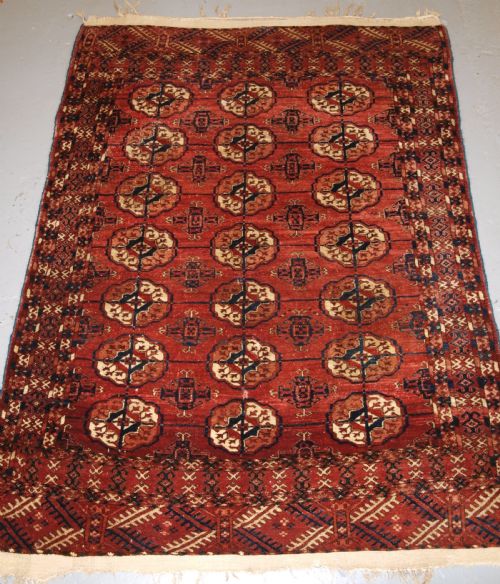
When you search for a 19th century bokhara carpet, you encounter nomadic weavings originating from Central Asia, predominantly associated with Turkmen tribes such as the Tekke and Ersari. These pieces range from small square dowry rugs and torba fragments to large main carpets.
The most common examples on this page are Tekke Turkmen rugs and carpets dating from the middle to the late 19th century. They frequently feature traditional gul motifs in repeated rows across the field.
Makers created these textiles for domestic use, dowries, and tribal ceremonies rather than for Western export markets. Consequently, each rug carries the distinct cultural identifiers of Central Asian tribal life.
How they were made
Weavers constructed these carpets entirely from wool, utilising soft pile yarns that yield a dense and tactile surface. The reliance on natural wool provided both durability for daily use and a receptive medium for rich dyes.
The techniques involve precise knotting executed on vertical looms, resulting in fine weaves particularly visible in dowry rugs and torba pieces. Artisans arranged geometric guls and borders with careful symmetry, relying on tradition rather than written patterns.
Every piece recorded on this page utilises wool as the primary material for both pile and foundation.
What varies in quality
Quality rests primarily in the fineness of the weave and the precision of the gul execution. Tighter knots and intricate border variations distinguish finer dowry pieces and main carpets from standard utility items.
The depth and vibrancy of the wool pile also separate examples, as does the preservation of the original structure. Pieces displaying soft, lustrous wool and distinct structural integrity stand apart in any collection.
The 19th Century Bokhara Carpet Glossary
- Gul
- A primary octagonal or repeating medallion motif used across Central Asian carpets. It often denotes specific tribal lineages.
- Torba
- A small storage bag face produced by Turkmen nomads, frequently featuring detailed guls and fine weave structures.
- Dowry rug
- A smaller textile woven specifically for a bride's wedding trousseau, often marked by exceptional care in design and wool selection.
- Main carpet
- A large floor covering intended for central domestic use within a tribal tent or dwelling, requiring substantial proportions.
19th Century Bokhara Carpet: Frequently Asked Questions
How are 19th century bokhara carpets structured?
These carpets are constructed with a wool pile knotted onto a wool foundation, following traditional Central Asian methods. Artisans arranged repeating geometric motifs across the field.
The structures vary from large main carpets down to compact square rugs and torba fragments, reflecting diverse tribal domestic needs.
What motifs appear on these carpets?
The predominant motif is the gul, an octagonal medallion repeated in orderly rows across the central field. Border designs also incorporate geometric and tribal symbols specific to Turkmen weavers.
Variations in these patterns, such as ovoid guls or unusual borders, indicate different tribal subgroups and periods within the nineteenth century.
Where did these carpets originate?
They originate from Central Asia, created by nomadic and tribal groups including the Tekke and Ersari peoples. The Emirate of Bukhara served as a primary trading hub for these goods.
As a result, Western markets historically grouped these diverse tribal weavings under the single designation of Bokhara.
How do I care for a wool rug?
Care involves gentle vacuuming without a beater bar and professional cleaning when necessary. Keeping the textile out of direct sunlight preserves the wool fibres and natural dyes.
Placing a proper underlay beneath the rug prevents slipping and reduces wear on the historical foundation.