




19th Century Birch Chest
A 19th century birch chest brings a pale, striking grain and solid utility to a room.
19th Century Birch Chest
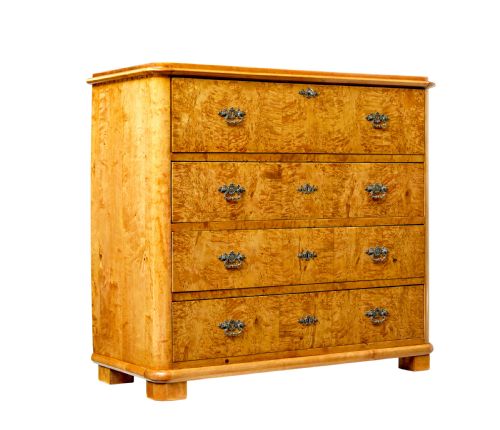
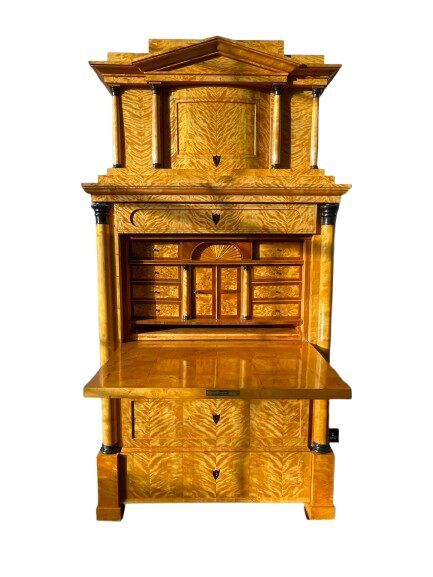
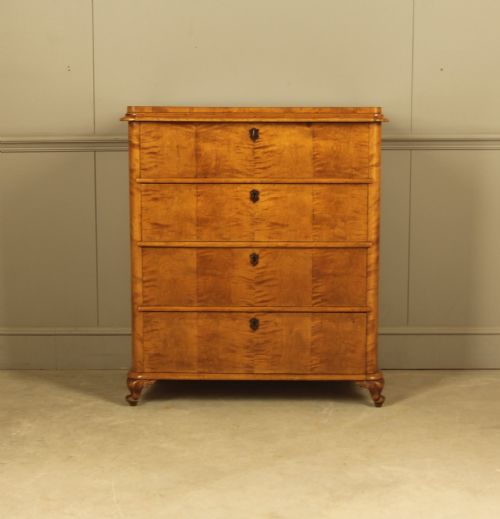
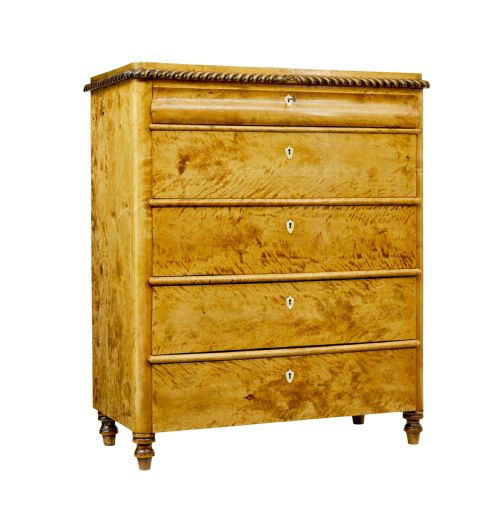
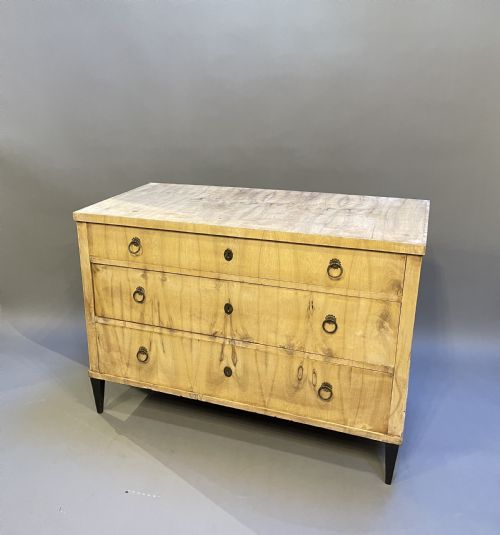
A 19th century birch chest encompasses a variety of storage furniture originating primarily from British and Scandinavian workshops during the Victorian era and the 1800s. The selection on this page leans heavily towards continental pieces, particularly Swedish Biedermeier, Empire Revival, and country designs featuring drawers, secretaires, and commodes.
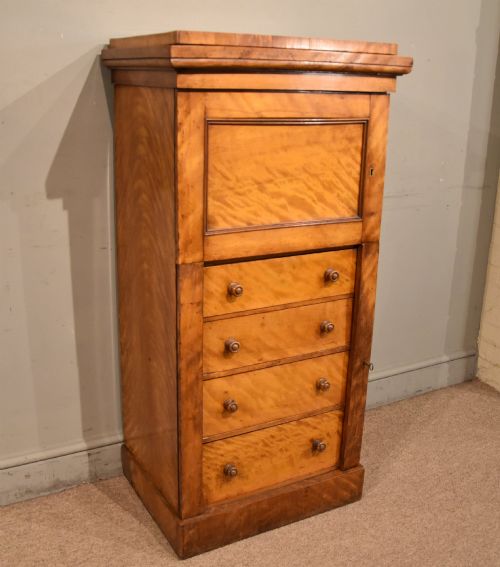
Buyers will encounter standard straight-drawer chests alongside more complex forms like secretaire chests, which fold down to create a writing surface, and tall Wellington chests. Variations also include smaller blanket boxes, table boxes, and cabinets built upon chests.
The aesthetic is defined by the pale warmth and varied figure of the timber, making these pieces distinct from darker mahogany or walnut alternatives common to the same period. They function well in contemporary and traditional interiors alike, offering substantial storage capacity.
Materials and Construction
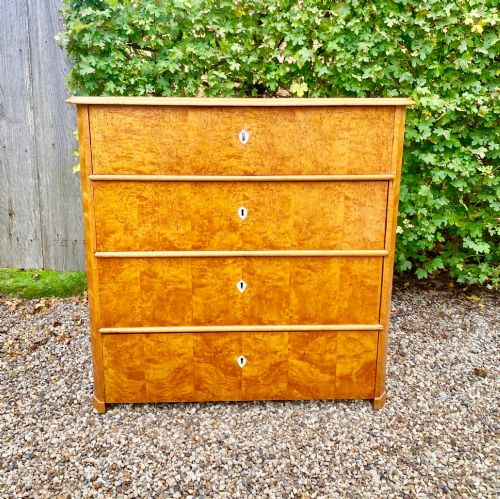
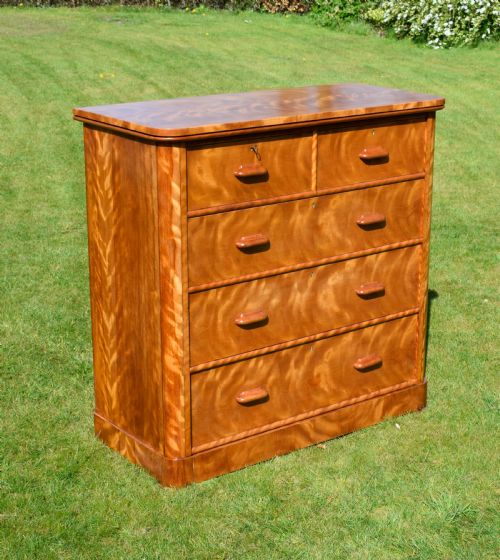
Cabinet makers utilised birch and its highly figured variants such as satin birch, flame birch, burr birch, and tiger birch to create visually arresting drawer fronts and surfaces. These timbers were frequently laid as veneers over secondary woods like pine to maximise the display of the natural grain patterns.
Construction techniques combined solid framing with precision veneering, occasionally incorporating contrasting details in ebonised wood, metal, or bone. Fittings such as brass handles and locks completed the hardware, while structural carcasses relied on traditional joinery methods suited to heavy daily use.
Listings feature brass hardware, bone inlay, and ebonised wood alongside solid birch and birch veneer.
Assessing Quality and Craftsmanship
Quality in these chests is determined by the choice and matching of the wood grain, where symmetrical flame, burr, or tiger figure commands greater visual presence than plain timber. The skill of the veneer work and the integration of decorative elements like ormolu mounts or inlay define the upper tier of execution.
Proportion and structural integrity also separate standard regional pieces from masterworks of the Biedermeier and Empire Revival styles. Clean drawer operation, original hardware, and minimal disruption to the delicate birch veneer reflect superior historical preservation and cabinet-making standards.
Holland and Sons·Gillow
The 19th Century Birch Chest Glossary
- Satin birch
- A timber featuring a natural sheen and shimmering grain effect. It was favoured by Victorian and continental makers for high-status bedroom furniture.
- Biedermeier
- A influential Central European style spanning the 19th century, known for clean lines, restrained ornamentation, and an emphasis on the beauty of wood grain.
- Secretaire chest
- A chest of drawers featuring a fitted pull-out writing drawer that conceals small compartments and pigeonholes behind a drop-front flap.
- Commode
- A continental term for a low chest of drawers, often heavily figured and standing on distinct feet.
- Flame birch
- A cut of wood displaying a rippled, undulating grain pattern resembling flickering flames, highly prized for drawer fronts.
19th Century Birch Chest: Frequently Asked Questions
How do I care for a birch chest?
Keep the wood away from direct heat sources and strong sunlight to prevent the birch veneer from drying out or fading over time. Dust gently with a dry cloth and occasionally apply a suitable wax to maintain the sheen of the timber.
Avoid using modern liquid polishes or silicone sprays, as these can penetrate old finishes and damage the delicate surface grain. Proper humidity control in the room will also protect the underlying pine and birch structure from movement.
Where were these chests made?
The majority of the birch chests available originate from Sweden and broader Scandinavia, reflecting a strong regional tradition of working with native birch timbers during the 19th century. British makers also produced notable examples, often utilising imported satin birch for high-end domestic pieces.
Continental workshops, particularly under the influence of Biedermeier and Empire Revival styles, focused heavily on the decorative potential of figured birch veneers. This creates a distinct visual separation between Scandinavian commodes and British Victorian case pieces.
What is tiger birch?
Tiger birch is a descriptive term for timber displaying strong, contrasting horizontal stripes across the grain that resemble the coat of a tiger. This natural figure occurs due to growth irregularities and was intentionally highlighted by 19th-century cabinet makers.
Chests featuring this particular grain pattern offer a dramatic visual texture compared to uniform woods. It appears frequently on Scandinavian Biedermeier and Empire Revival drawer fronts.
Can I use a secretaire chest as a desk?
Yes, the top drawer of a secretaire chest pulls out and folds down to reveal a fitted writing surface complete with small drawers and pigeonholes. This dual-purpose design was intended for correspondence and administrative tasks in 19th-century bedrooms and parlours.
When closed, the piece functions as a standard chest of drawers, concealing the desk interior entirely. The internal writing flap is typically supported by brackets or arms built into the frame.