


19th Century Ash Chairs
Selecting 19th century ash chairs brings functional vernacular seating shaped by English country makers into daily domestic spaces.
19th Century Ash Chairs
These pieces comprise sturdy country seating produced across British workshops during the Georgian, Regency and Victorian eras. Makers utilised tough local timber for utilitarian domestic use, creating forms suited to kitchens, farmhouses and parlours.
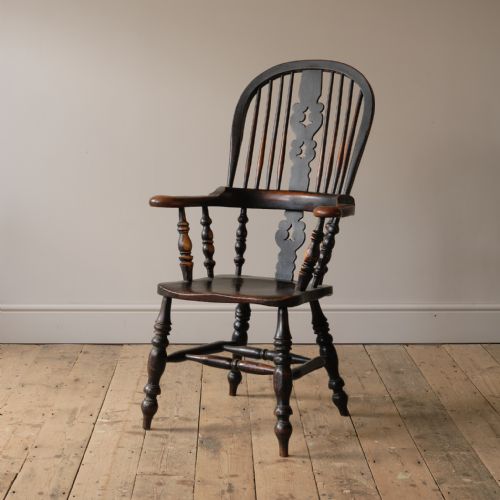
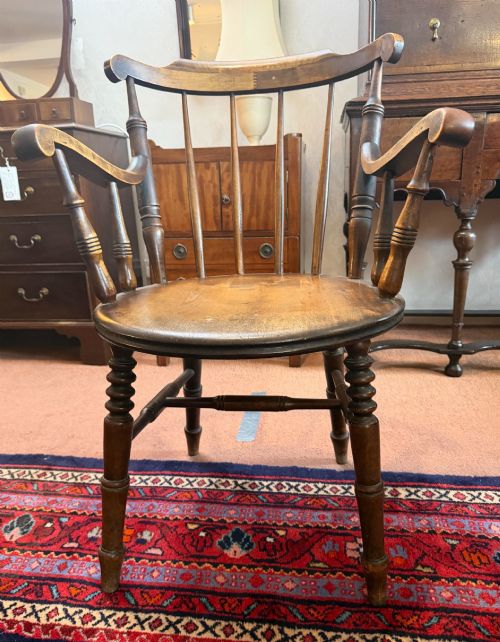
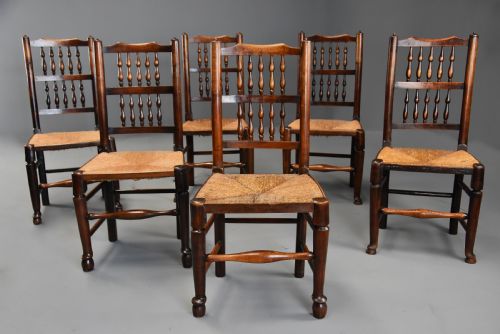
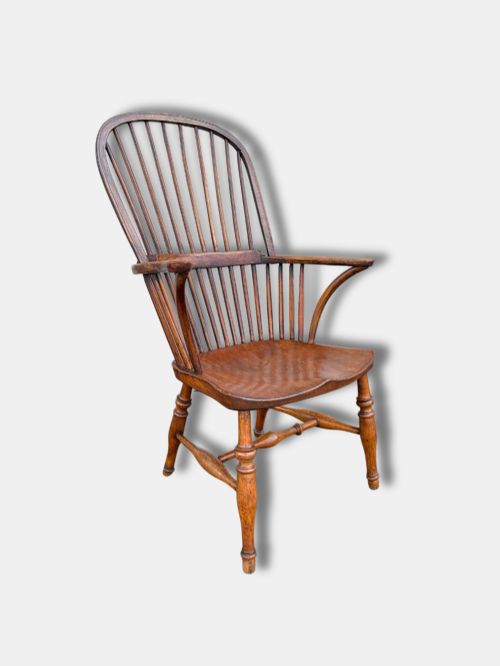
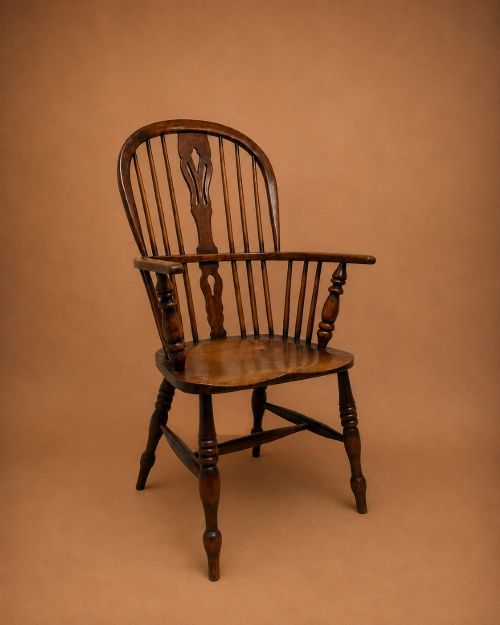
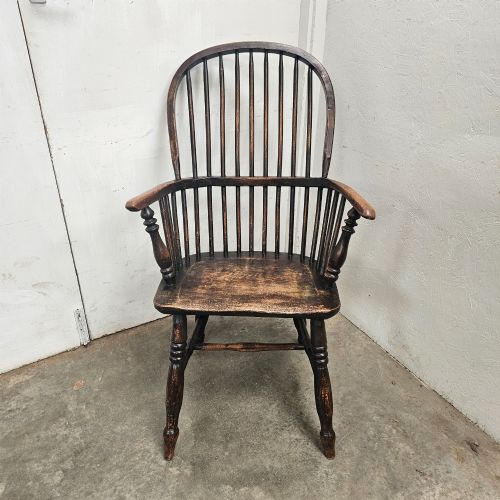
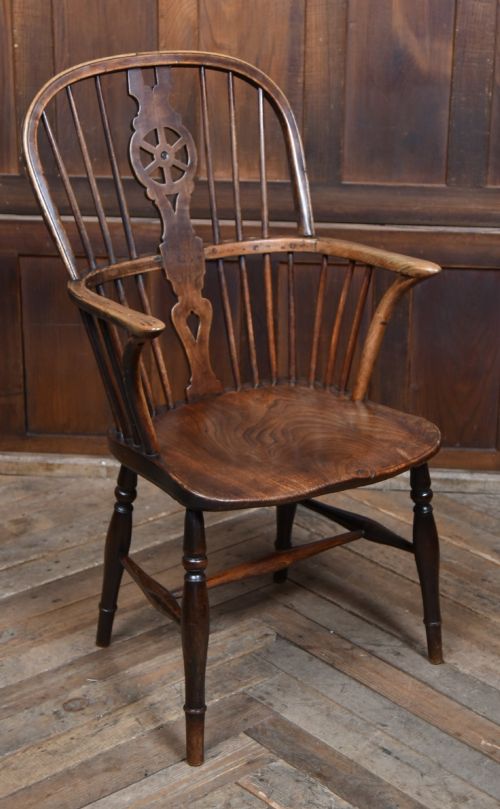
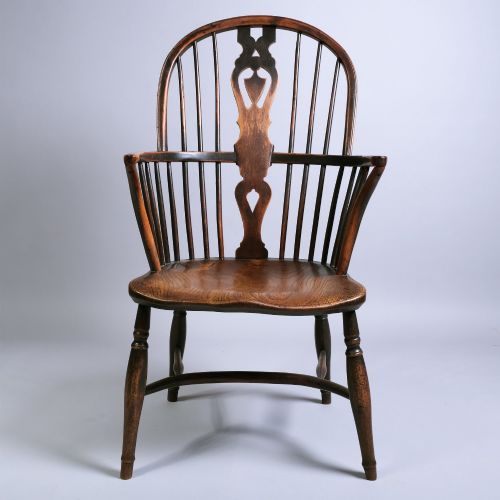
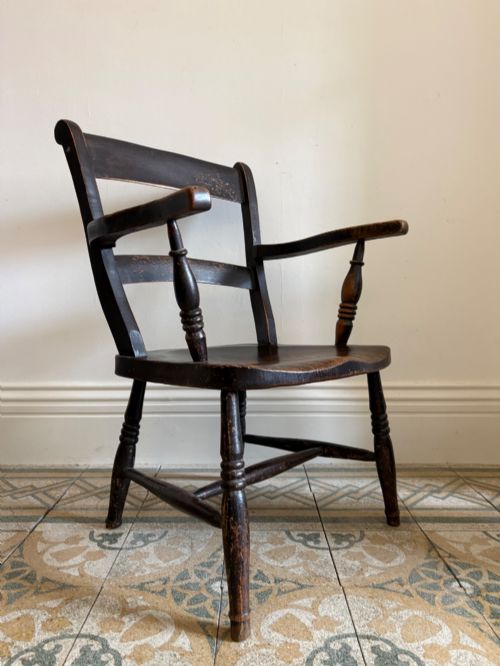
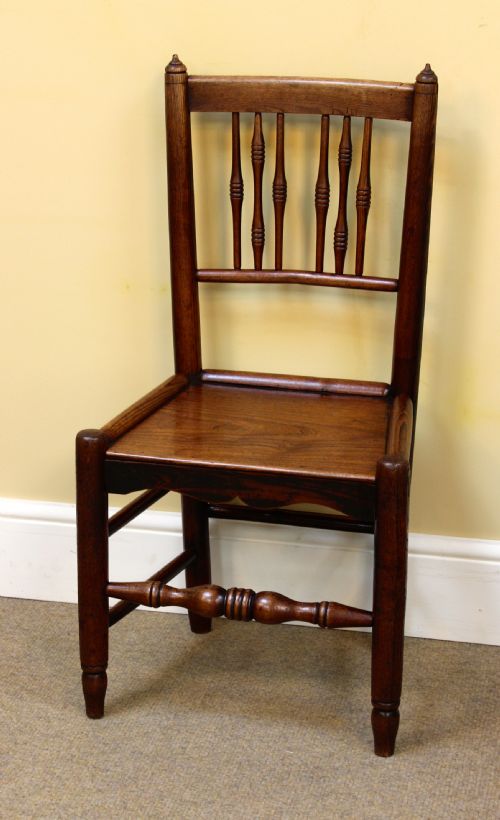
The selection on this page centres predominantly on Windsor armchairs and ladderback dining sets. Buyers encounter low backs, high backs, wheelbacks and spindle backs, frequently constructed with elm seats supporting ash frameworks.
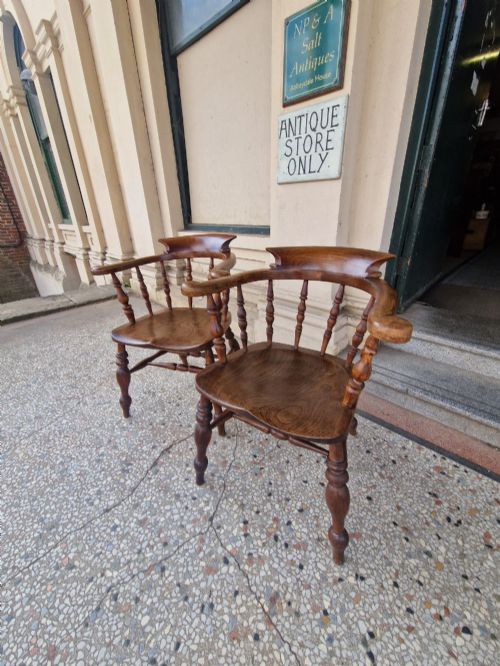
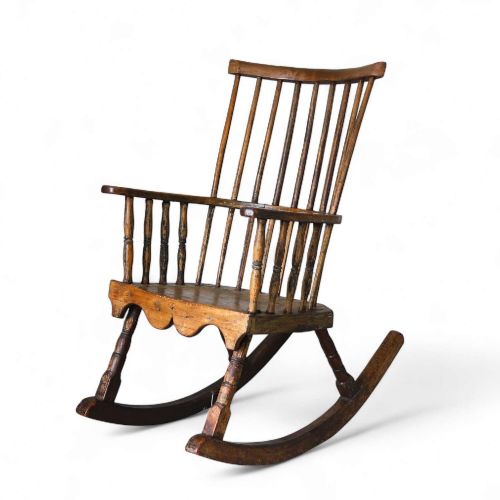
Regional variations span Thames Valley, West Country and Lancashire traditions, alongside vernacular rocking chairs, desk chairs and smokers bows. Sets range from pairs up to twelve matching or harlequin dining chairs.
How they were made
Construction relies heavily on the combination of ash for bent frames, spindles and legs, paired with carved elm for solid saddle seats. Additional timbers like beech, oak and sycamore appear in framing and secondary parts.
Green woodworking techniques enabled craftsmen to steam-bend ash for hoops, bows and ladderbacks while timber remained pliable. Turned components were shaped on pole lathes before assembly using traditional mortise and tenon joints.
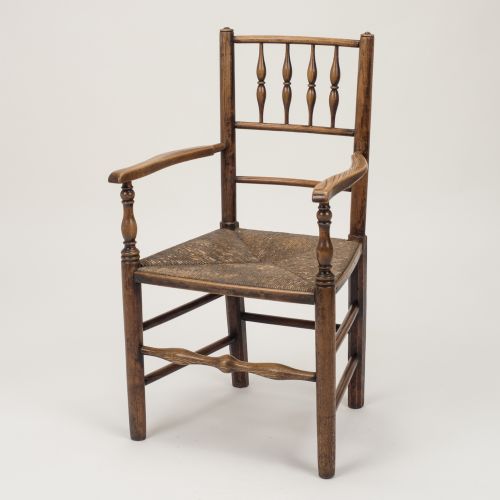
Seating surfaces often incorporate rush or plaited straw woven directly into the frame, or solid plank elm shaped with adzes and drawknives. Surfaces display natural wax finishes accumulated through generations of use.
Listings feature ash combined with elm, beech, oak and sycamore across 19th century country dining chairs and armchairs.
What varies in quality
The integrity of the original construction dictates much of the standing, particularly the tightness of turned joints and the absence of heavy replacement parts. Original uncompromised wedges and pegging indicate superior workshop output.
Timber selection and grain matching separate standard utility items from finer provincial work, especially in the figuring of elm seats and the matching of ash spindles. Surface character, ranging from dry scrubbed wood to deep untouched patination, defines visual depth.
Completeness within sets remains a key factor, as genuine matched or true sets command distinct interest compared to assembled harlequin groups gathered later. Maker attribution through stamps or documented regional characteristics adds historical distinction.
Philip Clissett·Duncan McKellar·Fred Walker
The 19th Century Ash Chairs Glossary
- Windsor chair
- A wooden chair built with a heavy solid plank seat into which the legs and back spindles are direct-inserted. This form developed distinct regional variations across Britain during the eighteenth and nineteenth centuries.
- Ladderback
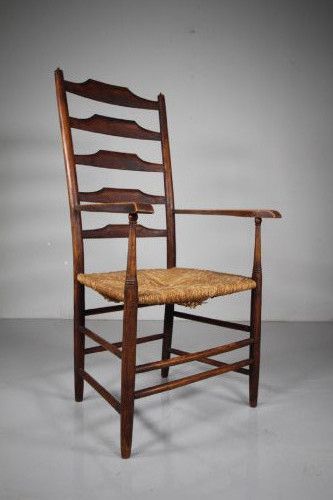
- A chair back constructed with horizontal slats between two upright posts. These frames frequently accommodated rush or woven straw seating.
- Smokers bow
- A low-backed Windsor armchair with a continuous curved arm rail supported by turned spindles. They earned popularity in domestic kitchens and public houses.
- Spindle back
- A chair featuring multiple slender turned uprights supporting the back rail. They provide lightweight strength through simple geometry.
- Súgán
- An Irish term for twisted straw or hay rope used for bottoming chairs. The material forms a durable plaited seat surface.
19th Century Ash Chairs: Frequently Asked Questions
What is an ash and elm Windsor chair?
An ash and elm Windsor chair combines a thick sculpted wooden seat with steam-bent ash bow backs and turned legs. Elm was chosen for the seat because its interlocking grain resisted splitting when drilled and carved.
Ash provided the necessary tensile strength and elasticity for the bentwood hoops and slender spindles. This material pairing allowed country makers to produce lightweight yet robust seating.
How do I spot a true set of dining chairs?
A true set shares identical turning details, timber characteristics, scale and wear patterns accumulated from the same workshop. Harlequin sets, by contrast, bring together similar individual chairs gathered from various sources over time.
Examining the underside of the seats and the joinery reveals consistency in construction methods. Matching sets display uniform proportions across every piece.
Where were regional ladderback chairs made?
Regional ladderback chairs were produced extensively across Lancashire, Cheshire and the Thames Valley by local bodgers and village chairmakers. Each area developed slight variations in slat profiles, upright turnings and finial designs.
Maker attribution often relies on these distinct regional characteristics and workshop traditions passed down through generations.
How should I care for a rush seat?
Rush seats require a stable indoor environment away from excessive moisture and direct heat sources that cause the natural fibres to become brittle. Regular dusting with a soft brush prevents dirt accumulation between the plaited strands.
Applying occasional light beeswax to the wooden frame preserves the finish without affecting the dry straw seating.