





19th Century American Artwork
These 19th century american artwork selections bring historic portraits, landscapes and political prints into domestic rooms with genuine period character.
19th Century American Artwork
When you examine 19th century american artwork, you encounter oil paintings, watercolours, and engravings that record the portraits, landscapes, and scenes of the period. The range spans early colonial drawings up to late Victorian watercolours and lithographs.
You are most likely to meet oil paintings and portraits on canvas or board, alongside framed prints depicting American scenes and subjects. These works capture the evolving visual culture across the United States during the 1800s.
Materials and methods
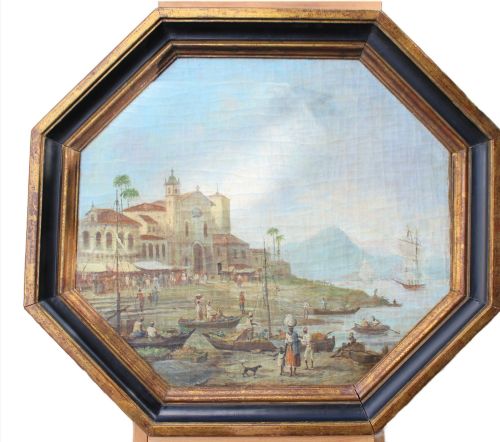
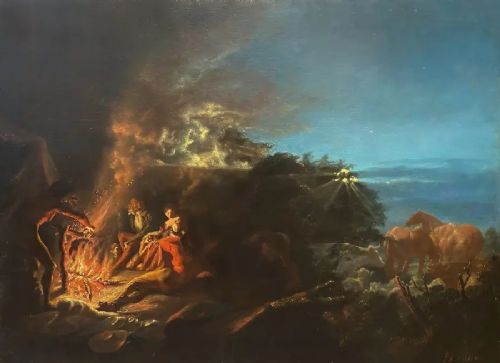
Makers utilised oil paint on canvas, wood panel, and board, applying pigments to create durable portraits and sweeping landscapes. Pen and ink on paper, watercolours, and hand-coloured steel engravings also feature extensively across the selection.
Framed works often utilise gilded wood frames that complement the period aesthetic of the pictures within. Artisans employed traditional printmaking techniques, including lithography and steel engraving, to produce multiple impressions of popular political prints and views.
19th Century American Artwork Retail Price Guide 2026
Typical asking prices for 19th century american artwork among the pieces listed under this phrase on Sellingantiques today, from the lower quarter to the upper quarter. They describe what is for sale here now, not the wider market.
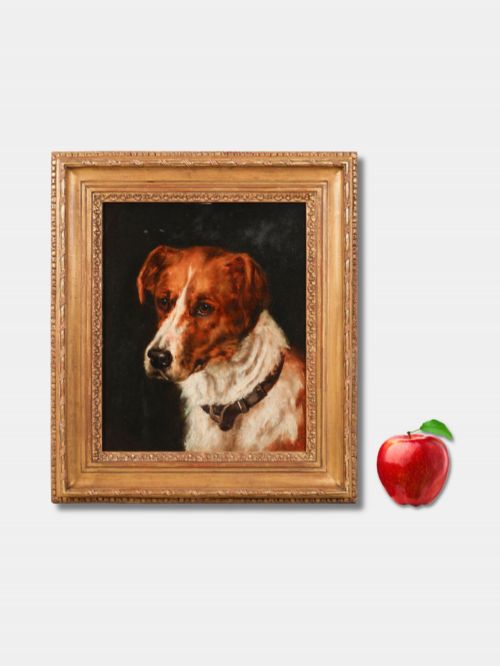
Canines make an appearance too, captured in a framed oil on board portrait of a Jack Russell terrier.
Evaluating quality
The distinction between ordinary and superior pieces rests upon the surety of the brushwork and the clarity of the composition. Works associated with named artists or recognised schools typically display a more sophisticated handling of light and form.
Condition and preservation of the primary support - whether canvas, paper, or wood - play a role in separating examples. Stronger pieces retain their original surface texture and unblemished ink or paint layers without disruptive intervention.
John C. McRae·Johann Moritz Rugendas·Albert Bierstadt·Thomas Hicks·Alexandre Le Bihan·Madeline Hughes·Thomas Worth·John Parker Davis·George J Tribe
The 19th Century American Artwork Glossary
- American School
- A term used to describe paintings and artworks produced by artists working in America or influenced by American artistic traditions without a specific individual attribution.
- Hudson River School
- An artistic movement characterised by pastoral and dramatic landscape paintings that celebrate the vastness and beauty of American scenery.
- Steel Engraving
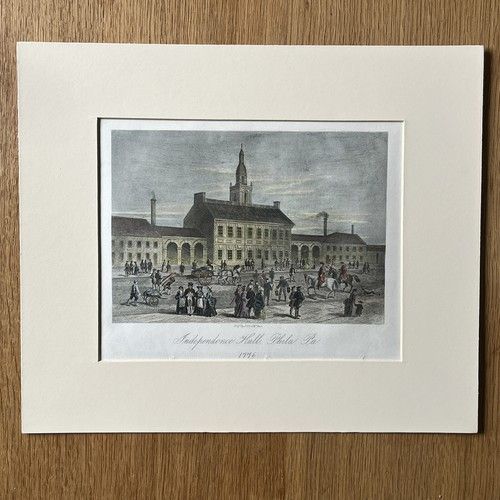
- A printmaking technique where an image is incised into a steel plate, allowing for fine lines and numerous crisp impressions.
- Lithography
- A planographic printing method utilising oil and water on a stone or metal plate to create multiple flat prints.
- Folk Art
- Creative work produced by self-taught or traditional artists, often emphasising bold simplicity over academic perspective.
19th Century American Artwork: Frequently Asked Questions
What subjects do these artworks show?
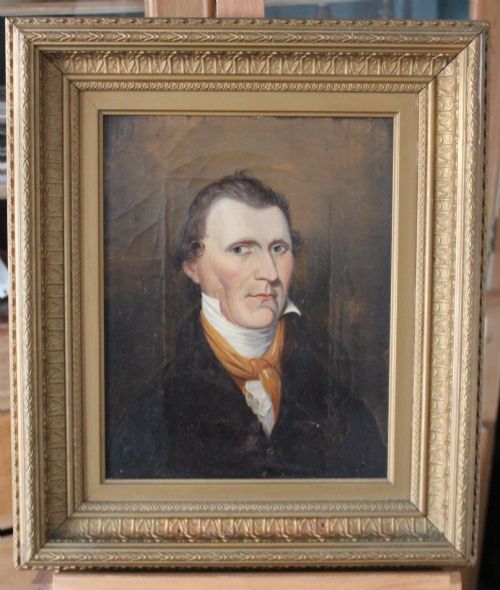
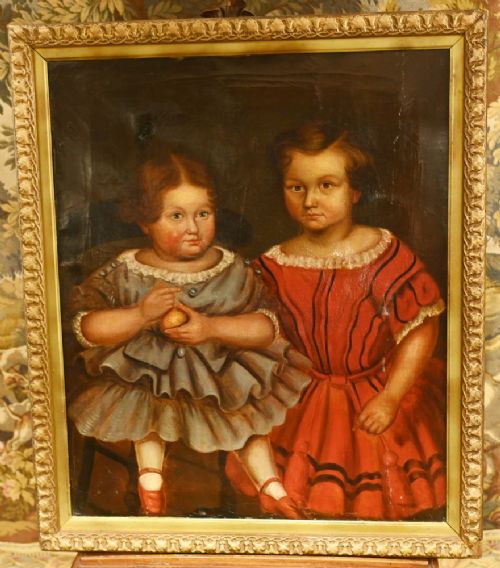
The pieces display a variety of subjects including portraits of individuals, military figures, and everyday people, alongside expansive landscapes.
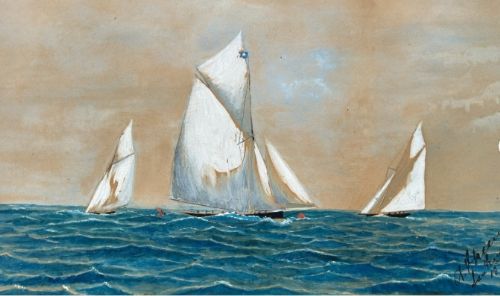
You also encounter political prints, architectural views of cities, and maritime scenes depicting racing yachts.
How should I hang an oil painting?
Oil paintings on canvas or board require stable indoor environments away from direct sunlight and excessive moisture.
Hang them securely using appropriate hardware that matches the weight of both the artwork and its gilded wood frame.
How do I identify a steel engraving?
Steel engravings generally present sharp, fine lines and crisp detail resulting from the hard metal plate used during printing.
Some examples feature hand-applied colouring over the printed lines to enhance the visual appeal of the historical scene.
What is American Primitive art?
American Primitive art refers to paintings and works created by artists who worked outside the academic training systems of the period.
These pieces often display a direct, unpretentious approach to perspective and colour that defines folk art.