


19th Century Afshar Rug
A 19th century afshar rug brings robust tribal weaving into a room with rich South Persian character and geometric designs.
19th Century Afshar Rug
A 19th century afshar rug is a tribal textile originating from the nomadic and village weavers of South Persia, particularly associated with the Kerman region and Neriz. These pieces encompass various formats such as area rugs, runners, and saddle bag faces.
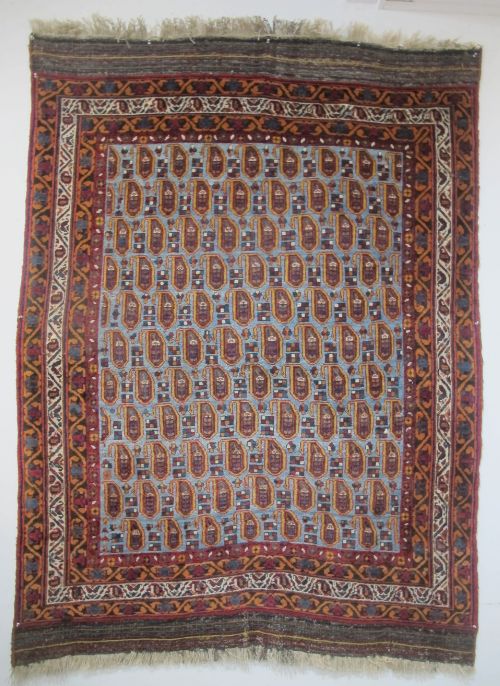
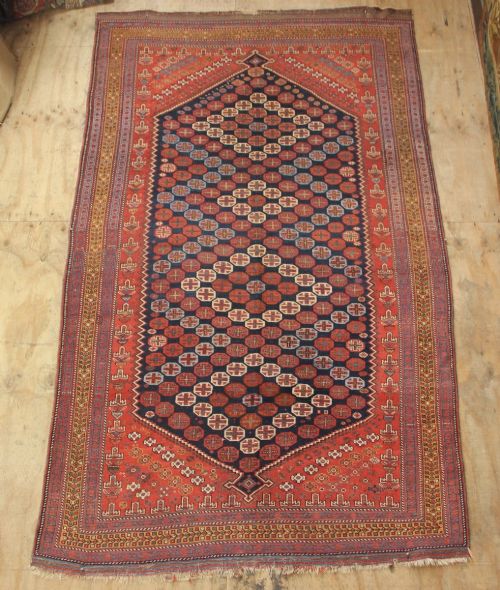
The designs on these rugs frequently showcase large boteh motifs, repeat herati patterns, shield designs, and vase compositions. Buyers encountering these pieces will find formats ranging from small square rugs to longer runner rugs.
The tribal Persian styles reflect the distinct weaving traditions of the Afshar tribes. Each piece functions as a durable floor covering or decorative textile with deep roots in nineteenth-century village production.
How they were made
The construction of these textiles relies upon wool and hand-spun wool for the pile, combined with cotton foundations. This material choice provides the characteristic dense and durable texture typical of tribal Persian weaving.
Weavers utilised traditional hand-knotting techniques to execute intricate geometric and floral patterns, such as the boteh and herati designs. The application of lustrous wool enhances the visual depth of the natural dyes used across the period.
Listings feature cotton foundations combined with wool and hand-spun wool across tribal Persian formats like runner rugs and saddle bag faces.
What varies in quality
The quality of a 19th century afshar rug is determined by the fineness of the weave and the crispness of the design execution. Pieces with exceptionally tight knotting and clear drawing sit at the upper end of the scale.
Colour saturation and the vibrancy of the wool further distinguish the grades of these rugs. Examples featuring lustrous, luminous wool and well-preserved natural dye palettes demonstrate superior craftsmanship.
The 19th Century Afshar Rug Glossary
- Boteh
- A stylised almond or pear-shaped motif representing a floral spray or cypress tree. This pattern appears frequently in various configurations across nineteenth-century tribal weaving.
- Herati
- A repeating floral pattern composed of a central rosette framed by lancet leaves. It remains one of the most enduring classic designs found in Persian carpets.
- Saddle bag face
- The front panel of a utilitarian nomadic container used for transport on animals. These panels were often preserved as small decorative mats due to their fine workmanship.
- Runner
- A long and narrow format of rug designed for corridors or narrow spaces. These examples display repetitive central medallions or all-over patterns adapted to linear dimensions.
19th Century Afshar Rug: Frequently Asked Questions
What designs do they feature?
The patterns include large boteh motifs, all-over herati designs, shield ornaments, and vase compositions.
These visual elements are typically arranged within geometric borders characteristic of South Persian tribal artistry.
How do I care for my rug?
Protect the wool pile by placing the rug in areas with moderate foot traffic and avoiding direct, prolonged exposure to strong sunlight.
Regular gentle vacuuming without a rotating brush roll helps maintain the integrity of the hand-spun wool and cotton foundation.
Are saddle bag faces complete rugs?
Saddle bag faces are individual panels cut or preserved from larger utilitarian storage bags used during nomadic travels.
They function today as small decorative wall hangings or compact floor rugs while retaining their original tribal design.