

1960s Gold Jewellery
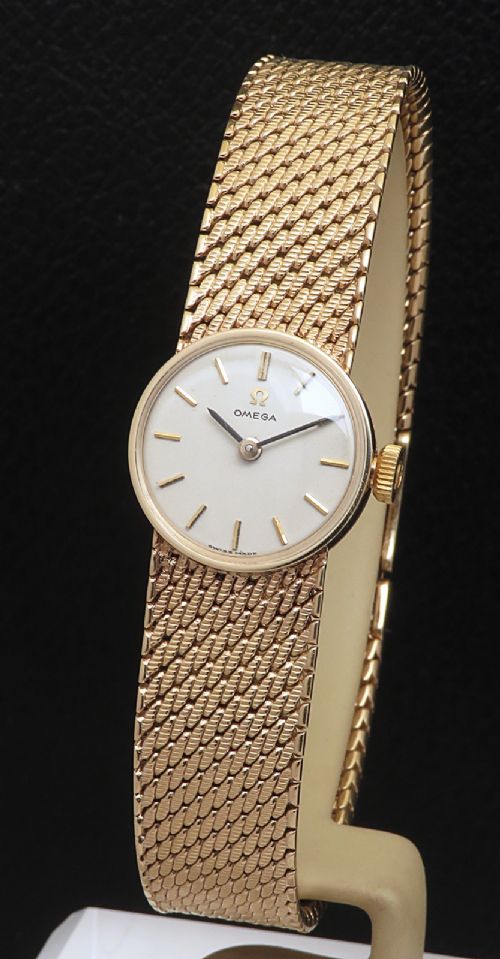
1960s gold jewellery captures a bold period of sculptural design and textured metalwork that continues to charm collectors.
1960s Gold Jewellery
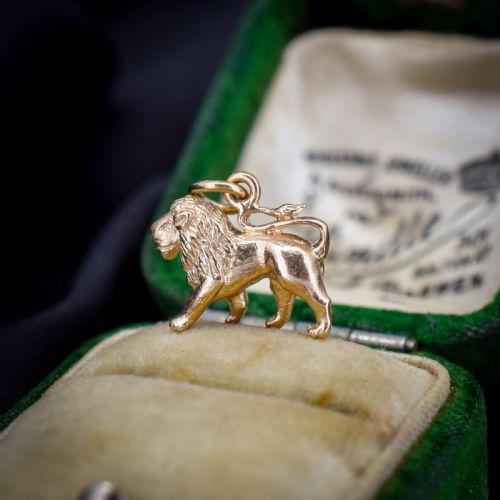
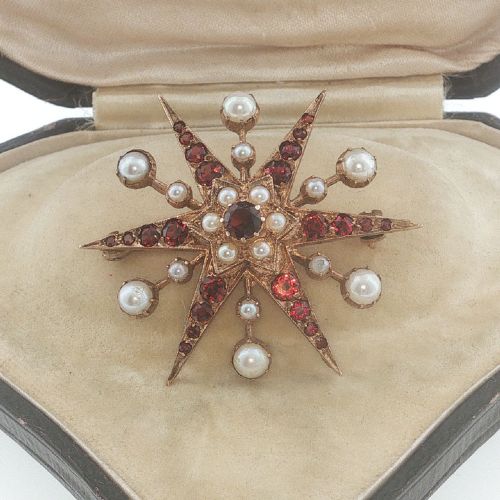
When you search for 1960s gold jewellery, you encounter rings, necklaces, bracelets, earrings, brooches, and charms dating from the middle of the twentieth century. The selections available reflect mid-century modern aesthetics alongside revivals of Victorian and art deco styles, often incorporating distinct textures.
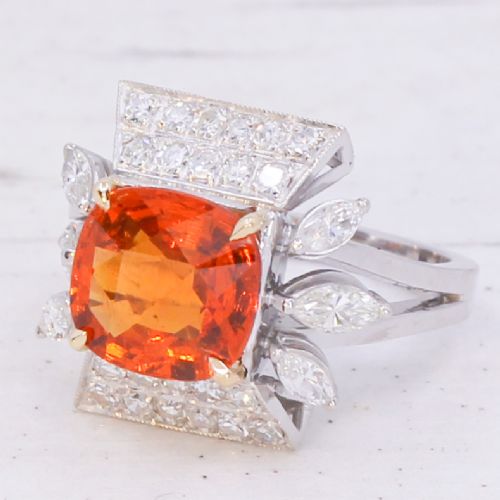
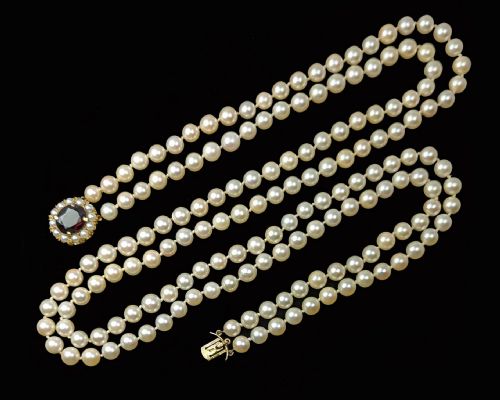
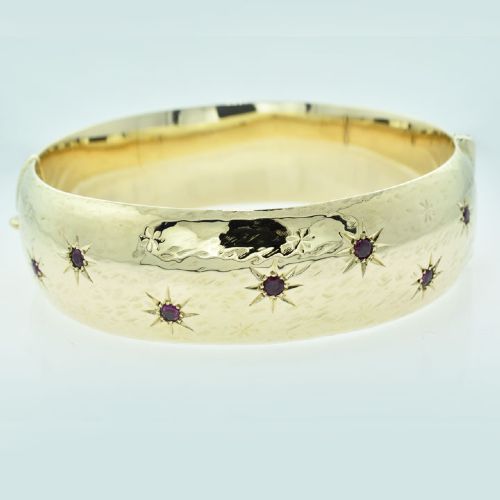
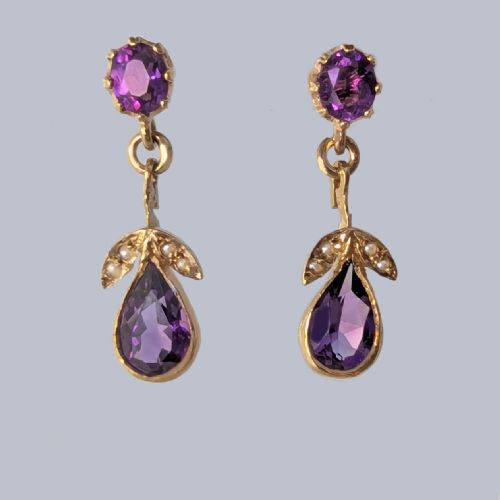
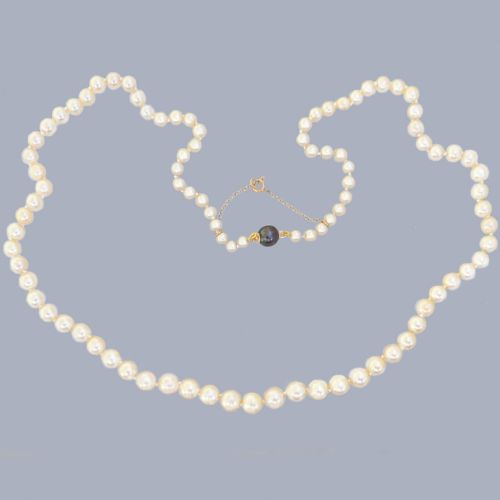
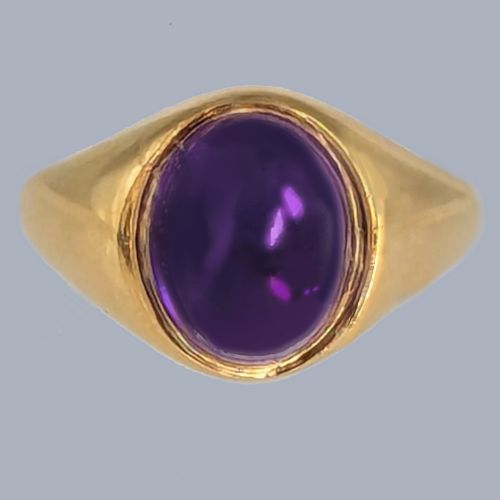
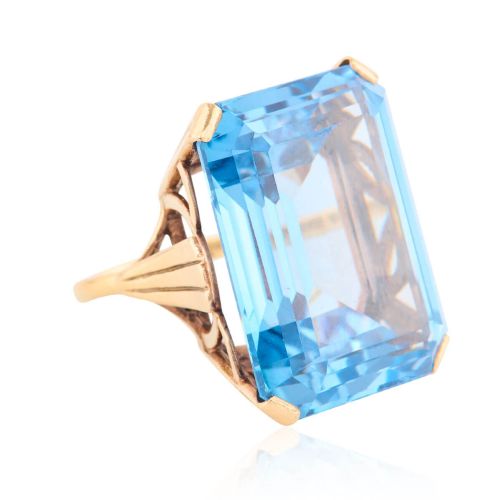
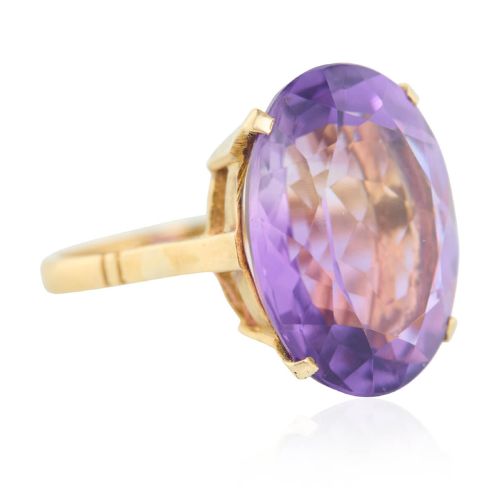
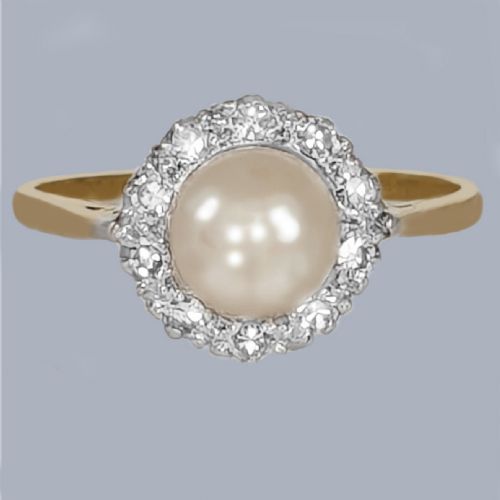
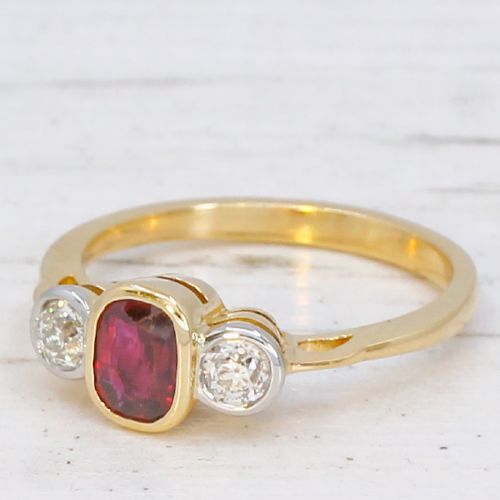
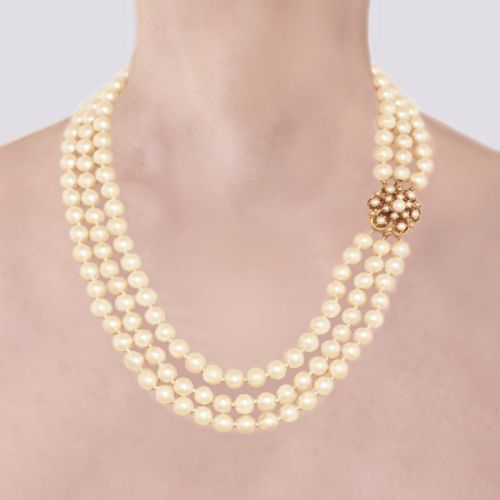
You are most likely to meet 9ct yellow gold pieces on this page, frequently set with cultured pearls, garnets, diamonds, or amethysts. Items range from everyday stacking rings and charm pendants to substantial cocktail rings, multi-strand pearl necklaces, and gemstone brooches.
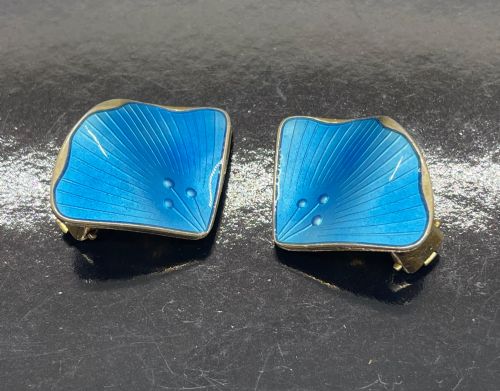
The objects stem from British assay offices including London, Birmingham, Sheffield, and Chester, with occasional international origins such as Norway and Italy. Many pieces bear clear hallmarks confirming dates from the early to late nineteen-sixties, alongside a smaller number from the adjacent decade.
How they were made
Maker's workshops utilised 9ct and 18ct yellow and white gold, casting or hand-working the metal into textured surfaces, lattice patterns, and organic shapes. Stones such as diamonds, sapphires, emeralds, rubies, and opals were secured using traditional claw and bezel settings.
Cultured pearls feature heavily, often hand-knotted on silk strands or arranged into cluster clasps, while enamel work appears on select imported items. Hallmarks and date letters were stamped directly into the metal by official assay offices to guarantee purity and year of creation.
1960s Gold Jewellery Retail Price Guide 2026
Typical asking prices for 1960s gold jewellery among the pieces listed under this phrase on Sellingantiques today, from the lower quarter to the upper quarter. They describe what is for sale here now, not the wider market.
Listings feature yellow gold, white gold, and silver-gilt items set with diamonds, rubies, sapphires, emeralds, garnets, amethysts, opals, and pearls.
What varies in quality
The standard of 1960s gold jewellery depends heavily on the weight of the metal and the substance of the mounting. Heavier, solid constructions and substantial mountings separate robust everyday wear from lighter, more delicate items.
Quality also rests on the selection and matching of stones, from the grading of diamonds and vibrant saturation of emeralds and sapphires to the uniformity of cultured pearls. Finer pieces demonstrate careful hand-finishing in textured gold details and secure, integrated stone settings.
Kutchinsky·Ben Rosenfeld
The 1960s Gold Jewellery Glossary
- Hallmark
- An official stamp applied by an assay office indicating metal purity, origin, and year of manufacture. These marks provide definitive proof of a piece's age and provenance.
- Cultured pearl
- An oyster-produced pearl formed with human intervention, commonly utilised in double and triple strand necklaces and cluster clasps during this era.
- Cocktail ring
- A large, prominent ring designed to draw attention during evening social events, frequently featuring substantial central gemstones surrounded by diamonds.
- Mid-century modern
- A design style spanning the mid-twentieth century that favoured abstract forms, clean lines, and textured surfaces over traditional ornamentation.
- Paste
- Cut and polished glass utilised to imitate gemstones in costume and dress jewellery, offering high visual impact with colourful brilliance.
1960s Gold Jewellery: Frequently Asked Questions
How do I style 1960s gold jewellery today?
These pieces mix well with modern wardrobes, especially structured geometric cocktail rings or textured gold brooches pinned to coats and scarves.
Layering multiple cultured pearl necklaces with gold clasps also creates an effortless evening look that highlights mid-century craftsmanship.
Are pearls from this era durable?
Cultured pearls remain robust if treated with care, though older necklaces benefit from periodic restringing to prevent strand breakage over time.
Keep pearls away from harsh chemicals, perfumes, and cosmetics to preserve their natural lustre.
How can I tell the exact year of manufacture?
British pieces typically feature a series of stamped assay marks, including a specific letter code that corresponds to the year it was hallmarked.
Matching this punch to local assay office records for London, Birmingham, Sheffield, or Chester reveals the precise date.
What is the difference between 9ct and 18ct gold pieces?
Gold purity dictates the proportion of pure gold alloyed with other metals, where 18ct contains a higher gold content than 9ct.
Both purities were standard during the nineteen-sixties, with 9ct offering greater resistance to everyday knocks.