


1950s Gold Clasp Pearls
These 1950s gold clasp pearls combine mid-century elegance with secure precious metal fastenings, offering classic style and versatility.
1950s Gold Clasp Pearls
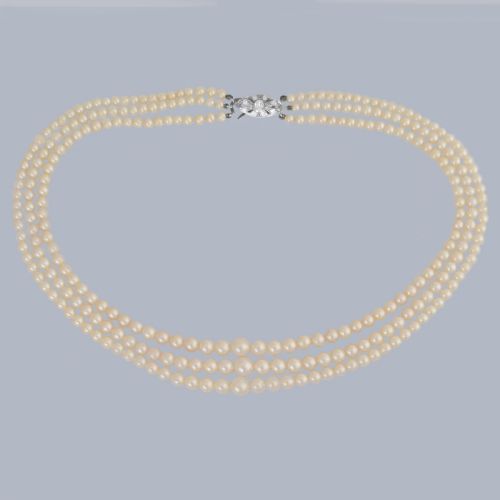
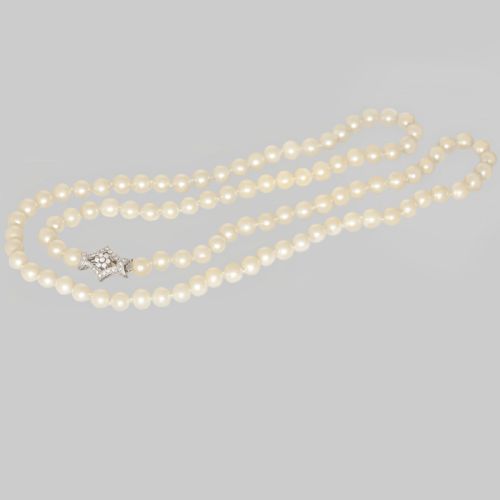
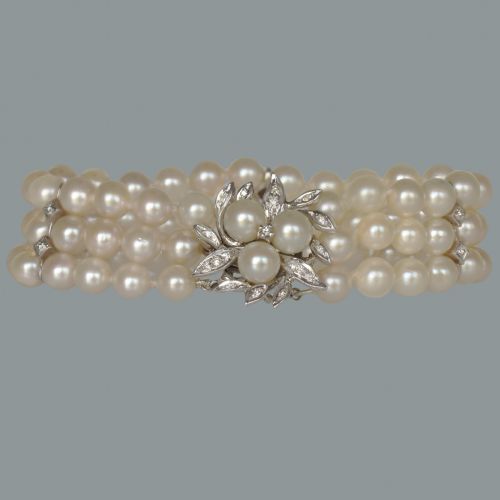
When searching for 1950s gold clasp pearls, buyers encounter necklaces and bracelets featuring single or multiple strands of pearls secured by gold mechanisms. These items reflect the mid-century modern aesthetic, combining traditional pearl arrangements with decorative fastenings.
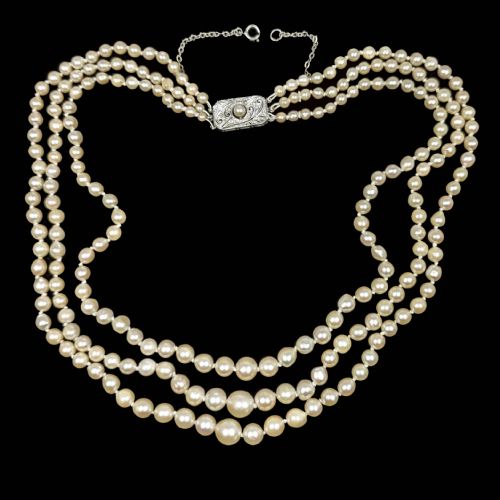
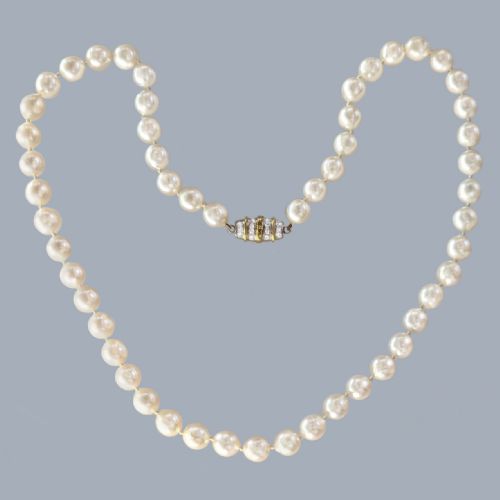
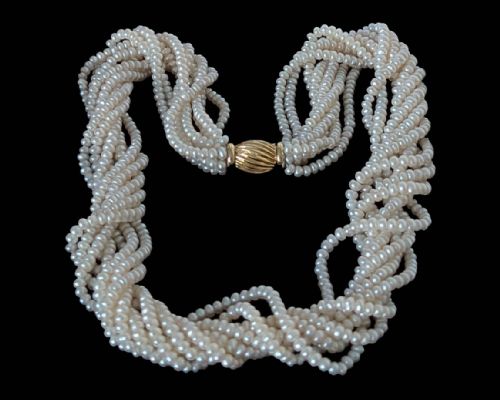
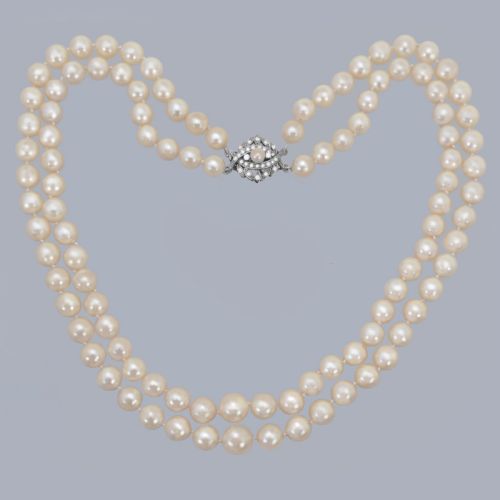
The pieces listed on this page appear mainly as necklaces, spanning single strands to multi-strand variations like double, triple, six, and eight-strand configurations. Cultured pearls dominate the selection, alongside freshwater seed pearls.
Originating from the 1950 period, these items frequently incorporate gemstone accents into their clasps. Garnet, sapphire, amethyst, and diamond embellishments occur regularly alongside yellow and white gold settings.
How They Were Made
The construction of these pieces relies on stringing cultured or freshwater pearls alongside precious metalwork. Clasps are forged from 9ct gold, 14ct gold, or 18ct gold in both yellow and white varieties.
Goldsmiths set diamonds, sapphires, garnets, and amethysts directly into the gold clasp mechanisms. Many examples feature detailed foliate or floral designs surrounding these gemstones.
Strands are organised into single or multiple rows, with several examples noting professional restrung status to ensure structural integrity. Gem certificates and pearl reports often accompany the pieces to document material quality.
Object forms on this page include necklaces and bracelets spanning single strand up to eight-strand configurations.
What Varies in Quality
Quality differences emerge in the complexity and material composition of the clasp. Simple metal fasteners contrast with intricate floral and foliate designs set with multiple diamonds, sapphires, or garnets.
The number of strands creates distinction across the range, moving from single strand iterations to elaborate multi-strand forms like six-strand and eight-strand variations.
Pearl size and type also influence the overall character of the piece, with cultured pearls and freshwater seed pearls offering different visual textures.
The 1950s Gold Clasp Pearls Glossary
- Cultured pearl
- Pearls created by the introduction of an irritant into an oyster or mollusc to stimulate pearl production. This method underpins the majority of mid-century pearl jewellery.
- Freshwater seed pearl
- Very small pearls harvested from freshwater mussels rather than marine oysters. These appear in multi-strand configurations.
- Foliate clasp
- A jewellery fastening shaped or engraved to resemble leaves and foliage. These often incorporate gemstones within the leaf design.
- Old cut diamond
- A diamond cut style popular before modern brilliant cuts, characterised by a smaller table and larger culet. These stones appear in white gold clasps.
- AnchorCert pearl report
- An independent laboratory document verifying pearl authenticity and characteristics. Such reports accompany high-grade pieces.
1950s Gold Clasp Pearls: Frequently Asked Questions
How do I care for my pearls?
Wipe pearls with a soft, damp cloth after wearing to remove oils and residues. Store them flat in a lined box away from hard metals.
Keep pearls away from cosmetics, perfumes, and hairsprays, as chemicals can dull the lustre over time.
Are these pearls natural or cultured?
The pieces utilise cultured pearls and freshwater seed pearls grown through controlled farming methods. These materials were standard for mid-century production.
Gem certificates and pearl reports provided with specific items verify the origin and nature of the pearls.
What gold purities are used?
Clasps utilise 9ct, 14ct, and 18ct gold in both yellow and white variations. Higher gold purities often accompany diamond and sapphire gemstone settings.
Birmingham hallmarks appear on specific pieces, confirming the metal standard and period of manufacture.
How many strands should I choose?
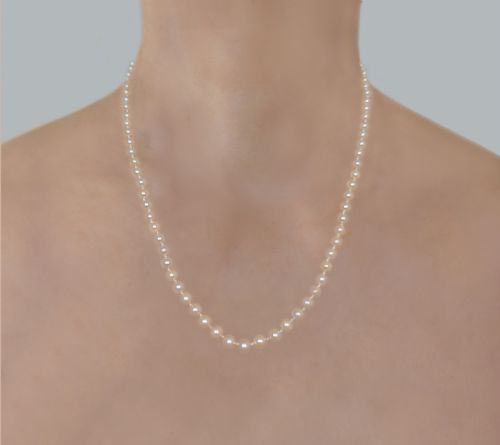
Single strands offer understated daily wear, while double and triple strands provide a fuller profile. Multi-strand options like six or eight rows create a more substantial statement.
Strand count alters the visual weight and dictates how the necklace sits against the collarbone.