
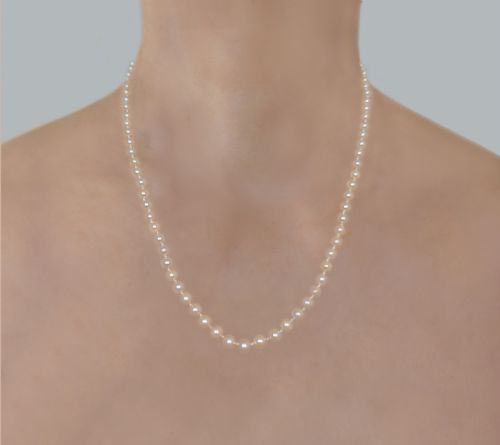


1950s Pearl Choker
These 1950s pearl choker pieces bring mid-century elegance to the neckline through short, closely fitting strands secured by gem-set clasps.
1950s Pearl Choker
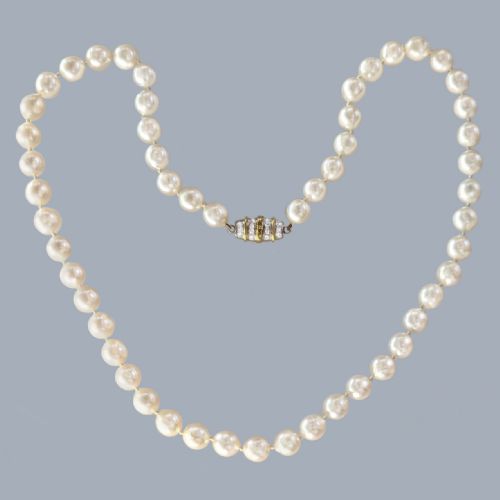
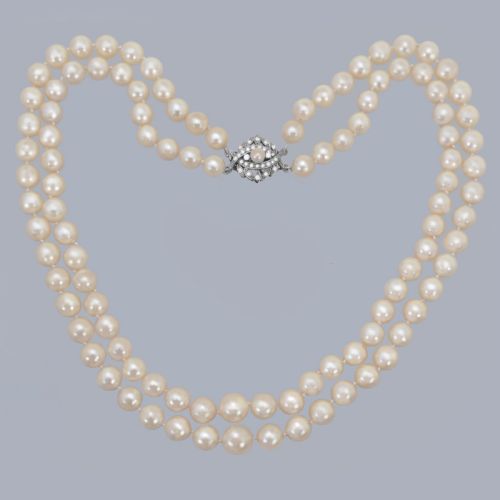
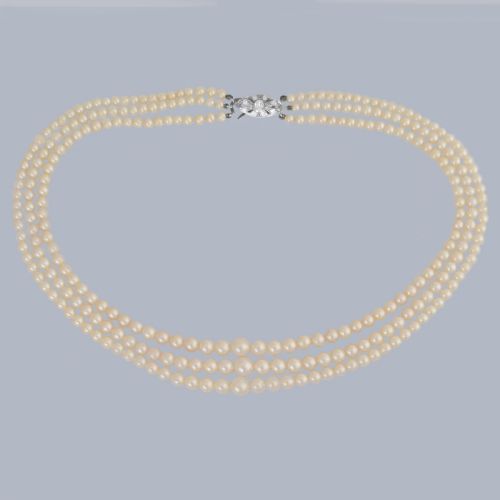
A 1950s pearl choker sits high on the neck, typically measuring around sixteen inches or shorter, designed to hug the collarbone in the manner characteristic of mid-century fashion. These necklaces appear as single strands, double strands, triple strands, or multiple multi-strand configurations reaching up to eight strands.
Most examples encountered here are cultured pearl necklaces or freshwater seed pearl necklaces paired with precious metal clasps. The designs frequently incorporate gem-set elements such as diamonds, sapphires, emeralds, rubies, garnets, amethysts, and citrines set into 9ct gold or 18ct gold.
How they were made
The construction of a 1950s pearl choker relies on stringing multiple strands of pearls onto durable thread, often complemented by professional restrung work to maintain proper tension. Clasps are cast in 9ct yellow gold, 9ct white gold, or 18ct gold, utilising traditional techniques to secure small gemstones.
Gemstones including diamonds, sapphires, and emeralds are integrated into foliate, floral, or geometric clasps that serve both a functional and decorative purpose. Birmingham hallmarks and gem certificates sometimes accompany these pieces, recording the metal purity and stone authenticity.
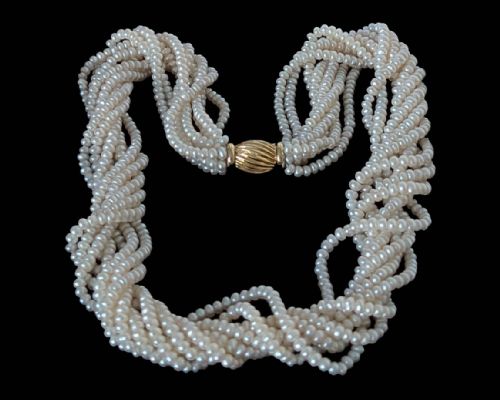
Some multi-strand seed pearl chokers pack hundreds of tiny pearls into a single clasp.
What varies in quality
Quality in a 1950s pearl choker rests upon the uniformity and lustre of the pearls, whether cultured or seed pearls, alongside the complexity of the clasp. Multi-strand pieces with higher pearl counts demand greater craftsmanship in alignment and stringing.
The selection of accent stones within the 9ct or 18ct gold clasp distinguishes standard pieces from more elaborate examples. Clasps featuring multiple diamonds, sapphires, or emeralds elevate the overall refinement of the necklace.
The 1950s Pearl Choker Glossary
- Cultured pearl
- Pearls formed with human assistance by inserting a nucleus into an oyster, resulting in a consistent nacre layer. These make up the bulk of the larger pearls seen in mid-century jewellery.
- Seed pearl
- Very small natural or freshwater pearls historically used in multi-strand configurations. They create a dense, textured appearance when gathered into a choker.
- Clasp
- The mechanical closure of a necklace, which in this period often doubles as a decorative focal point. Many utilise 9ct gold or 18ct gold set with diamonds and coloured gems.
- Mid-Century
- The design period spanning roughly the middle decades of the twentieth century, encompassing the 1950s aesthetic. Pieces from this era favour clean lines combined with decorative clasps.
- Necklet
- An alternative term for a short necklace or choker. This designation frequently appears on pieces designed to sit closely against the collarbone.
1950s Pearl Choker: Frequently Asked Questions
How long is a pearl choker?
A pearl choker typically measures around sixteen inches or shorter, designed to sit high on the neck against the collarbone.
This shorter length aligns with mid-century fashion conventions where necklaces sat close to the throat.
What metals are used in the clasps?
Clasps are predominantly fashioned from 9ct gold, 9ct white gold, or 18ct gold.
These precious metals frequently hold diamonds, sapphires, emeralds, rubies, or garnets to create decorative focal points.
Are multi-strand chokers common?
Multi-strand configurations are widely represented, ranging from double and triple strands up to six and eight strands.
These heavier arrangements use seed pearls or cultured pearls secured by substantial gold and gemstone clasps.
How do I identify a mid-century clasp?
Mid-century clasps often feature specific stylistic traits such as foliate, floral, or geometric Art Deco influences executed in gold.
Hallmarks, such as those from Birmingham, and accompanying gem certificates help confirm the period and materials.