




1950s Automatic Watch
A 1950s automatic watch delivers mid-century mechanical charm to the wrist through self-winding innovation and classic dial designs.
1950s Automatic Watch
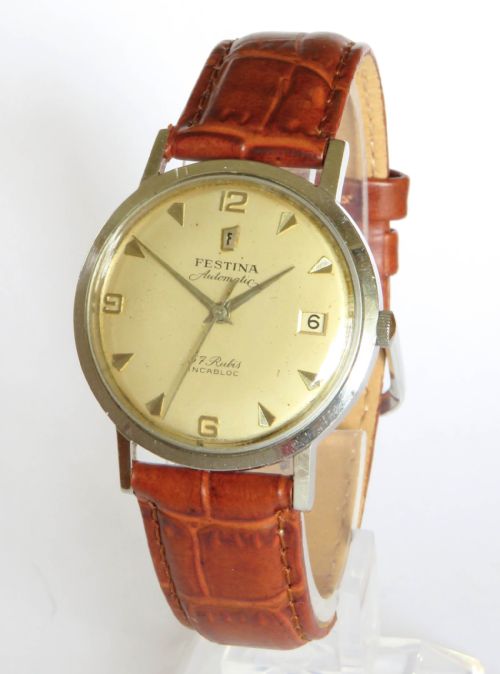
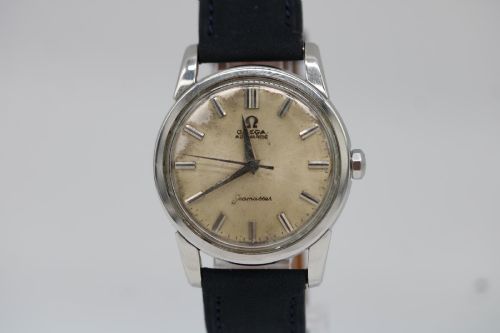
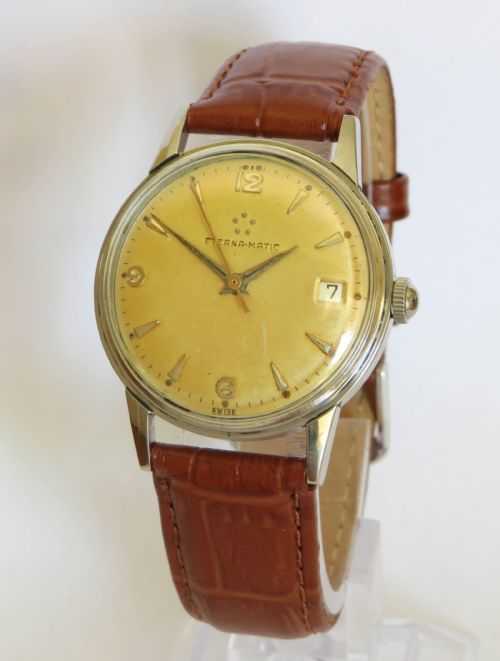
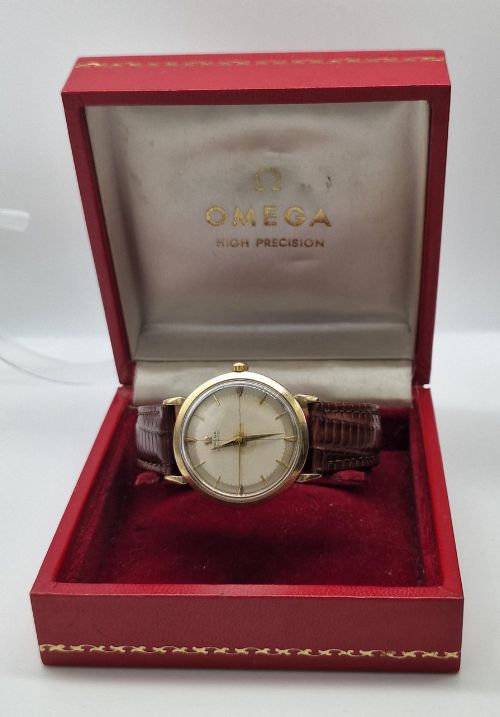
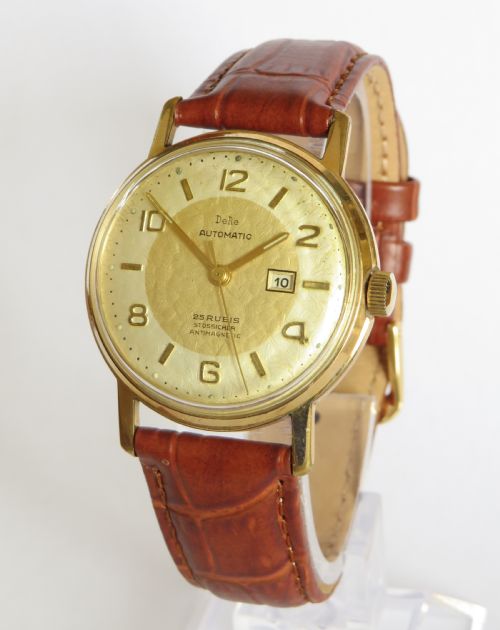
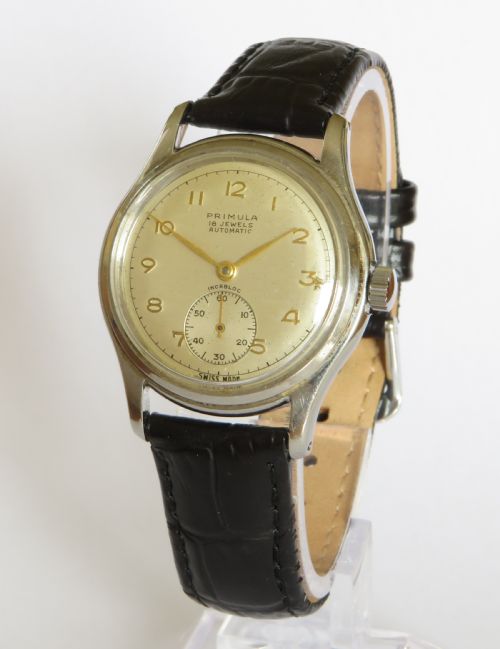
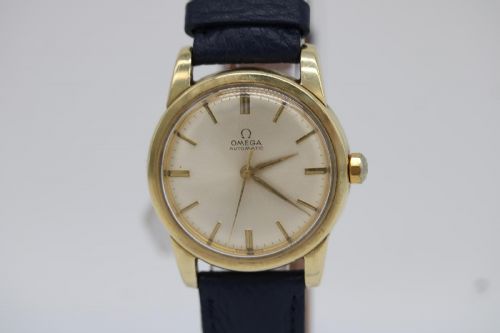
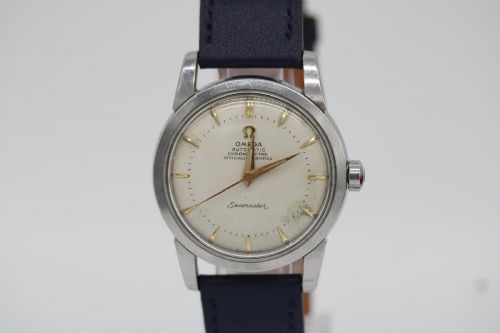
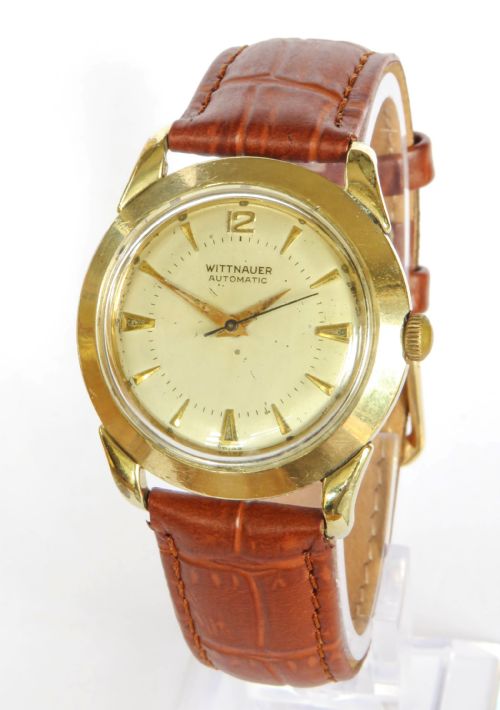
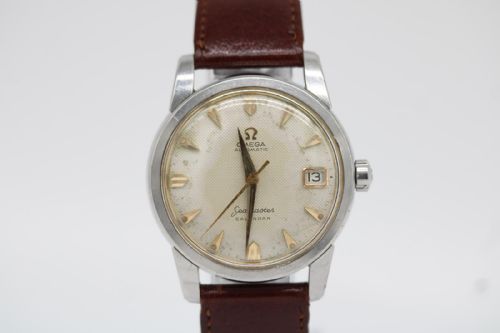
A 1950s automatic watch represents a period of significant mechanical transition in horology, moving away from manual winding toward self-winding movements driven by natural wrist motion. You will frequently encounter gents wristwatches from this decade, particularly dress and utility pieces adhering to mid-century modern design sensibilities.
The selection ranges from robust steel utility pieces to refined gold-plated and 9K gold specimens. Prominent manufacturers of the era such as Omega, Eterna, and Rolex feature strongly, alongside lesser-known makers that populate the wider vintage market.
Materials and movement construction
Cases of this era are constructed from stainless steel, gold-plated metal, gold-filled compositions, and solid 9K gold, paired with leather straps. Crystals protecting the dials are fashioned from glass or acrylic.
Internal mechanisms rely on early self-winding systems, including bumper movements which oscillate back and forth rather than rotating a full three hundred and sixty degrees. These mechanical movements utilise intricate gear trains and weights to harness kinetic energy from the wearer.
Early automatic watches talk back to you with a gentle mechanical thud on the wrist as their internal bumper weights swing.
Assessing quality in vintage timepieces
Quality differences rest primarily on the pedigree of the movement and the integrity of the case metals. Examples from established houses with in-house calibres generally command greater attention than generic ébauche movements.
Case finishing, dial originality, and the complexity of the complication - such as date functions, power indicators, or chronometer certification - further distinguish standard production models from superior specimens.
Omega·Eterna Matic·Rolex·Wittnauer·Baume Bimatic·Festina·Glashütte·Movado·Gruen·Bucherer
The 1950s Automatic Watch Glossary
- Automatic
- A self-winding mechanical watch movement that uses a weighted rotor to wind the mainspring automatically through natural wrist motion.
- Bumper automatic
- An early form of automatic movement where the oscillating weight swings back and forth within a restricted arc, striking internal springs rather than rotating freely.
- Calibre
- The specific manufacturer's designation for a particular watch movement design.
- Gold-filled
- A material consisting of a thick layer of solid gold mechanically bonded to a base metal core, offering greater durability than standard plating.
- New Old Stock
- Unsold vintage merchandise preserved in original condition, often retaining packaging or tags from the period.
1950s Automatic Watch: Frequently Asked Questions
How do I wind a 1950s automatic watch?
While these watches wind themselves via wrist movement, it is often necessary to give them an initial manual twist of the crown to jumpstart the mechanism after a period of rest. Turn the crown gently clockwise several times until the movement engages.
Avoid overwinding vintage pieces, as their internal components are delicate and sensitive to excessive force.
Can I wear my vintage watch daily?
Many collectors wear these timepieces regularly, provided they are handled with care and kept away from rigorous physical activity. Regular servicing by a qualified horologist ensures the internal lubricants remain effective.
Keep in mind that most pieces from this decade lack modern water resistance standards and should be kept dry.
What is a bumper movement?
A bumper movement is an early type of automatic winding mechanism where an internal weight swings back and forth rather than spinning in a full circle. You can often feel a slight physical tap on your wrist as the weight hits the internal buffer springs.
This technology represents the stepping stone between manual wind watches and modern fully rotating rotor systems.
How do I identify the decade of a watch?
Horologists look at several indicators including movement serial numbers, case style, font choices on the dial, and hand shapes. Mid-century pieces typically exhibit clean, minimalist markers and understated typography.
Comparing movement calibres against historical manufacturer archives provides the most precise date verification.